



Key Takeaways
- Major US equity indices declined Friday amid rising Treasury yields and elevated crude oil prices
- The 10-year Treasury yield surged back above the 5% threshold, weighing on equities
- WTI crude oil prices climbed above $102 per barrel, intensifying inflation worries
- Following this week’s 25 basis point rate increase, market participants anticipate further Fed tightening
- Probability of an additional 50 basis points in rate increases this year jumped to 44.3%
Wall Street’s major benchmarks—the Dow Jones Industrial Average, S&P 500, and Nasdaq Composite—all closed lower on Friday as surging Treasury yields and elevated energy prices erased gains from earlier trading sessions.
The Dow shed approximately 200 points, representing a 0.4% decline. The S&P 500 retreated 0.2%, while the Nasdaq edged down 0.1%.
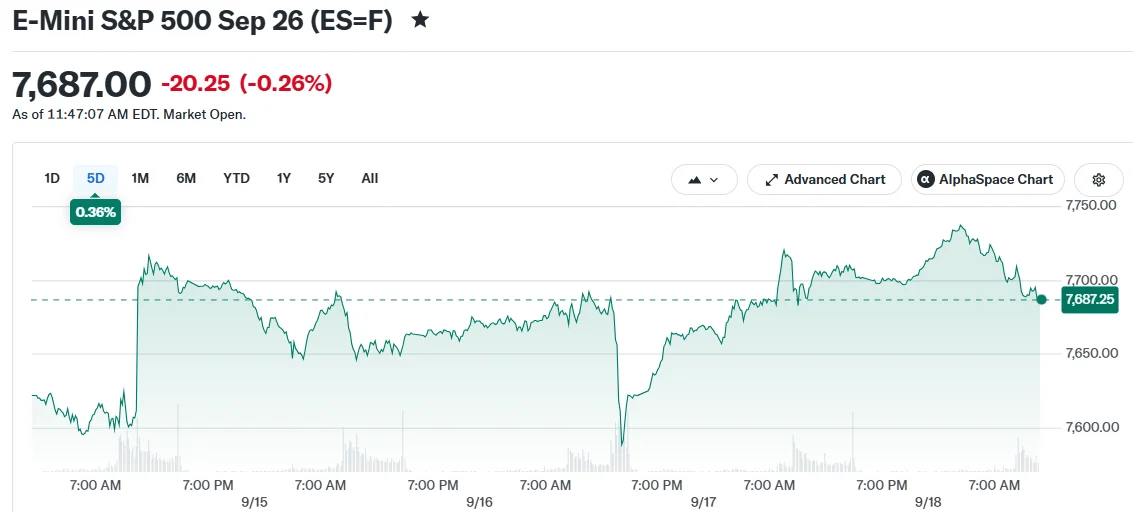
Friday’s trading session coincided with “triple witching,” a quarterly event when options and futures contracts expire simultaneously across multiple asset classes. Charles Schwab’s head trading strategist Joe Mazzola cautioned that market volatility could intensify next week as institutional investors rebalance portfolios for quarter-end.
The benchmark 10-year Treasury yield climbed back above the 5% mark, while the 2-year yield advanced to 4.75%. Rising yields typically pressure equity valuations by increasing corporate borrowing costs and enhancing the relative appeal of fixed-income securities.
Energy Prices Add to Market Headwinds
WTI crude oil futures advanced 0.9% to approximately $102.82 per barrel, reversing earlier morning declines. Energy prices have remained elevated due to ongoing supply disruptions in the Strait of Hormuz, linked to the Iranian conflict now extending into its seventh month, which continues to support higher crude prices.

Market analysts note that this energy price surge is creating additional complications for central banks worldwide as they navigate their inflation-fighting strategies.
The Federal Reserve implemented a 25 basis point rate increase earlier this week, marking its first rate adjustment in three years. While markets had broadly anticipated this decision and equities initially rallied following the announcement, sustained optimism proved short-lived.
However, skepticism remains about whether a single rate hike will sufficiently contain inflation. JPMorgan Chase CEO Jamie Dimon expressed his concerns to Yahoo Finance this week, stating: “It’s not clear to me we’ve slayed inflation.”
Market Pricing Reflects Expectations for Further Tightening
Market participants are increasingly anticipating additional monetary policy tightening. Data from the CME FedWatch Tool indicates that the probability of an additional 50 basis points in rate hikes this year increased to 44.3% on Friday, up from 41.7% the previous day. Meanwhile, expectations for the Fed to maintain current rates declined to 9.8% from 11%.
Oil prices briefly dipped below $100 earlier this week, providing temporary market relief. However, the subsequent rebound in crude prices has sustained inflationary pressures.
Semiconductor stocks demonstrated relative resilience this week following a mid-week selloff. The PHLX Semiconductor index posted only modest weekly losses. The earlier decline was partially attributed to statements from Anthropic and OpenAI advocating for a deceleration in artificial intelligence development.
The Bank of Japan also announced an interest rate increase this week, lifting rates to their highest level in over three decades, further complicating the global monetary policy landscape.
With an absence of significant corporate earnings releases or economic data scheduled for Friday, market participants remained focused on the potential trajectory of Federal Reserve policy should inflation prove persistent.
The Dow was tracking toward a weekly loss as trading approached the closing bell.
Get 3 Free Stock Ebooks
Discover top-performing stocks in AI, Crypto, and Technology with expert analysis.
- Top 10 AI Stocks - Leading AI companies
- Top 10 Crypto Stocks - Blockchain leaders
- Top 10 Tech Stocks - Tech giants



