


Key Highlights
- Tesla stock hovered around $376.80 during Thursday’s premarket session, declining approximately 1% intraday.
- Shares have retreated roughly 15% since the start of the year and are down 14% over the trailing twelve months.
- The company’s Texas cathode manufacturing facility completed its inaugural Cybercab using proprietary battery materials.
- Elon Musk highlighted that this facility strengthens Tesla’s control over its battery supply chain.
- Market participants continue prioritizing robo-taxi expansion over battery production developments.
Tesla stock was changing hands near $376.80 during premarket trading Thursday, registering a decline of approximately 1% for the session. Shares have slid roughly 15% year-to-date and have decreased 14% over the past year.
The stock movement occurred as Tesla announced a significant achievement at its Texas battery manufacturing operation. The electric vehicle manufacturer successfully assembled its inaugural Cybercab utilizing cathode materials produced completely within its own facilities.
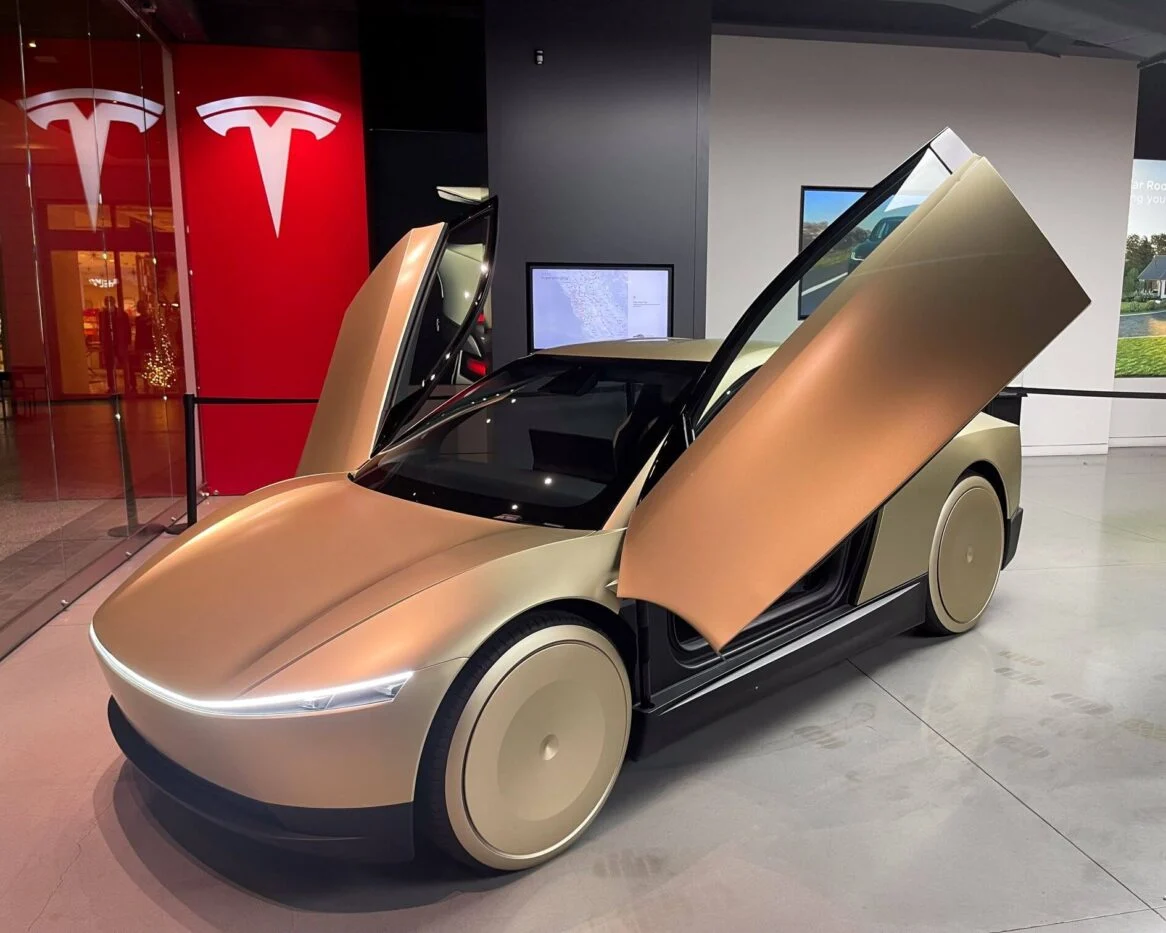
The company’s robo-taxi division shared an image of the completed vehicle on X platform Wednesday. The accompanying statement highlighted that it was manufactured “using our in-house cathode material, from the first cathode plant in America.”
Cathodes represent a critical battery component positioned on one electrode, facilitating electrical current flow. These materials account for approximately 35% to 40% of a battery’s total manufacturing expense.

The majority of battery producers, Tesla included until now, have historically sourced cathode materials from external vendors. Industry giants such as Umicore, BASF, Sumitomo Metal Mining, and LG Chem dominate this supply sector.
Tesla’s Strategic Move Toward Vertical Integration
Musk explained the rationale behind this investment during Tesla’s fourth-quarter 2025 earnings conference call. He characterized the facility construction as a strategic imperative rather than an optional business decision.
“Can someone else build these things? It is very hard to build these things,” Musk stated. He emphasized that Tesla is “making moves to make sure that no matter what happens, Tesla will prosper.”
Limited companies are committing capital to lithium processing or cathode refining operations at comparable magnitudes. This market gap has compelled Tesla to develop substantial portions of this critical infrastructure independently.
Reduced raw material expenses generally enhance any producer’s profit margins. However, this particular announcement probably won’t significantly influence Tesla’s share price in isolation.
Market observers have predominantly redirected their focus beyond electric vehicle manufacturing and battery technology. The pressing concern for financial analysts centers on Cybercab deployment velocity and commercial scaling.
Market Focus Shifts to Autonomous Operations
Tesla initiated its autonomous taxi service in Austin, Texas, during June 2025. This operation has not yet generated substantial financial impact, leaving investors anticipating accelerated expansion.
The Cybercab features no conventional steering wheel or pedals. It symbolizes Tesla’s strategic transformation from traditional automotive manufacturing toward a physical artificial intelligence platform.
Tesla disclosed second-quarter financial results on July 23rd. The company generated $28.24 billion in revenue, surpassing analyst projections of $26.42 billion.
Earnings per share reached $0.33, falling short of the $0.50 consensus forecast. Revenue increased 25.5% compared to the corresponding quarter in the previous year.
Wall Street analysts currently assign Tesla a consensus “Hold” recommendation. The mean price target among analysts stands at $412.25.
Tesla’s valuation metrics remain elevated at approximately 352 times trailing earnings. This premium multiple provides minimal margin for execution errors as the organization depends on AI, autonomous technology, and energy initiatives to support its stock price.
Fitch Ratings recently awarded Tesla its inaugural investment-grade credit rating of BBB. This upgraded rating may reduce financing expenses as Tesla prepares substantial capital deployment for AI and autonomy infrastructure development.
Chief Financial Officer Vaibhav Taneja divested 2,606 shares of Tesla common stock on September 8th at an average transaction price of $360.13. The divestiture, valued at approximately $938,499, was executed to satisfy tax obligations associated with vesting equity compensation.
Get 3 Free Stock Ebooks
Discover top-performing stocks in AI, Crypto, and Technology with expert analysis.
- Top 10 AI Stocks - Leading AI companies
- Top 10 Crypto Stocks - Blockchain leaders
- Top 10 Tech Stocks - Tech giants



