


Key Takeaways
- Wholesale gas futures in Europe and Britain declined 3.2% Friday amid widespread profit-taking.
- Both major benchmarks posted their sharpest weekly decline since mid-June, falling over 8%.
- Diplomatic discussions between Washington and Tehran regarding Strait of Hormuz access reduced supply concerns.
- European Union gas inventories stand at approximately 70% capacity, trailing last year by 12 percentage points.
- Ongoing Norwegian pipeline maintenance continues to constrain European gas availability.
Wholesale natural gas prices across Europe experienced significant declines Friday. Dutch TTF and British NBP futures contracts both slid 3.2% during trading.
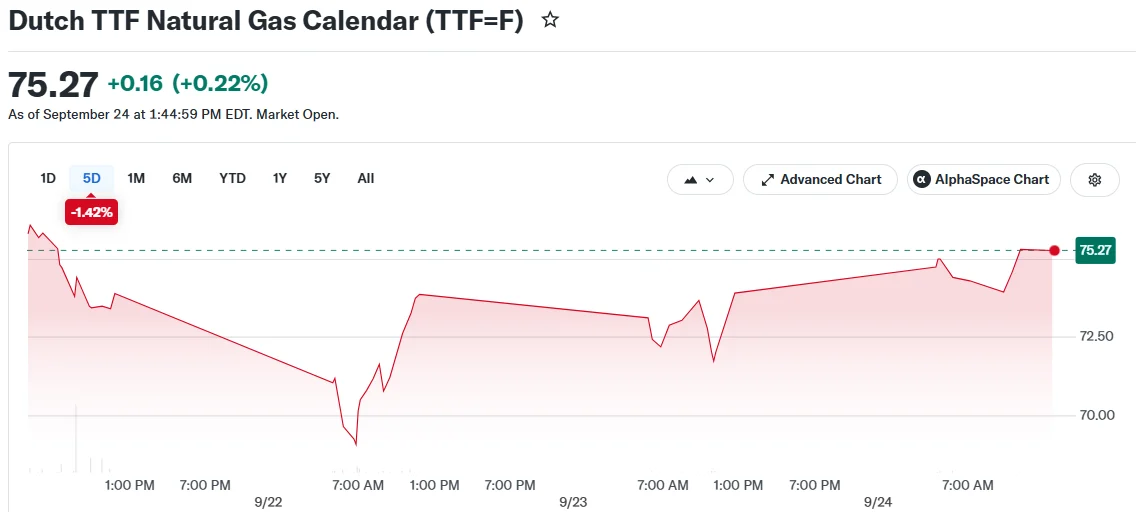
Market participants locked in gains following several weeks of sustained price increases. This selloff positioned both benchmark contracts for their most substantial weekly losses observed since the middle of June.
Weekly losses exceeded 8% for both indices. This represents a dramatic turnaround from the elevated levels recorded during early September.
Factors Driving the Decline
Reduced geopolitical tensions surrounding the Strait of Hormuz represent the primary catalyst for this week’s price retreat. Intelligence reports indicate ongoing diplomatic negotiations between Washington and Tehran focused on establishing a phased framework to restore access through the critical waterway.
Control over this strategic passage has remained contested throughout a conflict now approaching seven months in duration. Neither government has shown willingness to relinquish authority over the shipping channel.

Nevertheless, energy markets are responding to diminished prospects for additional military confrontation. This perception shift has compressed the risk premium historically embedded in Persian Gulf energy valuations.
Liquefied natural gas carriers have adapted their operations accordingly. Shipping vessels have reportedly established alternate navigation paths circumventing the Arabian Peninsula, alleviating concerns about complete disruption to physical LNG transport.
The temporary diplomatic progress prompted traders to liquidate speculative positions before the weekend. This wave of selling intensified downward price momentum.
Inventory Concerns Persist
European natural gas storage facilities continue presenting challenges despite this week’s price correction. Statistics from Gas Infrastructure Europe indicate EU storage infrastructure currently holds approximately 70% of maximum capacity.
This represents a deficit of around 12 percentage points compared to inventory levels recorded during the identical period last year. The shortfall diminishes the buffer available to energy companies as winter approaches.
Inadequate storage reserves suggest the continent remains vulnerable to price volatility should unseasonably cold temperatures materialize early or additional supply interruptions occur. The European Central Bank has previously highlighted this vulnerability, noting that natural gas price fluctuations can transmit into broader consumer inflation.
Scheduled maintenance operations across Norwegian infrastructure compound existing supply constraints. Diminished pipeline throughput from Norway is restricting deliveries into European markets precisely when storage levels remain suboptimal.
European buyers continue facing intense competition from Asian purchasers pursuing scarce LNG shipments. This rivalry has escalated as both regions attempt to secure adequate supplies before the winter heating season commences.
Notwithstanding Friday’s markdown, current prices remain substantially elevated relative to earlier 2025 levels. Disruptions to maritime shipping lanes and supply logistics stemming from the regional conflict persist.
Energy analysts suggest that a comprehensive diplomatic settlement between American and Iranian representatives regarding strait access would likely generate additional downward price pressure. Until such resolution materializes, natural gas valuations will probably remain reactive to emerging developments from ongoing negotiations.
By Friday’s close, TTF contracts had retreated below €73 per megawatt-hour, erasing previous session advances.
Get 3 Free Stock Ebooks
Discover top-performing stocks in AI, Crypto, and Technology with expert analysis.
- Top 10 AI Stocks - Leading AI companies
- Top 10 Crypto Stocks - Blockchain leaders
- Top 10 Tech Stocks - Tech giants



