


Key Takeaways
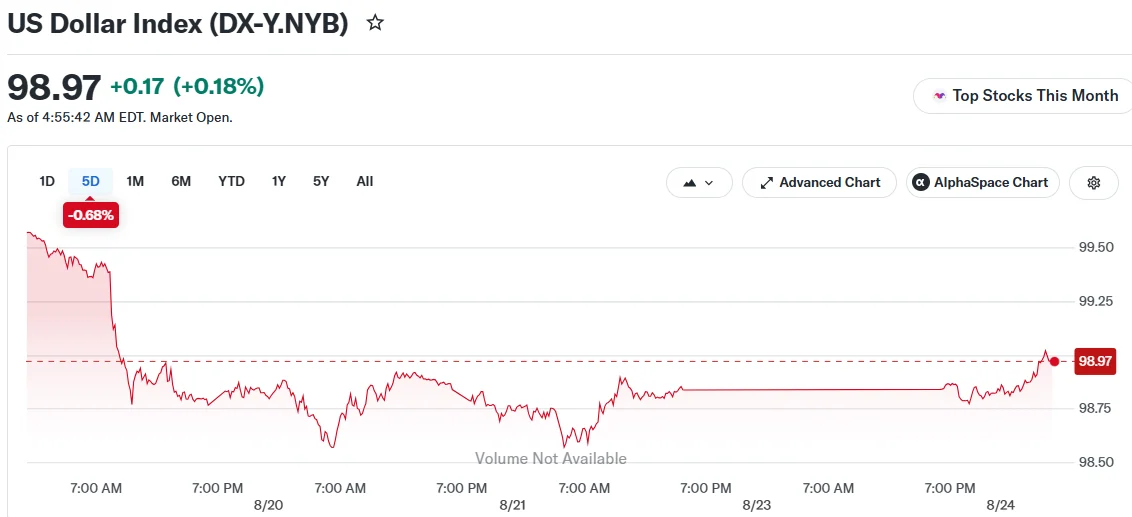
- The U.S. Dollar Index traded near 98.88, its weakest level since mid-May
- Treasury Department expanded long-term bond buyback operations to $4 billion per session, doubling previous amounts
- Federal debt has crossed the $40 trillion threshold, with the budget deficit approaching $1.8 trillion
- Canada’s currency declined following new U.S. tariffs of 50% on approximately $20 billion in Canadian imports
- Alternative assets including bitcoin and gold attracted investor interest as dollar confidence waned
On Monday, the U.S. dollar remained anchored near multi-month lows. Trading around 98.88, the U.S. Dollar Index maintained its position close to levels not seen since mid-May. The index had already declined by approximately 1% during the prior week’s trading.
This sustained weakness reflects mounting investor anxiety over America’s fiscal position. The federal debt burden has now broken through $40 trillion, while the annual budget deficit approaches $1.8 trillion.
The Treasury Department announced last week it would expand its long-dated bond buyback program, increasing operations to $4 billion per session—double the previous amount. Officials positioned the move as necessary to enhance market functioning and alleviate stress on longer-dated yields.
Although yields initially retreated, the fact that Treasury officials felt compelled to intervene directly in bond markets unsettled traders. Market observers suggest the intervention strategy could be producing unintended consequences.
“The more Bessent tries to push back, the more markets will push against him,” said Marc Ostwald, chief economist at ADM Investor Services International. He added that the situation is pushing investors toward gold and bitcoin over fears of currency debasement.
Alternative Assets Rally as Dollar Confidence Erodes
The greenback recorded its steepest weekly decline versus bitcoin in approximately three and a half years. Meanwhile, gold prices have surged as market participants search for alternatives to dollar-denominated holdings.

According to Ostwald, investors are actively repositioning away from G7 sovereign debt markets, concerned that escalating budget imbalances show no signs of meaningful correction.
The euro changed hands at $1.1665, close to the three-month peak established the previous week. The British pound maintained its position near a six-month high at $1.3628. China’s yuan traded near three-and-a-half-year highs versus the dollar.
Trade Disputes and Geopolitical Tensions Intensify Headwinds
The Canadian dollar lost ground after Washington imposed 50% tariffs on roughly $20 billion worth of Canadian exports following the collapse of bilateral trade negotiations. Ottawa responded by announcing matching retaliatory tariffs scheduled to take effect September 8.
Market participants were also anticipating announcements from U.S. Treasury Secretary Scott Bessent regarding new Iran sanctions scheduled for Monday. Bessent had previewed “the toughest sanctions in history” targeting Iran, with speculation centering on potential measures affecting China.
Oil prices dropped more than $1 per barrel in anticipation of the sanctions announcement as traders locked in gains, though concerns about potential disruptions near the Strait of Hormuz persisted.
Federal Reserve Chair Kevin Warsh is scheduled to deliver remarks at Jackson Hole on Friday. Investors will scrutinize his comments for insights on monetary policy direction or perspectives on the Treasury’s buyback initiative. Bank of Japan Deputy Governor Ryozo Himino addresses markets Thursday, with analysts listening for clues about the timing of additional rate increases.
Nvidia’s quarterly earnings release this week represents another potential catalyst for global market sentiment.
Get 3 Free Stock Ebooks
Discover top-performing stocks in AI, Crypto, and Technology with expert analysis.
- Top 10 AI Stocks - Leading AI companies
- Top 10 Crypto Stocks - Blockchain leaders
- Top 10 Tech Stocks - Tech giants



