



Key Takeaways
- Bitcoin declined more than 2%, hovering between $83,900 and $84,150 amid rising Treasury yields.
- Dogecoin experienced the steepest losses among top cryptocurrencies, plummeting approximately 8%.
- The benchmark 10-year Treasury yield reached 5.11% at close, marking its highest finish since 2007.
- Weak demand at a $70 billion five-year Treasury auction intensified market pressure.
- Crude oil surged more than 4%, reigniting inflation concerns and rate hike speculation.
Bitcoin experienced a significant downturn on Thursday, with prices tumbling over 2% to trade around $83,900 after reaching nearly $87,300 earlier in the trading week.
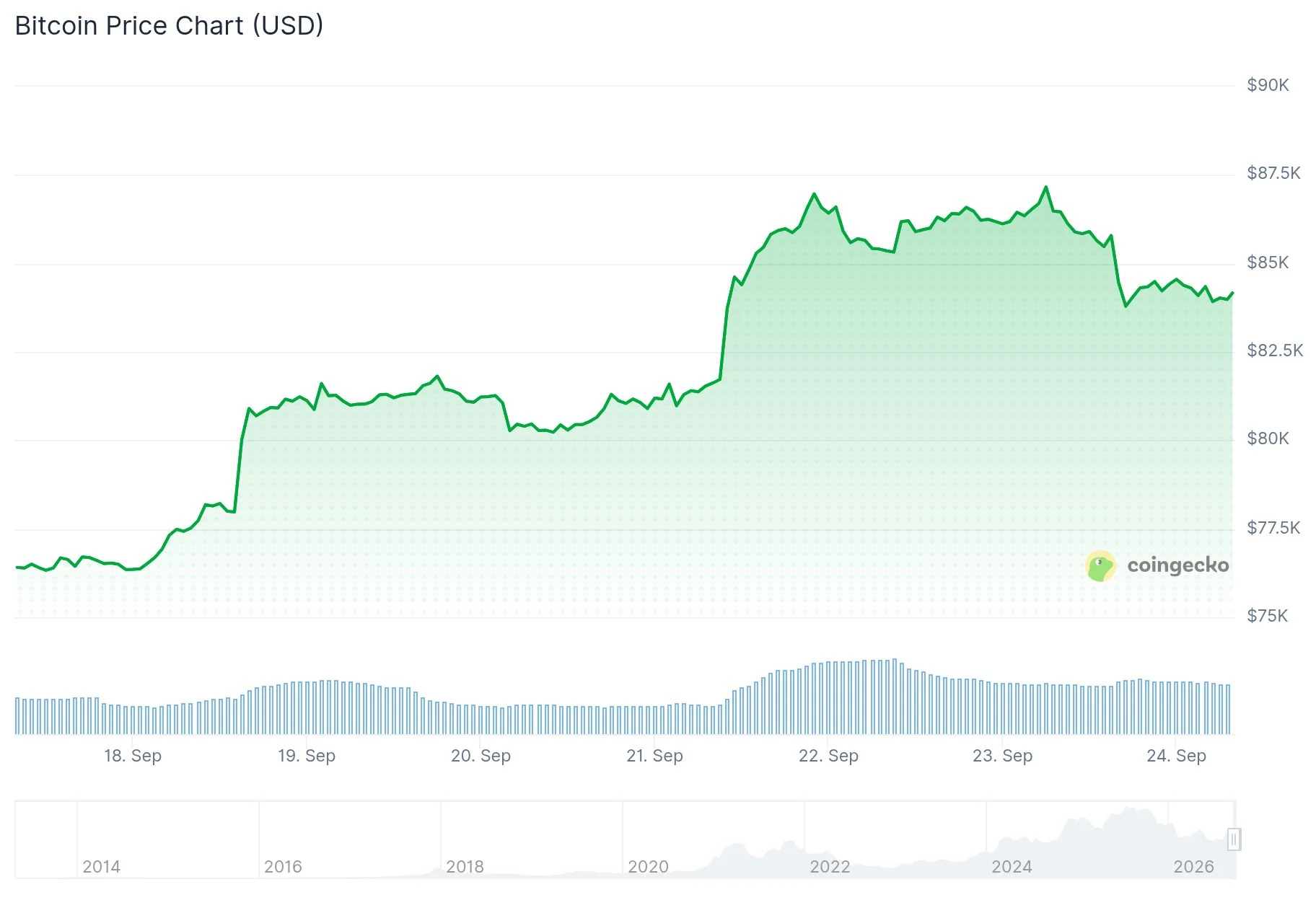
The cryptocurrency’s retreat coincided with U.S. Treasury yields climbing to levels not witnessed since 2007. The 10-year benchmark yield surged 15 basis points in one session to settle at 5.11%.
Among major digital assets, Dogecoin suffered the most severe losses, plummeting roughly 8% to trade just above the 9-cent threshold.
Factors Behind the Yield Rally
Multiple catalysts converged this week to drive borrowing costs higher. Energy markets emerged as a primary contributor to the movement.
Brent crude oil surged over 4%, approaching $104 per barrel. This rally halted a six-session decline that had previously provided relief to inflation-concerned market participants.

Economic data further amplified market anxiety. S&P Global’s preliminary survey indicated U.S. economic output expanded at its most rapid rate in more than half a decade.
The composite purchasing managers’ index climbed to 58.4, reaching its strongest reading since July 2021. Bitcoin’s most pronounced decline occurred immediately following the release of this economic indicator.
Subsequently, the U.S. Treasury Department auctioned $70 billion in five-year notes. The sale met lackluster demand, clearing at 5.033%—the highest auction yield recorded since 2006.
Investors demanded additional compensation to absorb the debt offering. This development indicated diminishing willingness to hold government securities at prevailing interest rates.
Broader Cryptocurrency Performance
Elevated yields diminish the appeal of non-yielding assets. Bitcoin and numerous other digital currencies fall squarely into this investment class.
ZEC, XRP, and HYPE each registered declines ranging from 5% to 6%. Ether, Solana, and BNB retreated between 2% and 3%.
XRP extended its losses as trading progressed, ultimately falling 7.5% to $1.5052. Cardano decreased 7.1%, while the $TRUMP memecoin tumbled 11.4%.
Bitcoin currently trades beneath the $85,000 threshold. Ledn co-founder Mauricio Di Bartolomeo highlighted substantial call option positions concentrated at that price point in advance of Friday’s approximately $14 billion options expiration on Deribit.
The Treasury yield phenomenon extended beyond American borders. Japanese 10-year government bond yields also reached a three-decade peak on Thursday.
Market expectations for additional rate increases intensified following last week’s 25 basis point Federal Reserve rate hike. The central bank reaffirmed its commitment to achieving 2% inflation, which traders interpreted as signaling potential future tightening.
The resurgence in oil prices stemmed from remarks by Iranian President Masoud Pezeshkian. During his Wednesday address to the United Nations General Assembly in New York, he delivered sharp criticism of the United States and President Donald Trump.
Notwithstanding Thursday’s decline, bitcoin maintains positive performance for September. Market participants had responded favorably to enhanced regulatory support from U.S. authorities earlier this month.
The Securities and Exchange Commission’s decision to authorize a five-year exemption for blockchain-based equity offerings triggered widespread gains throughout alternative cryptocurrencies. This optimism persisted despite Congressional failure to advance the Clarity Act.
Get 3 Free Stock Ebooks
Discover top-performing stocks in AI, Crypto, and Technology with expert analysis.
- Top 10 AI Stocks - Leading AI companies
- Top 10 Crypto Stocks - Blockchain leaders
- Top 10 Tech Stocks - Tech giants



