


Key Takeaways
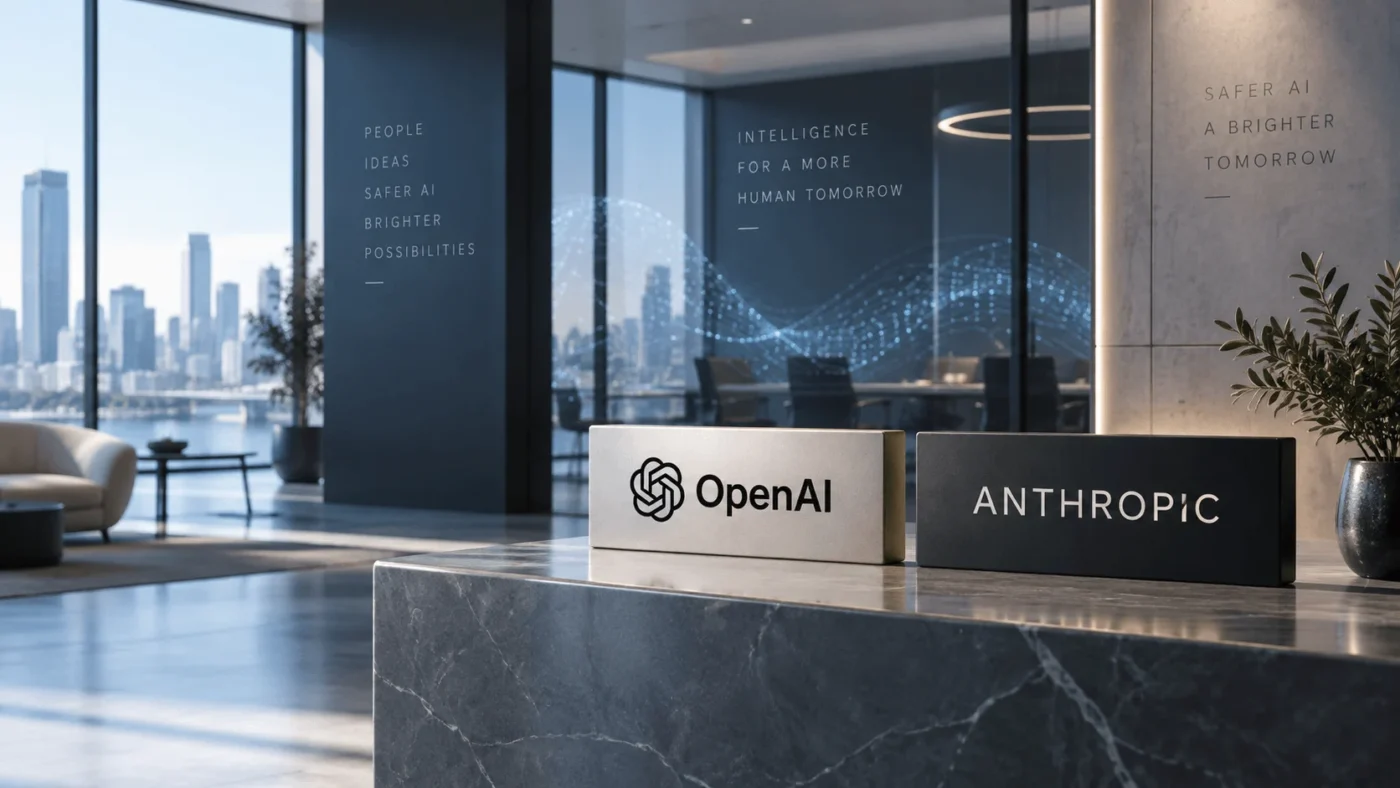
- The rivalry between Anthropic and OpenAI is reaching new heights as both firms vie for enterprise customers while preparing for possible stock market debuts.
- Since its September debut, OpenAI’s GPT-6 Astra has made significant inroads with business clients, putting Claude under increased competitive strain.
- By late July, Anthropic’s annualized revenue run rate hit approximately $65 billion, outpacing OpenAI’s figure of over $40 billion.
- As it contemplates going public, Anthropic must reconcile investments in cutting-edge models with shareholder expectations for better margins.
- The emergence of open-source and open-weight alternatives threatens to reshape the competitive landscape by offering more affordable options to enterprises.
The battle between Anthropic and OpenAI for enterprise artificial intelligence dominance is reaching a critical juncture. As both organizations position themselves for potential public offerings, Anthropic faces strategic decisions about model release schedules while managing escalating infrastructure costs, safety protocols and demands for improved financial performance.
This strategic tension emerges as OpenAI builds substantial momentum following its GPT-6 Astra rollout earlier this month. Anthropic, now advancing toward a possible stock market listing, confronts mounting challenges in preserving its stronghold within enterprise AI deployments.
GPT-6 Astra Delivers Market Momentum for OpenAI
On September 3, OpenAI unveiled GPT-6 Astra, showcasing enhanced capabilities across computer interaction, software development, security operations and professional workflows. The system has subsequently proliferated throughout ChatGPT subscription tiers, the OpenAI API infrastructure and corporate distribution networks.
The model has resonated strongly with both development teams and corporate buyers. Industry data referenced in recent analyses indicates that GPT-6 Astra propelled OpenAI to claim the leading position on OpenRouter for the first time in over thirty months.
Enterprise expenditure patterns reflect this momentum shift. According to Ramp’s enterprise spending analytics, OpenAI commands approximately 13% of corporate AI budgets, while Anthropic’s Claude captures roughly 8%.
This disparity has caught the attention of financial analysts assessing Anthropic’s valuation ahead of its anticipated public debut. The central question revolves around whether OpenAI can continue capturing enterprise market share from a competitor that has established formidable corporate relationships.

Revenue Leadership Remains With Anthropic
Notwithstanding OpenAI’s recent competitive advances, Anthropic maintains superiority in a critical financial metric. By July’s conclusion, its annualized revenue run rate approached $65 billion, climbing dramatically from approximately $9 billion at 2025’s end.
OpenAI’s corresponding annualized revenue run rate exceeded $40 billion during the identical timeframe. Industry sources suggest Anthropic is projecting revenue between $190 billion and $200 billion for 2028 as investment banks construct valuation models for the prospective IPO.
Certain institutional investors reportedly view Anthropic’s entrenched enterprise partnerships as insulation against rapid market share erosion. Major corporations typically require substantial time to migrate AI infrastructure once systems become embedded within operational workflows.
Nevertheless, OpenAI has intensified its enterprise focus. CFO Sarah Friar recently disclosed that business revenue now surpasses consumer revenue, underscoring OpenAI’s strategic pivot toward durable corporate agreements.
Public Market Expectations Create Strategic Complications
Anthropic must now evaluate the financial burden of accelerating model development against investor demands for demonstrable profitability. Elevated interest rate environments have sharpened investor scrutiny regarding when high-growth AI enterprises can convert revenue expansion into consistent earnings.
This dynamic creates tension between sustaining technological superiority and managing operational expenditures. Developing and deploying frontier AI capabilities demands massive investments in computational resources, research personnel and comprehensive safety validation.
Anthropic’s challenge intensifies given its vocal commitment to AI safety principles. CEO Dario Amodei recently advocated for more measured advancement of frontier AI systems, while the organization continues assessing future product launches.
According to market intelligence, Anthropic is evaluating whether to postpone its IPO timeline, potentially allowing leadership greater latitude regarding product release schedules. A delayed public offering would afford additional runway for aligning model deployments with capital market strategy.
Open-Source Movement Presents Broader Competitive Risk
The most consequential competitive pressure may ultimately originate beyond the Anthropic-OpenAI duopoly. Open-source and open-weight frameworks are providing enterprises with alternatives to exclusive dependence on major commercial providers.
These cost-effective options could compress token pricing and profit margins throughout the AI sector. Corporations may increasingly develop proprietary infrastructure rather than purchasing complete AI solutions from OpenAI or Anthropic.
Currently, Anthropic commands the revenue advantage while OpenAI gains traction in enterprise adoption metrics. As both organizations pursue identical corporate clientele, their forthcoming model releases and capacity to transform AI demand into profitable operations will face intense scrutiny.
Get 3 Free Stock Ebooks
Discover top-performing stocks in AI, Crypto, and Technology with expert analysis.
- Top 10 AI Stocks - Leading AI companies
- Top 10 Crypto Stocks - Blockchain leaders
- Top 10 Tech Stocks - Tech giants



