



Key Highlights
- BTC declined 0.8% to reach $78,299 amid heightened U.S.-Iran conflict
- Brent crude oil jumped beyond $101 per barrel, raising inflation concerns
- U.S. 10-year Treasury yields reached a three-year peak this week
- Japanese yen strengthened to its best position versus the dollar since February
- Large Bitcoin holder positions remained unchanged at 5.23 million BTC before CPI and FOMC releases
Bitcoin experienced further losses on Thursday, with prices settling at $78,299 as a combination of Middle East conflict, climbing bond yields, and concerns over yen carry-trade unwinding kept market participants cautious.
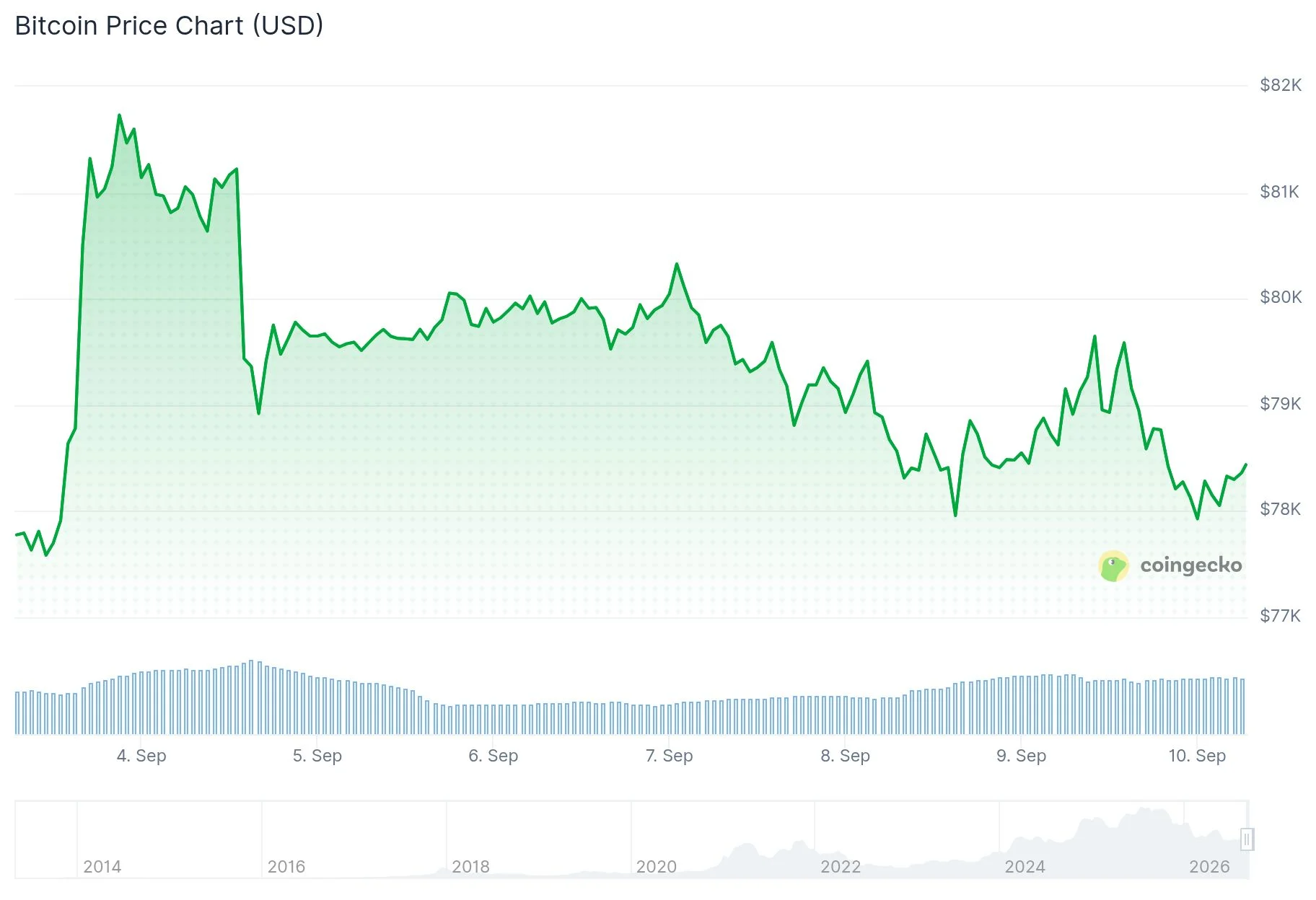
The decline followed an escalation in U.S.-Iran confrontations. Tehran announced attacks on 10 vessels in the vicinity of the Strait of Hormuz. Washington retaliated by destroying five Iranian oil tankers. This military exchange unsettled financial markets and triggered a significant spike in crude oil valuations.
Brent crude surged past the $101 per barrel threshold for the first time since the end of July. WTI similarly advanced, crossing the $96 mark. Elevated energy prices amplify inflation worries, which subsequently affect interest rate projections.
U.S. Treasury yields on 10-year bonds touched a three-year high following a Treasury Department buyback program for longer-maturity bonds that failed to attract sufficient interest. Elevated yields diminish the appeal of speculative holdings such as Bitcoin for market participants.
Historically, Bitcoin has shown weak performance during periods when the Federal Reserve implements rate increases, and current macroeconomic conditions are reviving worries about potential monetary tightening.

Yen Carry Trade Creates Additional Market Strain
The Japanese currency introduced another dimension of market stress. The yen reached its most robust level relative to the dollar since February, currently valued at $0.0065, representing a 6.5% gain since August.
Unprecedented short positions on the yen — exceeding 5 trillion yen — expose these market participants to substantial risk should the yen continue appreciating. Charu Chanana, chief investment strategist at Saxo, informed Reuters that a swift reversal could impact liquidity dynamics throughout financial markets, cryptocurrency included.
Scott Bessent, U.S. Treasury Secretary, suggested this week that additional yen market intervention might occur. During remarks at Southern Methodist University, he stated: “When we intervene with the Japanese yen, I have pretty good insight into what the Bank of Japan is going to do… I have asymmetric information. I am the house now.”
Market observers anticipate the Bank of Japan will implement a 0.25% rate increase at its September 28 policy meeting, which may hasten carry-trade position liquidation.
Cryptocurrency Market Watchers Weigh In
Cryptocurrency analyst Ali Charts observed on X that Bitcoin holdings among large investors have remained stable at approximately 5.23 million BTC throughout the past week. He indicated that substantial holders seem to be holding back before the forthcoming CPI data release and FOMC gathering before taking further action.
Market analyst Ted Pillows highlighted that Bitcoin recently formed a golden cross pattern on the daily timeframe, though he cautioned that spot market demand is weakening. He emphasized that a weekly closing price exceeding $83,000 would be necessary to establish conditions for a potential rally toward the $100,000 milestone.
Bitcoin is presently down approximately 0.4% for the trading session and has been unable to regain the $80,000 price threshold.
Get 3 Free Stock Ebooks
Discover top-performing stocks in AI, Crypto, and Technology with expert analysis.
- Top 10 AI Stocks - Leading AI companies
- Top 10 Crypto Stocks - Blockchain leaders
- Top 10 Tech Stocks - Tech giants



