


Key Points
- Volvo Cars strengthens collaboration with Nvidia to deploy advanced autonomous vehicle technology.
- Integration includes Nvidia’s Hyperion architecture, Alpamayo AI software, and Halos safety systems.
- Technology rollout planned across electric, hybrid, and gasoline vehicle lineups.
- More than 650,000 developers worldwide have accessed Nvidia’s open-source Alpamayo platform.
- Deployment of next-generation supervised automated driving expected before 2030.
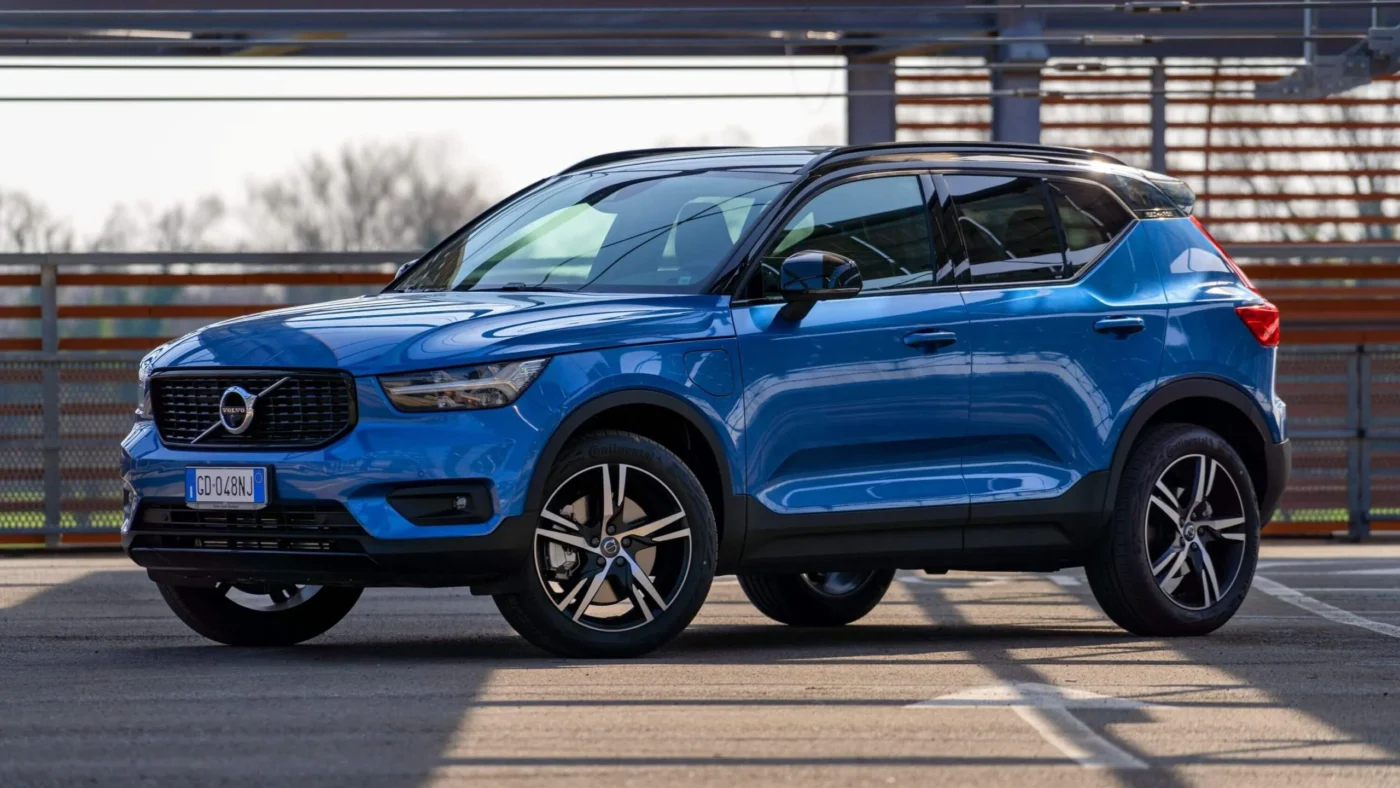
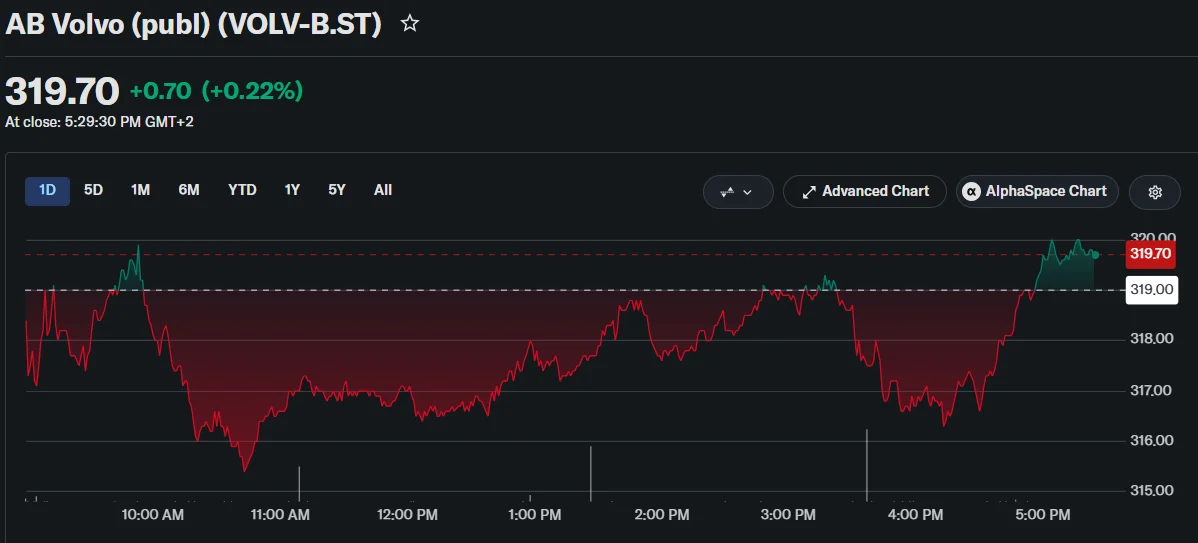
On Thursday, October 15, Volvo Cars revealed a strengthened collaboration with Nvidia focused on deploying sophisticated autonomous driving capabilities throughout its upcoming vehicle portfolio. Shares of separately listed AB Volvo (VOLV-B.ST) traded at SEK 319.70, reflecting an increase of SEK 0.70, or 0.22%, based on available data. The arrangement merges Nvidia’s artificial intelligence computing solutions with Volvo Cars’ established vehicle safety expertise to enhance automated navigation capabilities.
Nvidia’s Hyperion and Alpamayo Platforms Form Core of Volvo Integration
Volvo Cars will incorporate Nvidia’s Hyperion framework, Alpamayo autonomous driving software, and Halos safety infrastructure throughout its upcoming vehicle generation. Hyperion unifies sensor arrays and computational hardware to enable vehicles to interpret traffic patterns and roadway data. Alpamayo delivers artificial intelligence frameworks that facilitate driving decisions across varied road conditions.
Nvidia engineered Alpamayo as an integrated suite of AI algorithms, training data repositories, simulation environments, and development tools. The system functions in parallel with traditional driving software utilizing machine learning, camera networks, and radar arrays. This dual-technology strategy enables simultaneous data processing across multiple systems, promoting enhanced decision-making reliability.

According to Ali Kani, who leads Nvidia’s automotive division, the company maintains several parallel software systems working with diverse sensor configurations. This methodology employs independent systems to evaluate road scenarios and minimize reliance on singular software elements. Kani noted that Nvidia’s open-source Alpamayo software has accumulated more than 650,000 developer downloads globally.
Technology Deployment Extends Beyond Battery-Electric Vehicle Portfolio
Volvo Cars aims to broaden its autonomous driving capabilities beyond its current battery-electric offerings. The manufacturer also plans to support plug-in hybrid and traditional combustion-engine vehicles through an expanded software infrastructure. This strategic expansion demonstrates the company’s commitment to establishing unified technology frameworks across diverse powertrain configurations.
Volvo Cars currently employs Nvidia’s Orin computing processors throughout its battery-electric vehicle portfolio. These chips process data streams from cameras, radar units, and additional sensors to enable driver assistance capabilities. The enlarged partnership introduces supplementary computational power and software modules designed for more sophisticated automated driving operations.
Alwin Bakkenes, Volvo Cars’ software development leader, described the manufacturer’s evolution toward in-house integrated vehicle technology creation. Previously, the automaker depended on model-specific development initiatives and diverse technology vendors for individual vehicles. The current strategy unifies hardware components, software platforms, and safety engineering through a consolidated development framework.
Timeline Targets Pre-2030 Launch With Supervised Automation Features
Volvo Cars intends to launch the enhanced Nvidia platform through a new vehicle model before 2030. Company leadership has not disclosed the specific model designation, manufacturing timeline, or precise market introduction date. Initial deployment is expected to offer supervised automated driving capabilities, with human drivers maintaining ultimate operational responsibility.
The forthcoming system will utilize Nvidia’s Hyperion sensor and computing framework to analyze data across diverse driving environments. The Halos safety infrastructure will facilitate assessment of automated driving performance and system functionality. These technological components will enable the manufacturer to develop software addressing increasingly intricate roadway and traffic scenarios.
The collaboration also reinforces Volvo Cars’ comprehensive shift toward software-centric vehicle engineering and standardized technology platforms. Establishing uniform computing systems and sensor configurations could streamline future integration across electric, hybrid, and conventional powertrains. The partners have not disclosed commercial revenue projections, implementation expenditures, or financial estimates related to this expanded collaboration.
Get 3 Free Stock Ebooks
Discover top-performing stocks in AI, Crypto, and Technology with expert analysis.
- Top 10 AI Stocks - Leading AI companies
- Top 10 Crypto Stocks - Blockchain leaders
- Top 10 Tech Stocks - Tech giants



