


Key Takeaways
- Major US indices slipped modestly on Tuesday after early gains evaporated amid ongoing Iran uncertainty
- Negotiations between Washington and Tehran over Strait of Hormuz access remain gridlocked
- Brent crude maintained levels around $87 per barrel while WTI futures climbed 1.3% to reach $83.20
- Market participants anticipate Wednesday’s CPI inflation data as the critical catalyst, with increasing expectations for Fed tightening following last week’s employment figures
- After-hours earnings releases from CoreWeave and Super Micro Computer will shed light on AI infrastructure demand
Wall Street traded within a tight corridor on Tuesday as investors positioned themselves ahead of two pivotal developments: possible progress in reopening the Strait of Hormuz and the forthcoming Consumer Price Index reading scheduled for Wednesday.
The Dow Jones Industrial Average declined between 43 and 49 points, representing a loss of approximately 0.1%. The S&P 500 similarly retreated around 0.1%, while the Nasdaq Composite registered a steeper decline of about 0.3%.
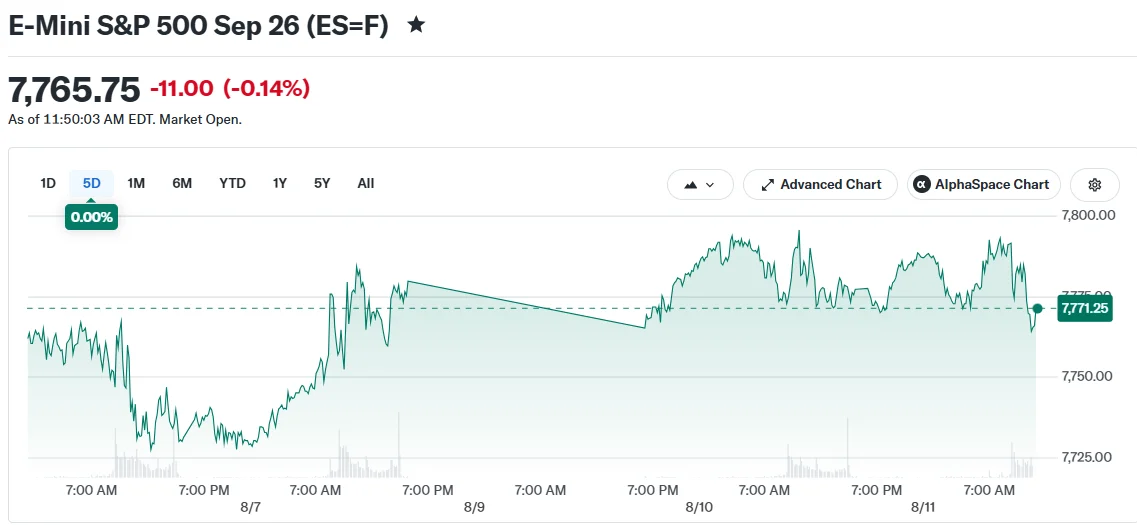
Following Friday’s record close at 7,757.64, the S&P 500 has lost upward momentum and requires a finish above that threshold to continue its historic rally.
According to Tom Essaye from Sevens Report Research, the market finds itself “at a little stop light,” requiring resolution on both the geopolitical situation with Iran and inflation data before establishing its next directional move.
Diplomatic Stalemate with Tehran Persists
Over the weekend, President Trump rejected Iran’s request for war reparations, indicating his preference for economic sanctions to achieve results. In an interview with Axios, he stated, “We are only semi-negotiating with them.”

Iran’s foreign minister Abbas Araghchi reinforced the standoff, declaring “no possibility of restarting negotiations” under present circumstances.
Oil markets experienced temporary optimism when Pakistan’s defense minister suggested the nations were “close to some sort of arrangement.” However, crude prices stayed elevated, with Brent maintaining its position near $87 per barrel.
The sustained elevation in energy costs is intensifying inflation worries in advance of Wednesday’s Consumer Price Index announcement.
Inflation Data and Fed Policy Expectations
Last Friday’s employment report underperformed forecasts, prompting traders to increase their wagers on a Federal Reserve interest rate increase in September instead of maintaining current policy.
In a Monday interview with Yahoo Finance, Cleveland Fed president Beth Hammack suggested that multiple rate hikes might be necessary to successfully control inflation pressures.
The 10-year Treasury yield edged down marginally to 4.69% during Tuesday’s session. Essaye cautioned that an unexpectedly high inflation reading could drive yields toward the 5% mark before week’s end, creating additional obstacles for equity markets.
Conversely, a more moderate inflation print would likely reinforce the Fed’s current policy stance and provide support for stock valuations.
AI Infrastructure Earnings Under Scrutiny
Recent capital raises by Intel and Nvidia have refocused attention on the expenses associated with expanding AI capabilities.
Tuesday’s after-market earnings announcements from CoreWeave and Super Micro Computer are anticipated to provide valuable insights into current demand trends within the AI hardware sector.
Market participants are paying particular attention to these financial results following an extended period of substantial capital investment by leading technology firms.
The direction of trading activity will predominantly hinge on Wednesday morning’s inflation disclosure.
Get 3 Free Stock Ebooks
Discover top-performing stocks in AI, Crypto, and Technology with expert analysis.
- Top 10 AI Stocks - Leading AI companies
- Top 10 Crypto Stocks - Blockchain leaders
- Top 10 Tech Stocks - Tech giants



