


Key Highlights
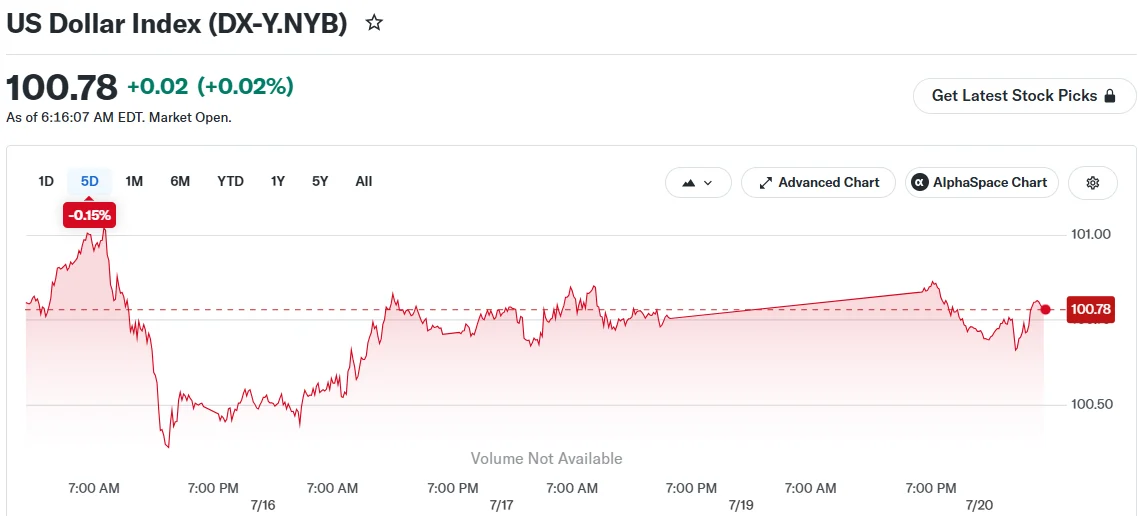
- The greenback traded flat in the 100.72–100.76 range amid heightened Middle East geopolitical concerns
- Military confrontations between the US and Iran entered their ninth consecutive night following ceasefire breakdown
- Sterling posted gains as Andy Burnham positioned to assume leadership at 10 Downing Street
- Fed funds futures indicate an 85.6% probability of unchanged rates at the upcoming July 29 policy meeting
- Fed official Beth Hammack cautioned that additional rate hikes remain possible if inflationary pressures persist
Currency markets exhibited muted activity on Monday as participants balanced escalating military tensions in the Persian Gulf against potential diplomatic overtures from Iranian authorities. The greenback maintained a tight trading range throughout the session.
The benchmark dollar index, tracking the US currency’s performance versus six major global currencies, hovered between 100.72 and 100.76. This represented a modest retreat following a three-session advance fueled by safe-haven demand amid regional instability.
Middle East Hostilities Persist Following Agreement Breakdown
American and Iranian forces engaged in their ninth straight evening of military exchanges. The renewed hostilities emerged after a temporary ceasefire arrangement, established approximately four weeks earlier, fell apart.
The military confrontation has concentrated around the strategically vital Strait of Hormuz, through which a substantial portion of worldwide petroleum exports transit. This disruption has contributed to upward pressure on energy markets and heightened inflation concerns among policymakers.
Brent crude momentarily surged past the $90 threshold before settling around $88.16 per barrel. Iranian officials subsequently indicated willingness to pursue diplomatic solutions aligned with their national objectives, which provided some relief to nervous markets.

According to Nick Rees, macro research director at Monex Europe, market participants have increasingly adapted to the prevailing risk environment. He projected that volatility would continue to diminish barring unexpected developments.
British Pound Strengthens on Leadership Transition
The pound sterling advanced 0.13% to reach $1.3470 as political transition unfolded with Andy Burnham poised to succeed Keir Starmer in the Prime Minister’s role. The Labour Party leadership change attracted considerable attention from foreign exchange participants.
Currency traders reacted favorably to indications that Home Secretary Shabana Mahmood would assume the Chancellor position. Market participants view her as a moderate voice who would likely pursue prudent fiscal management at the Treasury.
Chris Turner, global markets chief at ING, cautioned that Britain’s constrained fiscal circumstances could compel the incoming administration to consider revenue-raising measures to finance their policy agenda.
Meanwhile, the euro traded relatively unchanged at $1.1441. Market positioning reflects anticipation of Thursday’s European Central Bank gathering, where policymakers are widely expected to maintain the current 2.25% rate level.
Federal Reserve Policy Decision Takes Center Stage
Interest rate derivatives markets now reflect an 85.6% likelihood that the Federal Reserve will leave rates unchanged at its July 29 policy gathering. This probability has increased significantly from the 61.5% chance priced in just one month prior.
In remarks delivered Friday, Cleveland Federal Reserve Bank President Beth Hammack suggested that additional monetary tightening could become necessary should inflation prove more durable than anticipated. Her observations contribute to ongoing internal discussions as Chair Kevin Warsh approaches his second policy meeting.
The dollar experienced a modest 0.17% decline versus the Chinese yuan following China’s decision to maintain its benchmark lending rate unchanged for the fourteenth consecutive month.
Get 3 Free Stock Ebooks
Discover top-performing stocks in AI, Crypto, and Technology with expert analysis.
- Top 10 AI Stocks - Leading AI companies
- Top 10 Crypto Stocks - Blockchain leaders
- Top 10 Tech Stocks - Tech giants



