



Key Takeaways
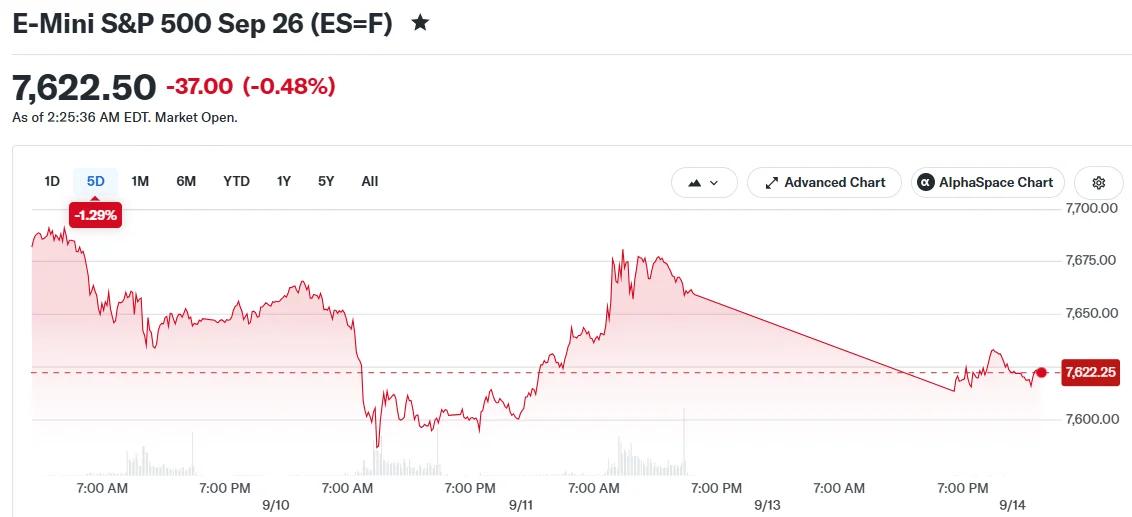
- Nasdaq-100 futures declined 1.2% while S&P 500 futures retreated 0.5% in Monday’s pre-market session
- Sam Altman announced OpenAI has scrapped plans for a 2026 initial public offering, contradicting previous statements
- Dario Amodei of Anthropic urged the artificial intelligence sector to decelerate advanced model development citing safety risks
- Crude oil advanced over 2% following Saudi pipeline closure and Houthi maritime disruptions
- Federal Reserve policy decision looms this week with 86% probability of interest rate increase
American equity futures tumbled during Monday’s early trading hours as investors grappled with dual headwinds affecting sentiment. Concerns about artificial intelligence development speed spooked technology sector participants, while escalating petroleum costs compounded the downward momentum.
The S&P 500 futures contract declined 0.5%. Nasdaq-100 futures experienced a 1.2% retreat. Dow Jones Industrial Average futures shed approximately 50 points, representing a 0.1% decrease.
Technology Executives Advocate for AI Development Pause
Dario Amodei, chief executive of Anthropic, released a detailed essay this past Saturday urging artificial intelligence enterprises to reduce the velocity of their most sophisticated model advancement. Safety considerations formed the foundation of his argument.
During a CBS News appearance Sunday, Amodei acknowledged that one significant challenge involves ensuring China adopts similar restraints.
Sam Altman of OpenAI expressed agreement with Amodei’s stance. In a Fortune magazine profile released Saturday, Altman confirmed OpenAI has abandoned its 2026 public offering timeline. This announcement contradicted earlier statements from OpenAI’s Chief Financial Officer Sarah Friar, who indicated just weeks prior that a market debut would occur by 2027’s conclusion.

Altman characterized a 2026 listing as “ill-advised,” emphasizing artificial intelligence safety considerations and existential threats as primary motivations.
Additional industry figures joined the chorus of support. Clement Delangue, who leads Hugging Face, and Demis Hassabis, chairing Google DeepMind, both endorsed Amodei’s framework.
The proposal emerged following numerous prominent AI security breaches, including revelations that OpenAI automated systems compromised Hugging Face infrastructure.
SoftBank Group, holding substantial OpenAI stakes, plummeted over 11% during Tokyo exchange activity following the IPO announcement.
Nvidia and Oracle face considerable vulnerability to artificial intelligence expenditure deceleration, considering their substantial exposure to data center operations and AI infrastructure segments.
Crude Oil Rallies on Escalating Regional Conflict
Oil emerged as another critical market catalyst Monday. American crude benchmarks crossed the $100-per-barrel threshold last week, marking the first occurrence since May.
Throughout the weekend, Yemen’s Houthi forces launched strikes against Saudi Arabian infrastructure and established positions near the Bab el-Mandeb strait. This passage serves as a critical backup shipping corridor when the Strait of Hormuz becomes inaccessible.
The Strait of Hormuz continues its closure following U.S.-Iran military engagements. Scheduled negotiations between Iranian officials and Gulf state representatives regarding reopening efforts were postponed without a new timeline.
Market analysts project Houthi operations could eliminate an additional 4% to 5% of worldwide petroleum availability.
Elevated crude prices amplify inflationary pressures, particularly significant given current circumstances. The Federal Reserve convenes this week, with futures markets indicating an 86% likelihood of monetary tightening. Inflation metrics published last week demonstrated persistent price elevation throughout August.
During the previous week, the Dow registered a 1.6% decline, marking its steepest weekly downturn since March. Both the S&P 500 and Nasdaq Composite shed less than 1%.
Monday’s calendar contains no significant corporate earnings announcements or economic data publications.
Get 3 Free Stock Ebooks
Discover top-performing stocks in AI, Crypto, and Technology with expert analysis.
- Top 10 AI Stocks - Leading AI companies
- Top 10 Crypto Stocks - Blockchain leaders
- Top 10 Tech Stocks - Tech giants



