


TLDR
- Futures for the S&P 500 hovered around unchanged following three consecutive weeks of gains
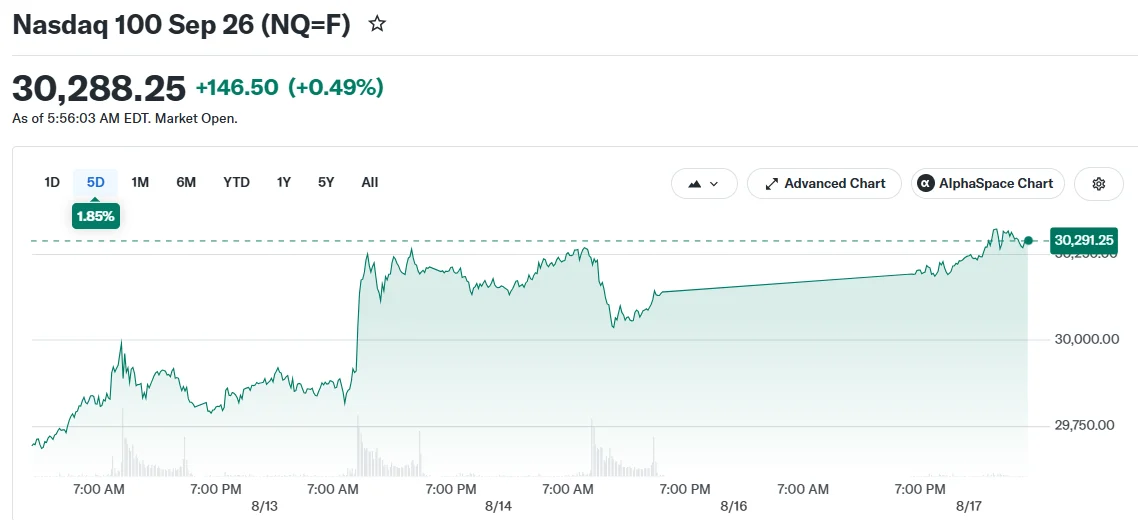
- Nasdaq 100 contracts advanced 0.5% amid renewed technology sector interest
- Major retailers including Walmart, Target, Lowe’s, and Home Depot scheduled to release quarterly results
- Market pricing shows probability of September Fed rate increase dropping below 33%
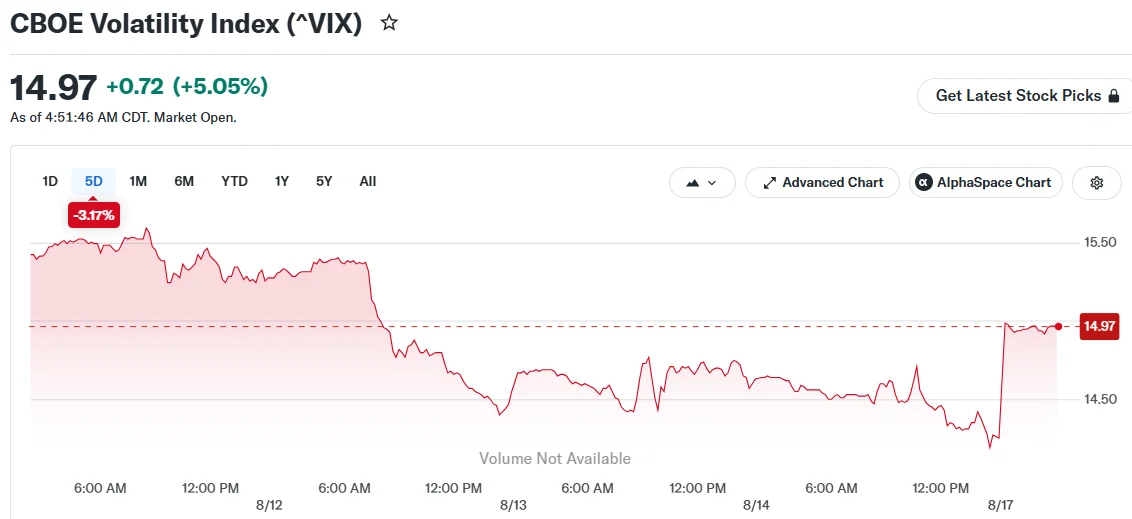
- Volatility index VIX touched its 2026 floor on Friday’s session
U.S. equity futures displayed minimal activity during Monday’s pre-market session as traders prepared for a week centered on retail sector earnings and the release of Federal Reserve policy meeting minutes.
Contracts tied to the S&P 500 hovered near unchanged levels following the benchmark’s third straight week of positive performance. Nasdaq 100 futures advanced 0.5% as market participants rotated into technology equities. Futures for the Dow Jones Industrial Average declined approximately 72 points, representing a 0.1% decrease.
Major Retail Reports Take Center Stage
This week’s primary market drivers will be quarterly earnings announcements from leading retail chains. Walmart, Target, Lowe’s, and Home Depot are scheduled to unveil their financial performance.
These financial disclosures will provide market participants with critical insights into consumer spending patterns throughout the back-to-school period. Retail sector results typically serve as an important barometer for overall economic momentum.

Market analysts will scrutinize retailer commentary regarding pricing strategies, consumer demand patterns, and store traffic levels. Unexpected results could trigger movement in individual securities and create broader market implications.
Minutes from the most recent Federal Open Market Committee gathering are scheduled for release on Wednesday. Market participants will analyze the document thoroughly seeking indications about the central bank’s future interest rate trajectory.
Trading activity reflects diminished expectations for a September rate adjustment. Current market pricing indicates the probability of a rate hike at the Fed’s Jackson Hole gathering has fallen to under one-third.
Both consumer price and producer price inflation metrics showed moderation during July. These figures helped alleviate worries about additional rate increases and supported the S&P 500’s recent upward momentum.
Volatility Gauge Reaches 2026 Bottom as Markets Remain Tranquil
The Cboe Volatility Index, commonly referred to as the VIX, fell to its 2026 low during Friday’s trading session. This development indicates market participants aren’t anticipating significant market disruption in the immediate future.
Continuing geopolitical tensions in the Middle East region have failed to generate substantial market anxiety. Despite a ceasefire agreement between the U.S. and Iran scheduled to lapse on Monday, crude oil prices continued their downward trajectory during early Monday trading.
West Texas Intermediate crude contracts declined 0.3% to approximately $82.19 per barrel. Brent crude, the global pricing benchmark, ticked higher to $88 per barrel.
The yield on 10-year Treasury notes decreased 2 basis points to 4.68% during Monday’s session. The U.S. dollar index weakened 0.3% versus a basket of peer currencies.
Financial conditions have experienced modest tightening in recent sessions, with yields on both 10-year and 30-year Treasury securities climbing as the weekend approached.
Market observers anticipate continued stability until Nvidia delivers its quarterly earnings report next Wednesday, which represents the next potentially significant market-moving event.
In the interim, investors remain focused on retail sector performance and Federal Reserve communications for potential changes in the economic outlook.
Get 3 Free Stock Ebooks
Discover top-performing stocks in AI, Crypto, and Technology with expert analysis.
- Top 10 AI Stocks - Leading AI companies
- Top 10 Crypto Stocks - Blockchain leaders
- Top 10 Tech Stocks - Tech giants



