


TLDR
- Nasdaq surged 5% for the week while the S&P 500 climbed nearly 3.5%
- July payrolls showed a loss of 23,000 jobs versus expectations of an 80,000 gain
- Jobless rate edged down to 4.1% from 4.2%
- Probability of a Fed rate increase in September dropped to 42% from 55%
- Market focus pivots to July inflation data scheduled for August 12
Wall Street concluded Friday’s session in positive territory, marking the strongest weekly performance since April, as disappointing employment figures reduced concerns about additional Federal Reserve monetary tightening.
The Dow Jones Industrial Average advanced 151 points, representing a 0.3% increase. The S&P 500 climbed 0.6%, while the Nasdaq posted a 1.3% gain during Friday’s trading.
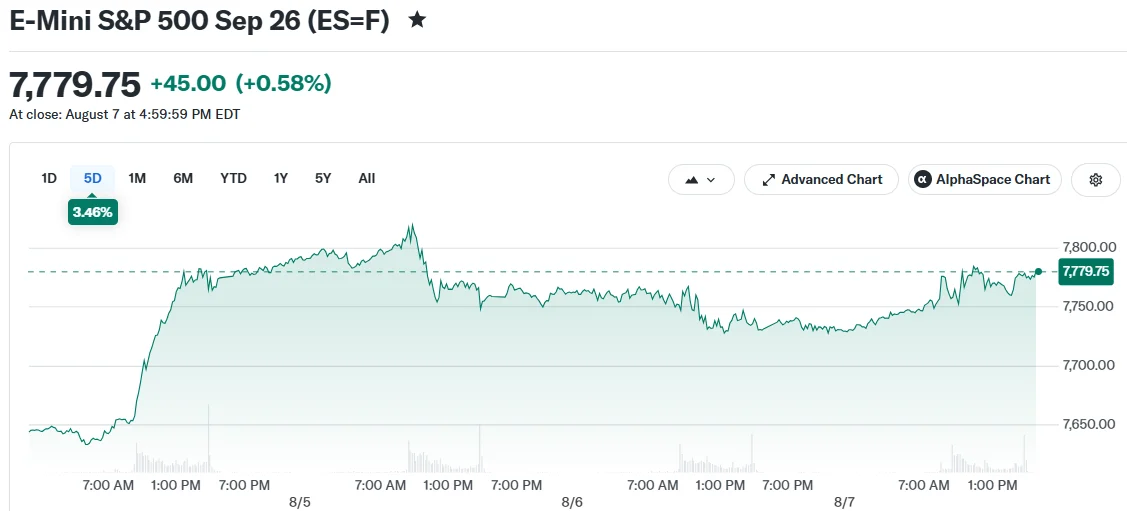
Weekly performance showed even more impressive numbers. The Nasdaq registered a 5% surge, and the S&P 500 advanced nearly 3.5%. Each of the three primary indexes recorded positive weekly returns.
The driving force behind the rally was July’s employment report, published Friday morning by the Labor Department. The data revealed the US economy shed 23,000 nonfarm payroll positions last month, significantly below the consensus forecast of 80,000 new jobs.
The jobless rate declined modestly to 4.1% from 4.2%, a marginal shift that barely altered the broader narrative of labor market cooling.

Treasury Markets Surge Following Weak Employment Figures
Fixed-income markets responded swiftly to the employment data. The 2-year Treasury note yield tumbled 4.2% during the week, marking its steepest weekly decline since June. The 10-year yield dropped beneath 4.66%.
Since bond prices and yields move inversely, declining yields signaled a treasury rally. Equity markets tracked this upward momentum.
David Rosenberg from Rosenberg Research characterized the report as “bond-bullish” and stated he couldn’t identify justification for a Fed rate increase in September or later months.
Data from the CME FedWatch Tool showed that the likelihood of a September rate hike declined to 42%, down from 55% prior to the jobs data release. Market participants now assign a 24.8% probability that rates will remain unchanged through year-end, up from 15.5% the previous day.
Inflation Data Takes Center Stage Next Week
Having digested the employment report, market participants are now shifting attention toward inflation metrics. The July Consumer Price Index is scheduled for release on August 12, with the Producer Price Index following on August 13.
Christopher Shaffer from Talaria Capital Management noted that the employment data places “100% of the focus on CPI.”
Corporate earnings season is approaching its conclusion, though quarterly results from Super Micro Computer, Applied Materials, and Cisco Systems remain pending and will attract investor scrutiny.
In energy markets, crude prices declined Friday amid ongoing ambiguity surrounding US-Iran relations. Iran and Oman continue negotiations toward an agreement to reopen the Strait of Hormuz, with reports suggesting Iran aims to restrict passage for US and Israeli vessels through the strategic waterway.
The market’s next significant hurdle arrives Wednesday, August 12, when inflation data becomes available.
Get 3 Free Stock Ebooks
Discover top-performing stocks in AI, Crypto, and Technology with expert analysis.
- Top 10 AI Stocks - Leading AI companies
- Top 10 Crypto Stocks - Blockchain leaders
- Top 10 Tech Stocks - Tech giants



