



Key Takeaways
- U.S. military operations targeted Iranian rocket sites in the Strait of Hormuz, driving crude oil higher by more than 2%
- Federal Reserve Chair Kevin Warsh delivered hawkish remarks at Jackson Hole, fueling rate increase speculation
- Market-implied odds of a Fed rate hike in September surged to 57-60%
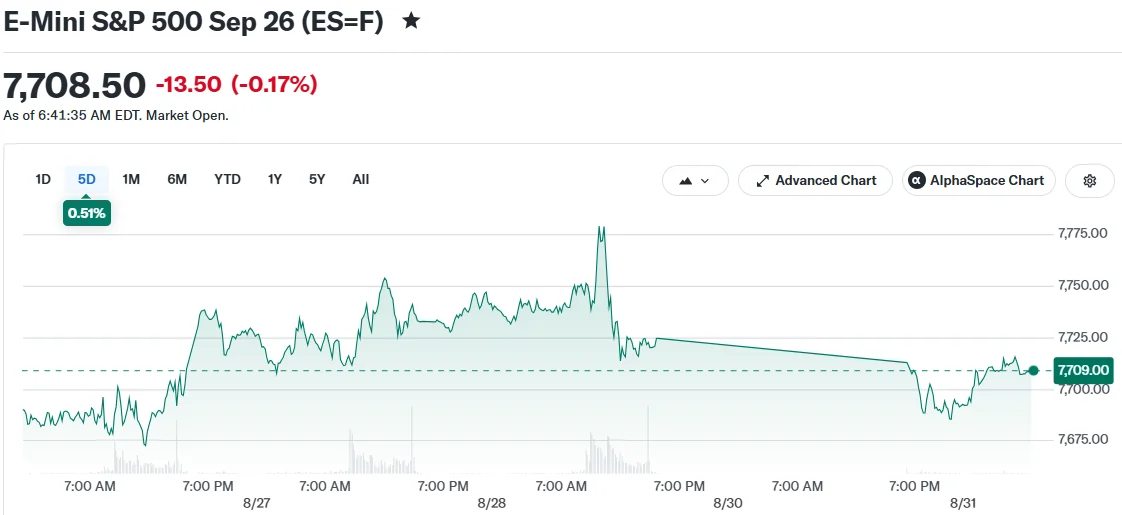
- Dow futures declined 85 points, while S&P 500 and Nasdaq futures both shed 0.2% before the opening bell
- Global bond yields surged to multi-year peaks in Japan and Germany amid rising inflation anxiety
Equity futures in the United States declined during Monday’s premarket session as heightened military tensions in the Middle East and increasingly hawkish Federal Reserve rhetoric combined to dampen investor sentiment on the final trading day of August.
Futures tied to the Dow Jones Industrial Average fell 85 points, representing a 0.2% decline. Both S&P 500 and Nasdaq 100 futures retreated by 0.2% in early trading.
Crude Oil Rallies Following U.S. Military Action Against Iran
American military forces conducted airstrikes on two Iranian rocket launching sites located on Larak Island within the strategically vital Strait of Hormuz on Sunday. Tehran retaliated with attacks on U.S. military positions in Jordan and asserted it had successfully struck a commercial tanker in the critical waterway.
President Trump claimed via social media that Iran’s primary oil export facility on Kharg Island was being “blown to smithereens,” although no official Pentagon confirmation of such operations was provided.
Brent crude advanced 2.3% to reach $90.17 per barrel. West Texas Intermediate gained 2.3% to trade at $85.32. The Strait of Hormuz serves as one of the world’s most critical petroleum shipping corridors, and any potential supply disruption typically triggers immediate oil market reactions.

Federal Reserve Rate Hike Expectations Surge Following Warsh Comments
Federal Reserve Chair Kevin Warsh delivered remarks at the annual Jackson Hole symposium on Friday, emphasizing that inflation risks continue to be underestimated by market participants. His statements effectively eliminated near-term rate cut expectations while introducing the possibility of additional monetary tightening.
Financial markets responded swiftly. The market-implied probability of a rate increase at the September Federal Open Market Committee meeting surged from approximately 40% one week earlier to between 57-60% by Monday morning, based on CME FedWatch data.
Barclays analysts now forecast the Federal Reserve will implement 25 basis point rate increases at both the September and December policy meetings. JPMorgan’s chief U.S. economist characterized the September meeting as “live” but continues to anticipate the initial hike will come in December.
Two-year Treasury yields remained elevated at 4.34% following a sharp 12 basis point spike on Friday. Japan’s 2-year government bond yield climbed to a 31-year high. Germany’s 2-year yield touched its highest level since July 2024.
Rising rate expectations generally lead to valuation compression, particularly impacting growth-oriented and technology stocks, which accounts for Monday morning’s selling pressure.
Notwithstanding Monday’s retreat, August has delivered positive returns overall. The Dow is up 2% for the month and tracking toward a fifth consecutive monthly advance. The S&P 500 has gained nearly 3% while the Nasdaq has posted approximately 4% in gains.
Critical employment data releases are scheduled this week, including JOLTS Job Openings data on Tuesday and the comprehensive U.S. Employment Report on Friday. Quarterly results from Broadcom and Dell Technologies will provide additional insight into artificial intelligence infrastructure spending momentum.
Gold retreated 0.3% to $4,437 per ounce but maintains an approximately 10% gain for August.
Get 3 Free Stock Ebooks
Discover top-performing stocks in AI, Crypto, and Technology with expert analysis.
- Top 10 AI Stocks - Leading AI companies
- Top 10 Crypto Stocks - Blockchain leaders
- Top 10 Tech Stocks - Tech giants



