


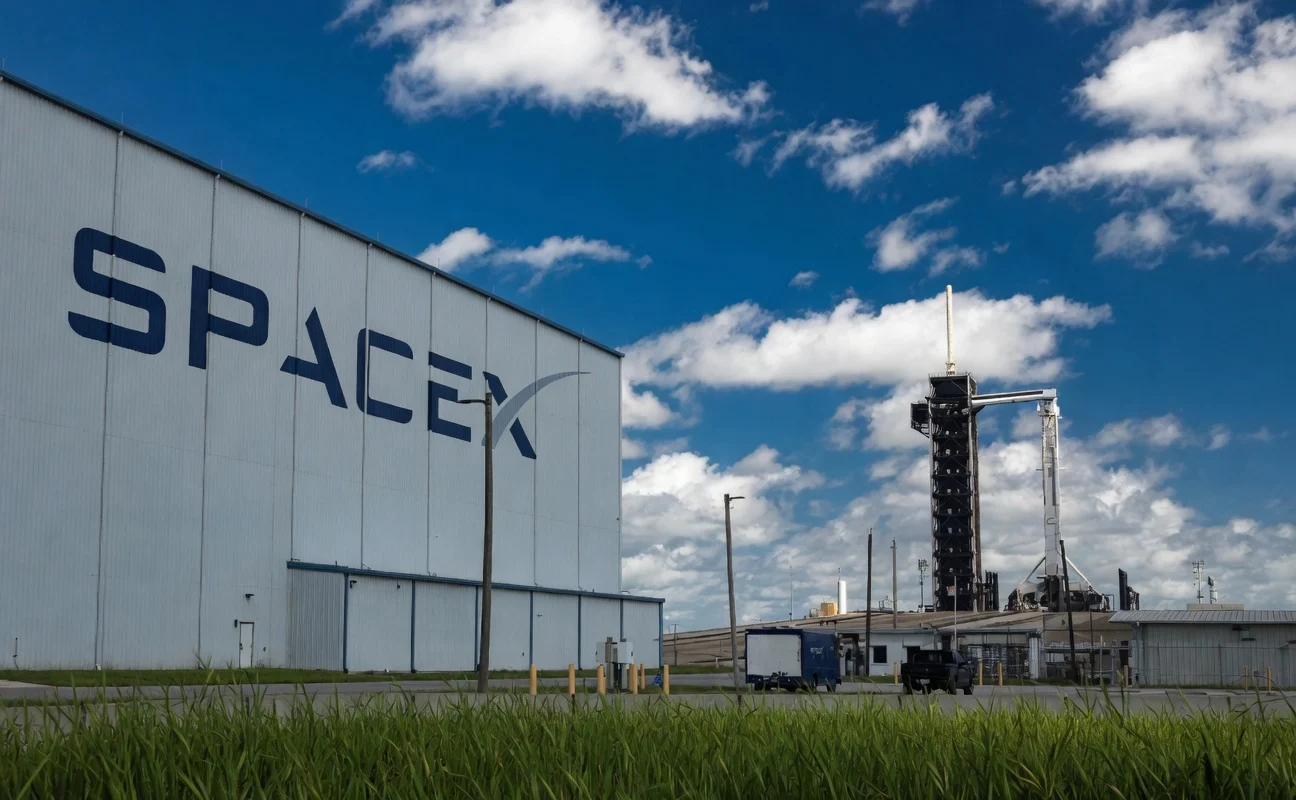
Key Highlights
- Shares of SpaceX reached $146.23 on Monday, gaining 4.5%, even as major indices declined approximately 0.5%
- Regulatory filings show Nvidia owns roughly $21 billion in SpaceX shares; Alphabet’s position is valued at approximately $94 billion, representing a 100x return since 2015
- Approximately 319 million insider shares become tradable on August 20, with nearly 4.9 billion shares unlocking before year-end
- UBS analysts maintain Buy with $210 target; Phillip Securities keeps Sell rating at $75
- The global space industry is projected by Goldman Sachs to expand to $1.8 trillion by 2035
Shares of SpaceX (SPCX) finished Monday’s session at $146.23, registering a 4.5% gain, following a series of regulatory filings that revealed substantial institutional ownership in Elon Musk’s aerospace company.
Space Exploration Technologies Corp., SPCX
While the S&P 500 and Dow Jones Industrial Average each declined approximately 0.5% during the session, SpaceX shares bucked the broader market trend.
According to SEC documentation, Nvidia’s holdings in SpaceX were valued at around $21 billion at the conclusion of Q2. The semiconductor giant owned 122.8 million Class A units as of the reporting period.
Alphabet’s stake dwarfed other institutional positions. The Google parent company’s SpaceX holdings were worth approximately $94 billion at the end of June, having grown from a $900 million initial investment made in 2015—representing over a 100-fold appreciation. Reuters analysis identified Alphabet as SpaceX’s largest institutional shareholder.

Harvard Management Co. disclosed holdings valued at $2.2 billion in SpaceX, constituting a substantial portion of its $4.3 billion publicly disclosed US equity holdings. Norway’s Government Pension Fund Global revealed a 0.05% ownership stake worth slightly more than $1.2 billion as of the second quarter’s end.
Additional institutional investors with disclosed SpaceX positions include Fidelity Investments, Saudi Arabia’s Public Investment Fund, and Hancock Prospecting, the mining company controlled by Australian billionaire Gina Rinehart.
Share Lock-Up Expirations Approaching
Trading dynamics in SPCX shares since going public have been influenced significantly by supply considerations. The stock fell beneath $105 during July, trading well under its $135 offering price, as market participants anticipated potential insider selling.
Approximately 319 million shares held by early-stage investors become freely tradable on August 20. An additional 700 million shares unlock during September, followed by more than 650 million in October. Cumulatively, about 4.9 billion shares—representing roughly 70% of shares not controlled by Elon Musk—will become available for trading by the end of the year.
The stock rebounded following SpaceX’s impressive second-quarter financial results released on August 4. The company posted Q2 revenue of $7.8 billion, marking a 92% year-over-year increase. Artificial intelligence-related revenue jumped 247%, including $1.6 billion from newly signed cloud infrastructure agreements. SPCX shares rose 23% during the earnings release week and continued upward with an additional 5% gain the subsequent week.
Wall Street Remains Divided
UBS has reaffirmed its Buy recommendation with a $210 price objective, citing SpaceX’s expanding cloud services operations and artificial intelligence model development capabilities. The investment bank projects US Starlink subscriber growth from approximately 3 million currently to 20 million by 2031.
Phillip Securities takes a contrarian stance. The firm has maintained its Sell recommendation with a $75 price target, highlighting concerns about revenue concentration. A single AI-focused customer represented 19.5% of second-quarter revenue, compared to under 10% one year prior. Additionally, the company recorded a $542 million operating loss in Q2.
Goldman Sachs projects the worldwide space economy will reach $1.8 trillion by 2035. Investment in the space sector exceeded $36 billion during Q1 2026 alone, establishing a new record.
SpaceX’s initial public offering generated more than $86 billion in proceeds, establishing it as the largest public equity offering in history.
Get 3 Free Stock Ebooks
Discover top-performing stocks in AI, Crypto, and Technology with expert analysis.
- Top 10 AI Stocks - Leading AI companies
- Top 10 Crypto Stocks - Blockchain leaders
- Top 10 Tech Stocks - Tech giants



