


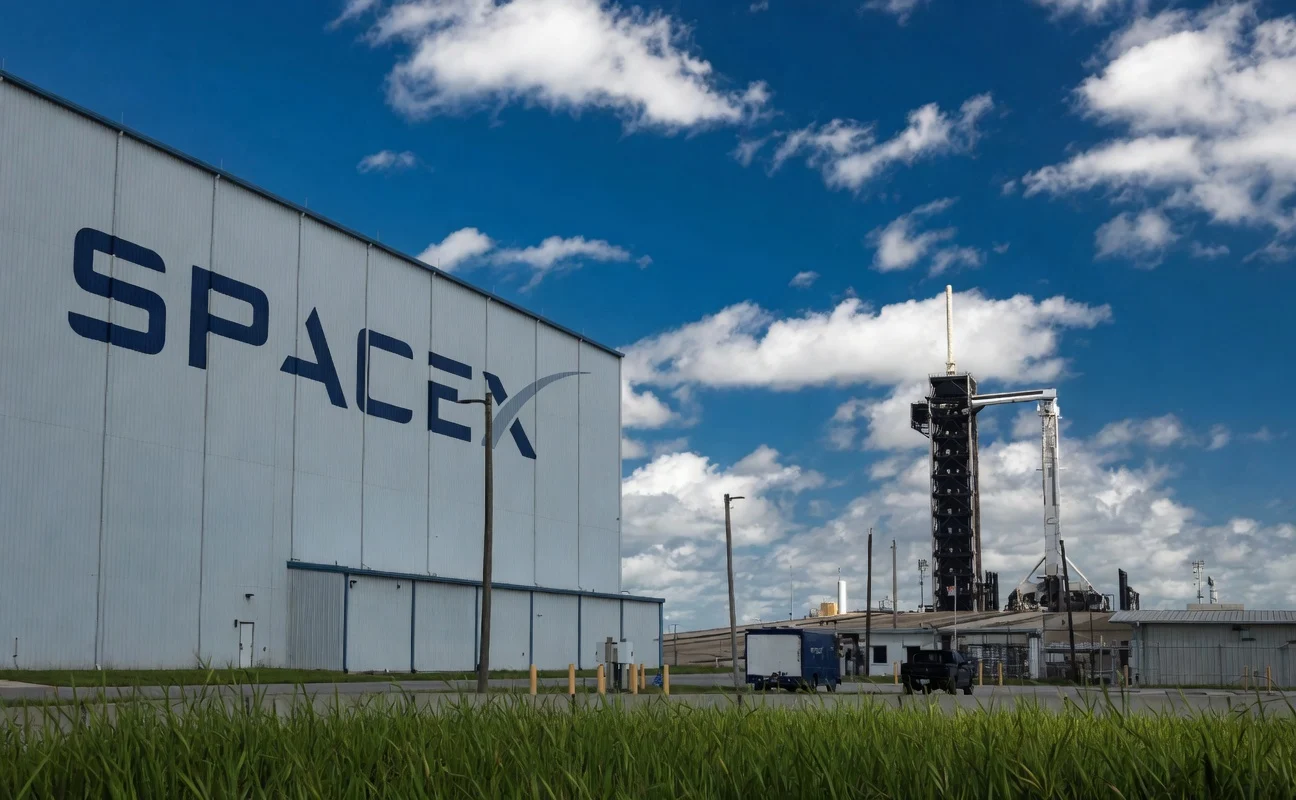
Key Takeaways
- SpaceX (SPCX) shares climbed 2.22% to $136.97 on Friday, though remaining approximately 15% below its June IPO level
- Bernstein maintained its Outperform designation and $248 target while highlighting significant technical constraints for satellite-based mobile service
- Physical distance between satellites and devices poses substantial challenges for data speeds, power consumption, and building penetration
- Analysts view an MVNO arrangement as the most practical route for SpaceX’s wireless ambitions
- Consensus rating stands at Moderate Buy with average analyst target of $228.59, suggesting potential upside of roughly 67%
Shares of SpaceX finished Friday’s session at $136.97, marking a 2.22% gain following Bernstein’s comprehensive analysis of the aerospace company’s wireless market strategy. The stock continues trading approximately 15% beneath its June initial public offering price.
Space Exploration Technologies Corp., SPCX
Analyst Douglas Harned at Bernstein reaffirmed his Outperform stance on SPCX alongside a $248 price objective. However, the research note expressed reservations about SpaceX’s timeline to introduce Starlink Mobile by late 2027, aiming to capture a portion of the U.S. wireless sector valued at over $300 billion annually.
The fundamental challenge comes down to basic physics. Traditional cellular towers operate just a few kilometers from user devices. Starlink satellites orbit several hundred kilometers above Earth’s surface. This vast separation diminishes signal strength and creates complications with upload performance, indoor service quality, and device battery consumption.
“Distance, however, remains a stubborn physics problem, even at low-earth-orbit,” Bernstein noted in the report.
Existing Starlink direct-to-cellular download performance hovers around 3 Mbps. By contrast, typical 5G performance reaches 173 Mbps on AT&T’s network, 214 Mbps on Verizon, and 309 Mbps on T-Mobile. Upload capabilities fall short of 1 Mbps.

This performance disparity presents significant challenges, particularly as video content continues dominating mobile data consumption patterns.
Next-Generation Satellites Offer Improvements, Not Parity
SpaceX’s forthcoming V2 Mobile satellite constellation should deliver enhanced performance. Bernstein anticipates these units will operate at altitudes between 325 and 350 kilometers, compared to the current fleet’s 525 to 535 kilometer range. Enhanced antenna systems represent another planned advancement.
Despite these upgrades, Bernstein doesn’t foresee satellite-exclusive service matching 5G capabilities for mainstream applications. The firm identifies text messaging, emergency communications, and rural connectivity as viable short-term use cases. Bandwidth-intensive activities like video conferencing remain impractical for the foreseeable future.
Bernstein characterized satellite connectivity as “a complementary layer of connectivity rather than a replacement for terrestrial wireless networks.”
Partnership Model Emerges as Preferred Strategy
The research outlined three potential approaches for SpaceX: constructing an independent network infrastructure, acquiring an established wireless operator, or establishing a partnership through an MVNO framework.
Independent network construction would necessitate securing nationwide spectrum licenses and deploying extensive tower infrastructure. Acquiring a major telecommunications company involves substantial regulatory obstacles and significant capital requirements. This positions the MVNO approach as the most viable alternative, allowing SpaceX to market mobile services under its brand while leveraging an existing carrier’s network infrastructure for primary connectivity.
“A partnership (i.e., MVNO) appears to be the most likely approach,” the analysts concluded.
Combining broadband and cellular services within a unified Starlink subscription could enhance customer appeal.
SpaceX reported Q2 2026 revenue reaching $7.8 billion, representing 92% year-over-year growth, with Starlink accounting for $4.3 billion of that figure. Deutsche Bank’s Edison Yu forecasted SpaceX could achieve a $100 billion annualized revenue rate by year-end 2026, partially fueled by its expanding Neocloud AI infrastructure operations.
Current Wall Street consensus assigns SPCX a Moderate Buy rating across 33 analyst assessments: 24 Buy recommendations, 6 Hold positions, and 3 Sell ratings. The mean price objective stands at $228.59.
Get 3 Free Stock Ebooks
Discover top-performing stocks in AI, Crypto, and Technology with expert analysis.
- Top 10 AI Stocks - Leading AI companies
- Top 10 Crypto Stocks - Blockchain leaders
- Top 10 Tech Stocks - Tech giants



