


TLDR
- Major indices extended their losing streak to three sessions, with the S&P 500 declining 0.69% amid climbing bond yields and semiconductor weakness
- The 30-year U.S. Treasury yield reached its highest level in 19 years; bond markets in Japan, Germany, and France also saw yields spike
- Chip manufacturers faced steep declines, with multiple stocks plummeting between 7% and 9%
- Investors await Federal Reserve meeting minutes from July for insights on future monetary policy direction
- Anthropic’s Q2 revenue more than doubled to $11.6 billion, marking the first time it exceeded OpenAI’s quarterly performance
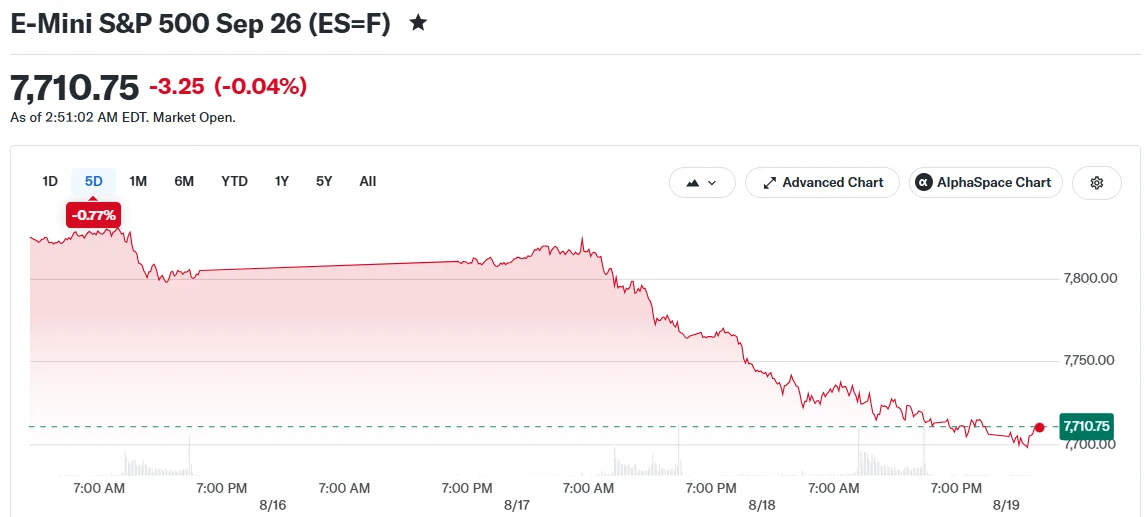
U.S. equity markets extended their downturn into a third consecutive session on Tuesday, pressured by climbing bond yields and significant weakness across semiconductor names. The S&P 500 declined 0.69%, closing at 7,691.76. The tech-heavy Nasdaq Composite slid 1.33% to finish at 26,289.71. The Dow Jones Industrial Average retreated 116 points, representing a 0.22% loss.
Chip stocks bore the brunt of Tuesday’s selling pressure. Western Digital tumbled 7%, while Sandisk plunged 9%. Marvell Technology and Seagate Technology similarly suffered losses of approximately 8% and 9%, respectively.
According to analysts from Vital Knowledge, the semiconductor sector weakness stemmed from a combination of profit-taking activity and apprehension regarding substantial debt issuance connected to the artificial intelligence expansion. Concerns about the long-term viability of AI infrastructure investments continue to mount.
Bond Yields Surge Globally
The 30-year Treasury yield in the United States reached a new 19-year peak on Tuesday. Japan’s 10-year government bond yield touched its highest mark in three decades. Germany’s 30-year bond yield advanced to levels not seen since 2011. France witnessed its 30-year government bond yield climb to the highest point since 2008.
Advancing oil prices compounded market pressures. U.S. crude futures gained 0.5% during Tuesday’s trading, settling at $84.94 per barrel. Deadlocked negotiations between Iran and the United States continued to fuel supply uncertainty.

President Trump stated on Tuesday that the United States is not currently participating in any diplomatic discussions with Iran and confirmed that the naval blockade “remains in full force and effect.”
Bill Fitzpatrick, who serves as portfolio manager at Logan Capital Management, noted that the market has been underestimating the bond yield challenge. He emphasized that the underlying forces pushing yields higher are unlikely to dissipate in the near term.
Fed Minutes and Earnings in Focus
U.S. stock futures showed little movement on Wednesday morning as investors awaited the publication of Federal Reserve minutes from the July monetary policy meeting. The central bank maintained interest rates unchanged during that session, though three committee members voted against the decision, preferring a 25-basis-point increase.
Fed Chair Kevin Warsh refrained from providing forward guidance, stating only that the Fed will “not waver” in its dedication to achieving the 2% inflation target.
Regarding corporate earnings, Target and Lowe’s are scheduled to release their quarterly results. Home Depot delivered second-quarter earnings that exceeded analyst expectations on Tuesday, benefiting from strong demand in repair and maintenance services.
Semiconductor manufacturer Analog Devices is also slated to report. The company’s third-quarter revenue projection surpassed estimates in May, suggesting continued robust AI-driven demand for its products.
President Trump announced a temporary three-day suspension of the planned 50% tariffs on Canadian imports, indicating that an agreement has been reached pending final documentation. The tariff measures were aimed at approximately $20 billion worth of Canadian goods.
In artificial intelligence sector developments, Anthropic disclosed $11.6 billion in second-quarter revenue, representing more than double its previous quarter’s performance and exceeding OpenAI for the first time. OpenAI reported $6.7 billion in revenue during the same timeframe, reflecting an 18% sequential increase that disappointed investor expectations. Anthropic additionally achieved a modest operating profit.
Get 3 Free Stock Ebooks
Discover top-performing stocks in AI, Crypto, and Technology with expert analysis.
- Top 10 AI Stocks - Leading AI companies
- Top 10 Crypto Stocks - Blockchain leaders
- Top 10 Tech Stocks - Tech giants



