


Key Highlights
- SNDK shares declined approximately 6% during Monday’s premarket session, reaching $1,542.06
- DeepSeek’s newly launched V4.1 Flash model demonstrated significant reductions in memory and storage requirements
- Memory sector companies including Micron, Western Digital, Seagate, and SK Hynix experienced losses ranging from 4% to 7%
- S&P 500 futures retreated 0.79% while Nasdaq futures plummeted 1.78% amid widespread tech sector weakness
- Wall Street maintains a consensus Buy recommendation on SNDK with a mean price objective of $2,190.50
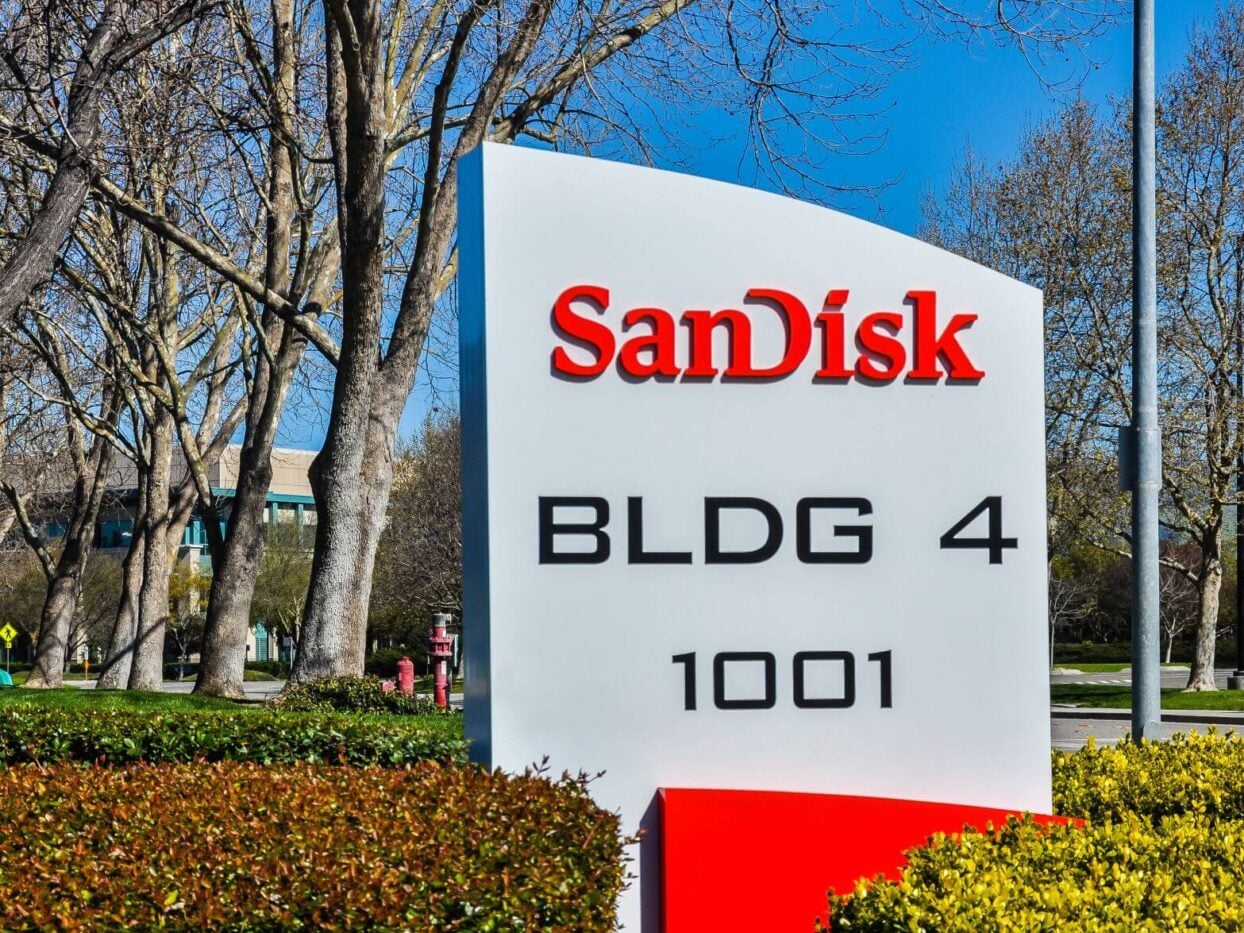
Shares of SanDisk experienced a steep decline of nearly 6% during Monday’s premarket hours, with the price falling to $1,542.06. The downturn reflected growing investor anxiety surrounding memory and storage companies amid mounting concerns over artificial intelligence hardware requirements.
The catalyst behind the sell-off was the unveiling of DeepSeek’s V4.1 Flash model. This innovative AI framework demonstrated the capability to operate using significantly reduced amounts of High Bandwidth Memory and solid-state storage compared to earlier iterations. The development sparked a critical concern among market participants: if AI developers embrace such efficiency-focused architectures en masse, what becomes of future NAND flash market demand?
This uncertainty ignited a sweeping sell-off throughout the entire memory sector, extending well beyond SanDisk’s individual situation.
Widespread Memory Sector Decline
The retreat wasn’t isolated to SanDisk. Micron Technology experienced a roughly 5% premarket decline. Both Western Digital and Seagate saw their shares drop over 4%. SK Hynix suffered the steepest losses, falling more than 7%. The coordinated pressure throughout the memory industry underscores that this represents a sector-wide challenge rather than an isolated company issue.

Given SanDisk’s elevated beta coefficient, the stock characteristically exhibits more pronounced movements compared to industry peers when sector sentiment shifts. This volatility characteristic magnified Monday’s downturn relative to competing memory names.
Broader market conditions compounded the pressure. Nasdaq futures plunged 1.78%, while S&P 500 futures declined 0.79%. Technology equities spearheaded the weakness as market participants reevaluated AI infrastructure expenditure following statements from prominent technology leaders advocating for a measured approach to AI advancement due to safety considerations.
Chart Analysis and Wall Street Perspective
Examining the technical landscape, SanDisk currently trades approximately 3.5% beneath its 20-day simple moving average of $1,602.13 and marginally under its 100-day SMA positioned at $1,555.75. However, the stock maintains substantial distance above its 200-day SMA of $1,033.67, which remains 49.6% below present levels. While the extended uptrend persists, short-term price momentum has weakened.
The Relative Strength Index registers at 52.52, representing neutral territory that fails to provide a decisive advantage for either bullish or bearish traders at this juncture.
Critical resistance awaits near the $1,696.50 level. Should selling pressure intensify, traders should monitor support around $1,416.50.
From an analyst perspective, bullish sentiment prevails. Wall Street’s consensus recommendation stands at Buy with an average price objective of $2,190.50. Mizuho maintained its Outperform stance last August while reducing its target to $1,875. RBC Capital elevated its objective to $1,600 while preserving a Sector Perform rating. Wells Fargo increased its target to $1,550 accompanied by an Equal-Weight designation.
Benzinga assigns SNDK a momentum score of 99.9, indicating robust longer-term performance, though its Value score of 11.12 suggests the stock carries premium valuation oriented toward growth expectations rather than value characteristics.
Monday’s retreat pushes SNDK closer to intermediate technical support levels following an impressive rally during the year’s earlier months. Prior to the session, the stock had been commanding a nearly 50% premium above its 200-day moving average.
Get 3 Free Stock Ebooks
Discover top-performing stocks in AI, Crypto, and Technology with expert analysis.
- Top 10 AI Stocks - Leading AI companies
- Top 10 Crypto Stocks - Blockchain leaders
- Top 10 Tech Stocks - Tech giants



