


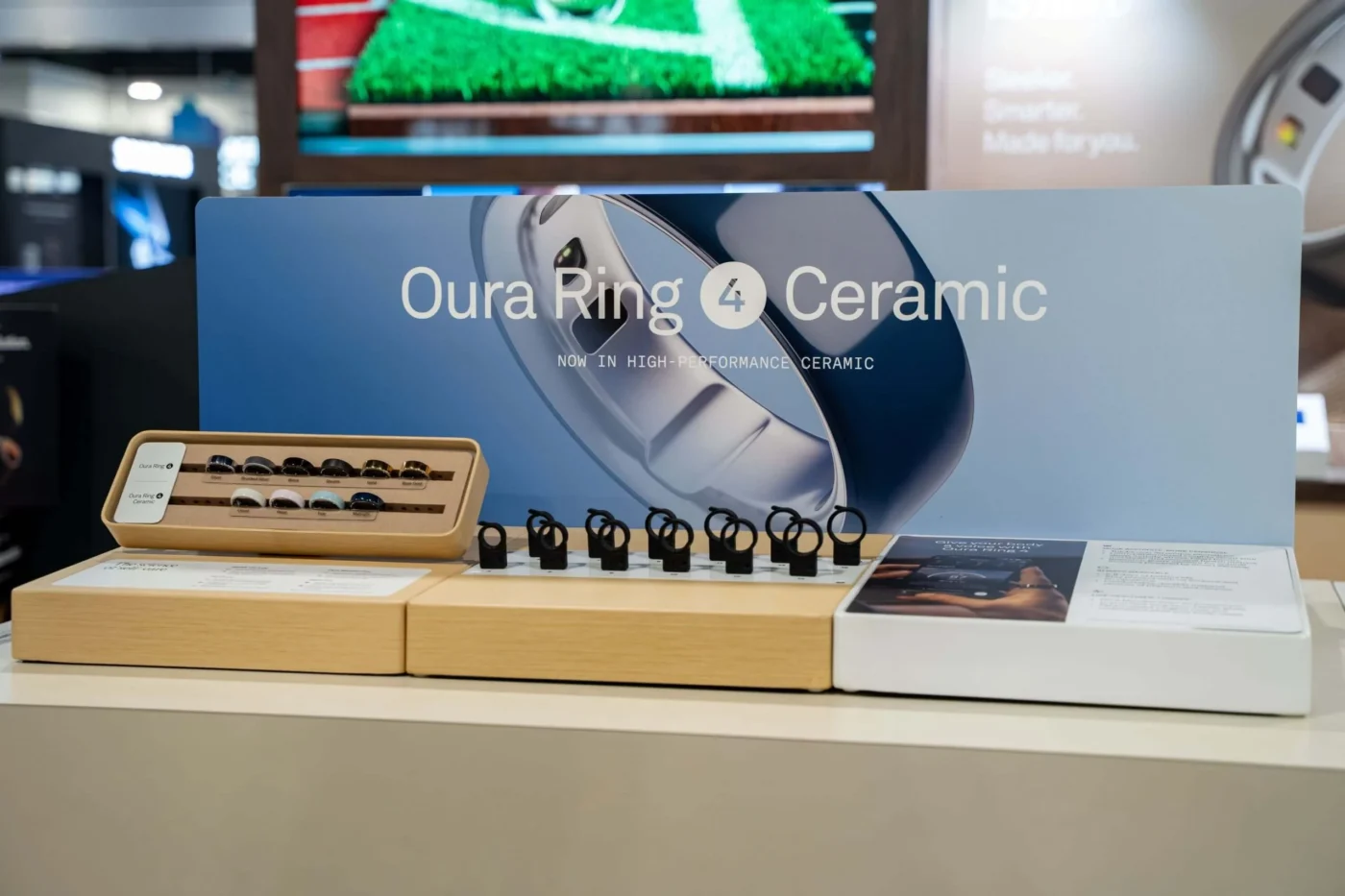
Key Highlights
- On September 3, 2026, Oura submitted its S-1 registration statement, advancing toward a public listing on Nasdaq with the OURA ticker symbol
- The wearable health tech firm generated $1.4 billion in sales and posted $59 million in net profit for the fiscal year concluded in June 2026
- Year-over-year revenue expansion reached 74%, with management cautioning that this pace may decelerate
- The subscriber base stands at 5 million paying customers, with distribution spanning 56 countries and approximately 8,400 brick-and-mortar stores
- Risk disclosures highlight concerns around trade tariffs, concentration among major retail accounts, and operational dependency on external AI providers including OpenAI, Anthropic, and Google
The Finnish-American company behind the Oura Ring health monitoring device has taken a significant step toward becoming publicly traded by submitting its S-1 registration document to the Securities and Exchange Commission this Thursday, setting the stage for a Nasdaq listing.
Trading is expected to commence under the OURA ticker symbol. The offering will be led by major financial institutions Goldman Sachs, Morgan Stanley, and J.P. Morgan serving as principal underwriters.
The regulatory filing paints a picture of impressive financial momentum. During the twelve months concluded in June 2026, Oura recorded $1.4 billion in total revenue alongside $59 million in bottom-line earnings.
Looking at the three-quarter period through June 2026, the company generated $1.21 billion in sales, marking a substantial 74% increase versus the corresponding timeframe in the previous year.
During this nine-month stretch, gross profit reached $662 million, translating to a healthy 55% gross margin.
Impressive Expansion Tempered by Cautionary Notes
While the financial metrics appear robust, Oura maintained transparency regarding its historical performance. The filing acknowledges the company carries “a history of operating losses” and has “only recently achieved profitability.”

Management emphasized that sustained profitability cannot be guaranteed going forward.
During the nine-month window ending June 2026, the company recorded net losses totaling $924 million against revenues of $1.21 billion. The comparable prior-year period showed losses of $182.8 million on $697.6 million in revenue.
The filing also highlighted concerns that ongoing international trade disputes and associated tariffs may increase manufacturing and product expenses.
Revenue Streams and Customer Base
The company operates a dual-revenue model: selling the Oura Ring hardware device alongside generating recurring income through its Oura Membership subscription service.
As of June 2026, the platform supported 5 million active paying subscribers. Notably, approximately 72% of the membership base identifies as female.
Unit sales reached 3.6 million rings during the trailing twelve-month period. Users demonstrate strong engagement, with typical daily wear time averaging around 23 hours.
Distribution extends across 56 international markets through a network of roughly 8,400 physical retail outlets, featuring prominent partners like Amazon, Best Buy, Target, Costco, and Walmart. International markets outside the United States account for under 20% of hardware sales.
Approximately 40% of customer acquisition occurs through organic channels, while the twelve-month membership retention rate stands at an impressive 85%.
Dependencies and Strategic Alliances
The S-1 filing revealed significant retail concentration, with the two largest retail customers representing 12% and 10% respectively of total revenue during the nine-month reporting period, presenting notable partnership dependency risks.
Technology infrastructure relies heavily on artificial intelligence capabilities provided by OpenAI, Anthropic, and Google, alongside third-party cloud infrastructure. The company cautioned that service interruptions from these providers could materially impact business operations.
Strategic collaborations include integrations with Dexcom, Natural Cycles, ResMed, Strava, and additional health technology partners aimed at broadening platform capabilities.
Market opportunity analysis identifies a serviceable addressable market exceeding $90 billion spanning fitness technology, digital health services, and connected biosensor devices.
Executive leadership includes CEO Thomas Hale, who previously served as President at Momentive, and CFO Sean Brecker, formerly CEO of meditation platform Headspace.
Capital raised through the public offering will be allocated toward advancing technology infrastructure, funding operational requirements, and supporting general corporate initiatives.
Get 3 Free Stock Ebooks
Discover top-performing stocks in AI, Crypto, and Technology with expert analysis.
- Top 10 AI Stocks - Leading AI companies
- Top 10 Crypto Stocks - Blockchain leaders
- Top 10 Tech Stocks - Tech giants



