



Key Takeaways
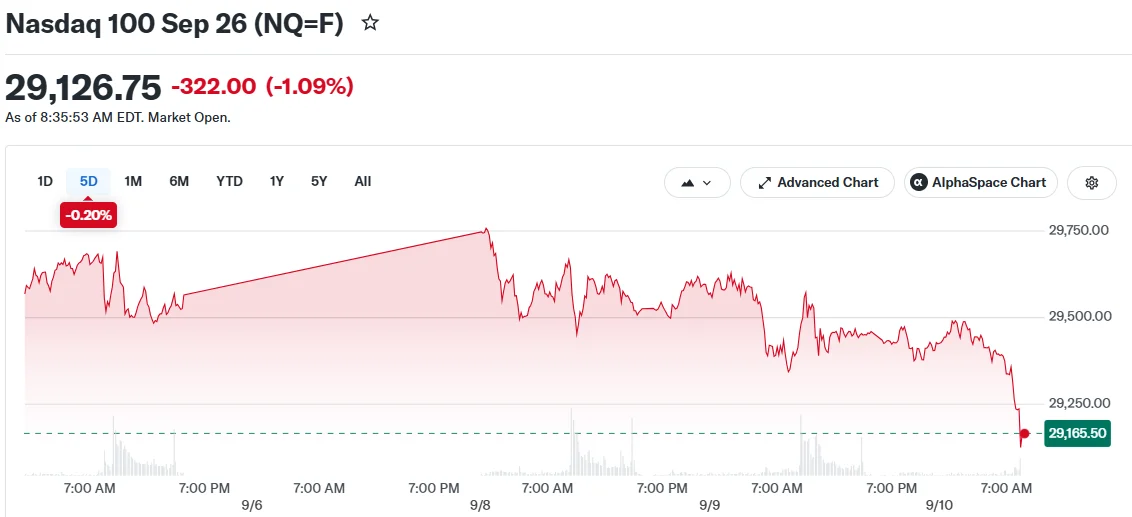
- Nasdaq 100 futures declined by as much as 1%, with Dow futures remaining relatively unchanged
- Crude oil prices surged toward $104-$105 per barrel, driving Treasury yields to 4.9%
- Producer Price Index increased 5.4% annually, matching analyst forecasts
- European Central Bank implemented 25 basis point increases across three primary rates
- Oracle scheduled to announce quarterly results after market close, with AI investment trends under scrutiny
American equity futures displayed mixed performance Thursday morning as escalating energy costs and new inflation metrics weighed on market sentiment. The Nasdaq 100 futures contract shed as much as 1%, while Dow Jones futures remained relatively stable and S&P 500 futures declined approximately 0.4%.
Energy markets have commanded attention throughout the trading week. Brent crude advanced beyond $105 per barrel, while WTI futures approached the $100 threshold. The surge in petroleum prices stems from the continuing US-Iran conflict and supply chain interruptions in the Strait of Hormuz, intensifying concerns about potential widespread energy market disruptions.
During Wednesday remarks, President Trump indicated that energy prices might remain elevated until after the midterm elections scheduled for two months from now. His statement failed to alleviate investor anxiety regarding the situation.
Wholesale Price Data Aligns with Forecasts
Thursday’s Producer Price Index release revealed that wholesale costs increased 5.4% on an annual basis, with core prices advancing 4.6%. Both measurements aligned closely with analyst predictions.
The wholesale inflation report establishes context for Friday’s consumer price data, which market participants and Federal Reserve officials will monitor intently. Elevated energy expenses could drive that figure upward.

Government bond yields also experienced upward movement. The 10-year Treasury yield reached a three-year peak on Wednesday following the Treasury Department’s announcement of plans to purchase up to $6 billion in longer-dated securities. By Thursday morning, yields approached the 4.9% level.
The European Central Bank contributed additional pressure to the worldwide interest rate environment. The institution elevated three benchmark interest rates by 25 basis points and revised its inflation projections upward, indicating that monetary tightening continues across Europe as well.
Technology Sector Awaits Oracle Financial Results
Market participants are closely monitoring Oracle Corporation. The enterprise software company plans to release quarterly earnings following the closing bell, and investors seek insight into whether artificial intelligence-related capital expenditures remain robust or show signs of deceleration.
[[LINK_START_2]]Oracle[[LINK_END_2]] has emerged as an important indicator of genuine demand for AI computing infrastructure. The financial results could influence technology sector performance on Friday.
On the political front, President Trump proposed a plan during a Dallas appearance Wednesday to distribute $5,000 payments to every American adult should Republicans maintain Congressional control following the midterm elections. Such a distribution would require Congressional authorization, and the funding mechanism remains unclear.
Equity markets have experienced challenging conditions this week. Both the S&P 500 and Nasdaq indices are enduring three-session declining streaks, with investors hoping Friday’s consumer inflation report doesn’t compound negative momentum.
Brent crude trading at $105 and ascending bond yields represent two primary factors maintaining downward pressure on equities. Market participants will await Oracle’s quarterly results and Friday’s Consumer Price Index data for clearer directional signals.
Get 3 Free Stock Ebooks
Discover top-performing stocks in AI, Crypto, and Technology with expert analysis.
- Top 10 AI Stocks - Leading AI companies
- Top 10 Crypto Stocks - Blockchain leaders
- Top 10 Tech Stocks - Tech giants



