



Key Takeaways
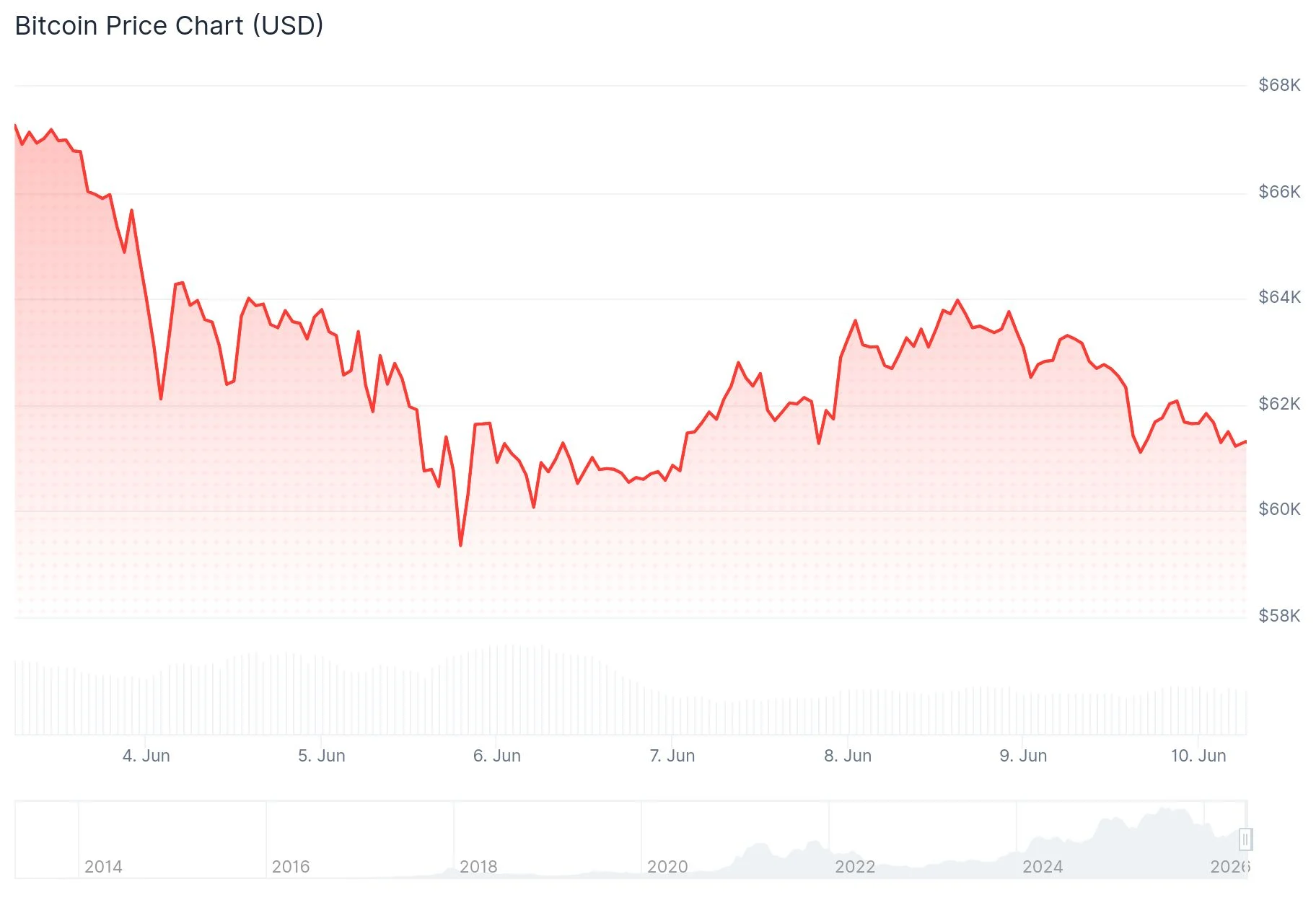
- Bitcoin declined approximately 7% over the week, settling near $61,233, while gold slipped beneath the $4,200 per ounce mark
- The latest cryptocurrency rally stemmed from short squeeze dynamics rather than genuine demand — more than $500 million in short positions were forced to close
- Continued outflows from US spot Bitcoin ETFs suggest institutional investors remain hesitant
- Military action by the US against Iran triggered declines in stock futures, with Nasdaq 100 futures falling 0.8%
- Market participants are closely watching Wednesday’s US CPI release, as elevated inflation could strengthen expectations for interest rate increases
Both Bitcoin and gold experienced synchronized declines on Wednesday as market participants reassessed interest rate expectations. An elevated inflation figure could reinforce the Federal Reserve’s restrictive stance, negatively impacting non-yielding assets.
Bitcoin was trading at $61,233, representing a 3% daily decline and approaching a 7% weekly loss. Gold retreated 2% to trade beneath $4,200 per ounce. These assets typically face headwinds when higher interest rates are anticipated.
Widespread Cryptocurrency Weakness
Ether declined 3.4% to reach $1,625. Solana experienced a 4.1% drop to $64.24. XRP decreased 4.3% to $1.12. Hyperliquid’s HYPE token led losses, plummeting 10.2% during the session and 21.3% across the week to $55.52.
The recent upward movement in Bitcoin wasn’t fueled by genuine buying interest. Instead, forced liquidations of over $500 million in bearish positions—the largest since April—temporarily inflated prices.
Actual market demand hasn’t materialized. Persistent outflows from US spot Bitcoin ETFs indicate that institutional participants remain on the sidelines.

“Market participants have provided support following the recent decline, but genuine spot demand remains conspicuously absent,” noted Diana Pires, chief business officer at sFOX.
Without substantial underlying demand to sustain price levels, upward movements have proven fragile. Should selling intensify following the inflation release, Bitcoin may face additional downward pressure.
Equity Futures Retreat Following Iran Military Operations
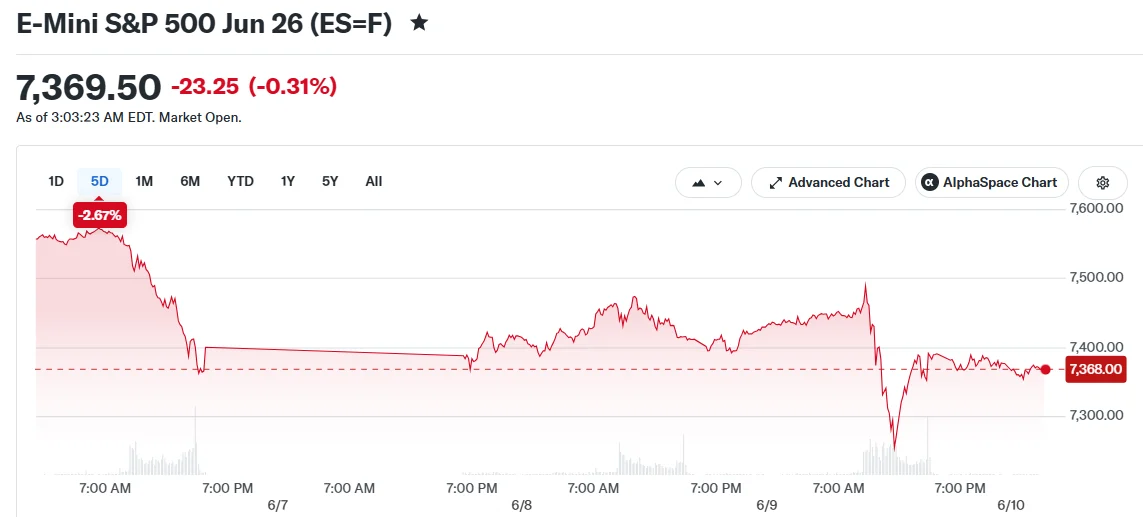
US equity futures declined after the Pentagon confirmed military strikes against Iranian targets characterized as “self-defense” operations. Dow and S&P 500 futures each retreated approximately 0.3%. Nasdaq 100 futures dropped 0.4%.
Tensions between Washington and Tehran intensified following Monday’s downing of a US Apache helicopter near the Strait of Hormuz. President Trump confirmed Iranian involvement and pledged retaliation.
South Korea’s Kospi index plummeted 6.3%, contributing to a 2.5% decline in the MSCI Asia-Pacific benchmark. Brent crude hovered around $92 per barrel as geopolitical tensions in Iran kept oil prices supported. The 10-year Treasury yield climbed to 4.54%.
Equity markets finished Tuesday’s session with mixed results as investors rotated away from artificial intelligence stocks. Growing concerns that the Iranian situation could fuel inflationary pressures are intensifying speculation that the Federal Reserve may need to raise rates.
Wednesday’s May Consumer Price Index report represents the week’s pivotal market event. Economists anticipate another price increase. An inflation reading exceeding forecasts would elevate the probability of rate hikes in the coming months.
New Federal Reserve Chair Kevin Warsh has already telegraphed a more restrictive policy approach. An unexpectedly high inflation figure could reinforce that hawkish positioning.
Oracle will release quarterly results following Wednesday’s market close. Market watchers will scrutinize its cloud computing segment, which includes OpenAI among its clientele.
The SpaceX initial public offering is scheduled for Friday, anticipated to become the largest public market debut in history.
Should gold prices stabilize while Bitcoin continues declining, it would undermine the narrative positioning Bitcoin as an effective macroeconomic hedge.
Get 3 Free Stock Ebooks
Discover top-performing stocks in AI, Crypto, and Technology with expert analysis.
- Top 10 AI Stocks - Leading AI companies
- Top 10 Crypto Stocks - Blockchain leaders
- Top 10 Tech Stocks - Tech giants



