


Key Takeaways
- SpaceX shares gained 1% to reach $116.35 during premarket hours Thursday following a 6.7% decline in the prior session
- The company’s 13th Starship test flight targets a 6:45 p.m. ET launch window from its Starbase facility in Texas
- An earlier launch attempt on July 17 was cancelled at the final moment due to booster engine problems; SpaceX replaced multiple Raptor engines afterward
- Weather conditions from Tropical Storm Bertha present a potential obstacle, prompting close monitoring by mission teams
- Today’s mission objectives include deploying 20 Starlink V3 satellites and conducting a Raptor engine restart test in orbit
Shares of SpaceX advanced 1% to $116.35 during Thursday’s premarket session, recovering a portion of the previous day’s steep 6.7% decline.
Space Exploration Technologies Corp., SPCX
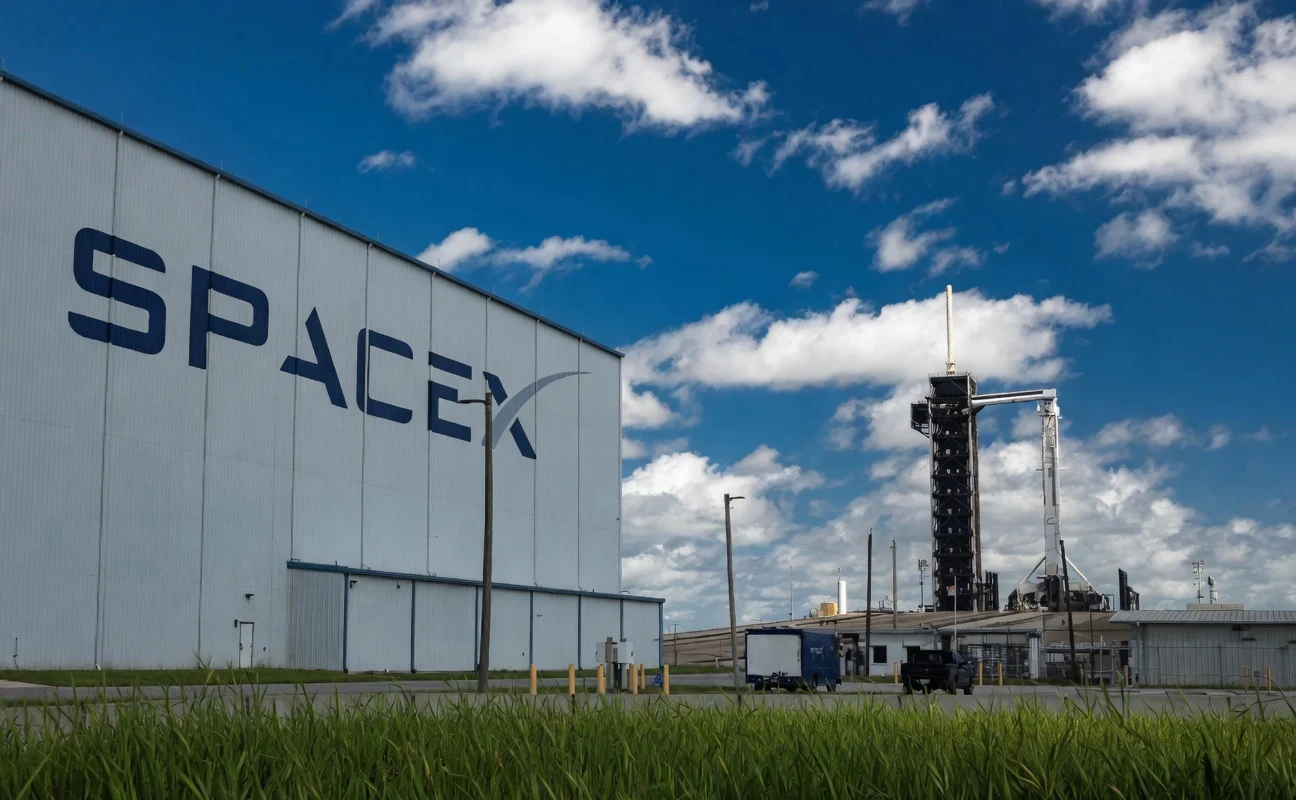
The modest uptick arrives as market participants focus attention on the firm’s upcoming 13th Starship test mission, which has a launch window opening at 6:45 p.m. ET from the company’s South Texas launch site.
Since its public debut, the stock has faced headwinds despite breaking records at IPO. After briefly ending a seven-session decline on Tuesday, shares retreated once more Wednesday. Analysts have pointed to valuation concerns — the company currently trades at approximately 40 times projected 2026 revenues, a multiple unprecedented for any trillion-dollar enterprise.
The initial Flight 13 launch window on July 17 was called off moments before ignition when multiple engines on the Super Heavy first stage failed their automated startup sequence. During the week-long delay, SpaceX swapped out a minimum of two Raptor engines from the booster’s 33-engine array, CEO Elon Musk confirmed.

A fresh complication has emerged: Tropical Storm Bertha is tracking through the region. The company posted on X that meteorological conditions represent “currently a significant watch item,” as the system delivers precipitation, gusty conditions, and elevated seas along the Texas shoreline. The National Hurricane Center warns that flash flooding and tropical storm-strength winds remain possibilities for the coastal zone.
Mission Objectives for Flight 13
Thursday’s test carries an ambitious agenda. The Super Heavy first stage must execute launch operations, ascent phase, stage separation maneuvers, a boostback burn sequence, and conclude with a precision landing burn at a designated offshore location in the Gulf of America.
The second stage — the Starship vehicle — aims to release 20 Starlink V3 satellites into orbit, perform a single Raptor engine restart while in space, then conduct a controlled atmospheric reentry and splashdown in the Indian Ocean.
A flawless mission would represent meaningful progress toward achieving full reusability for the Starship system. SpaceX projects that complete reusability could reduce orbital access costs by approximately 90% relative to its current Falcon 9 vehicle.
RBC analyst Ken Herbert characterizes cost reduction as the central “flywheel” driving SpaceX’s value proposition. Herbert emphasizes that without Starship’s capabilities, concepts like orbital AI data centers remain impossible.
Production Cadence and Future Plans
Morgan Stanley’s Adam Jonas has highlighted SpaceX’s long-term vision to conduct thousands of annual Starship flights. To put this in perspective, global launch activity totaled approximately 330 missions in 2025 — with SpaceX responsible for over half that figure.
Jonas indicated that Starship might begin transporting commercial payloads by the fourth quarter, though he cautioned that “space is hard, and future Starship and in-space anomalies should be expected.”
NASA’s Artemis lunar landing program depends on Starship as well, adding urgency to the vehicle’s development schedule.
Live coverage of the launch will stream on SpaceX’s official website beginning approximately 30 minutes prior to liftoff, with real-time updates available through the company’s X account.
Following the aborted July 17 attempt, SpaceX conducted engine replacements on the booster stage to address ignition issues.
Get 3 Free Stock Ebooks
Discover top-performing stocks in AI, Crypto, and Technology with expert analysis.
- Top 10 AI Stocks - Leading AI companies
- Top 10 Crypto Stocks - Blockchain leaders
- Top 10 Tech Stocks - Tech giants



