



Key Takeaways
- Friday saw the Dow surge 479 points, adding 0.9%, while both the S&P 500 and Nasdaq posted 0.5% gains
- Major indexes recorded weekly gains even after experiencing a pronounced midweek decline
- The benchmark 10-year Treasury yield reached its strongest level in over 16 years before moderating Friday afternoon
- Crude oil futures retreated on emerging reports of potential diplomatic progress regarding the Strait of Hormuz situation
- Market pricing indicates greater than 60% probability of a Federal Reserve rate increase next month
U.S. stocks concluded Friday’s session in positive territory, bringing a turbulent trading week to a constructive close. The upward momentum persisted despite bond yields climbing to their loftiest levels in more than a decade and a half.
The Dow Jones Industrial Average advanced 479 points, representing a 0.9% increase, to settle at 51,829. Meanwhile, both the S&P 500 and Nasdaq Composite registered approximately 0.5% gains.
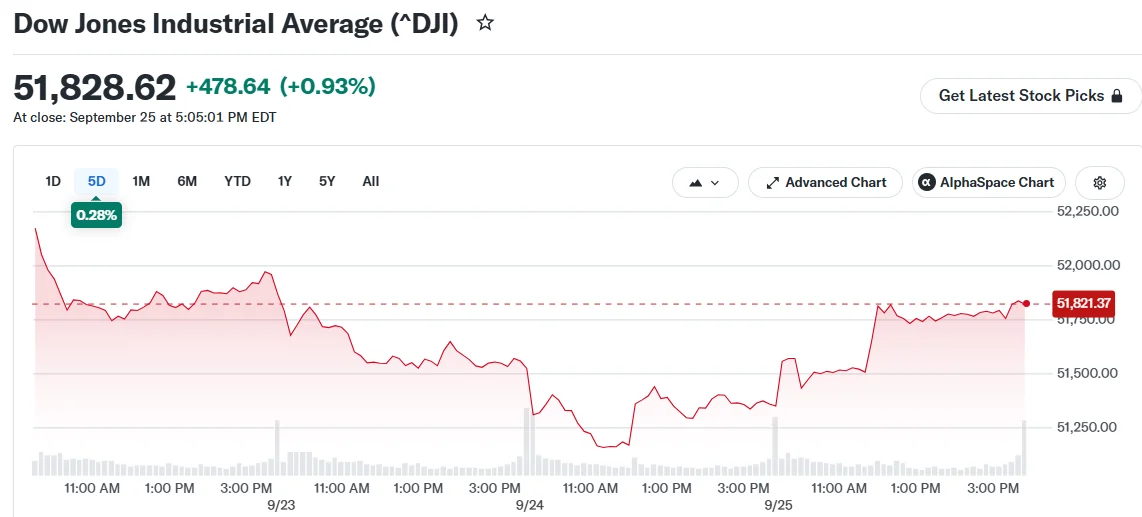
Looking at the broader weekly performance, the Dow posted a 0.3% advance. The S&P 500 climbed 1.2%, while the Nasdaq jumped 2%, despite experiencing notable weakness during midweek trading sessions.
Among individual stock performers Friday, Akamai Technologies emerged as a notable winner. The company’s shares appreciated 3% following the announcement of an extended partnership agreement with Anthropic.
Meta Platforms delivered impressive weekly returns as well. The social media giant’s stock surged nearly 13% as investors responded enthusiastically to the unveiling of Muse, its latest artificial intelligence agent platform.

Treasury Market Turbulence Creates Headwinds
Fixed-income markets experienced considerable turbulence throughout the week. The benchmark 10-year Treasury yield climbed to its most elevated level since 2007, briefly touching 5.228% before retreating modestly.
Friday’s close showed the 10-year at 5.18%, marking a new 19-year peak. The 30-year Treasury yield finished at 5.5%, having pierced that threshold for the first time in more than two decades.
The shorter-duration two-year yield declined marginally, concluding the session at 4.862%.
Multiple catalysts have propelled yields upward. Contributing factors include increasingly hawkish rhetoric from Federal Reserve policymakers, elevated energy costs stemming from Middle Eastern geopolitical tensions, and purchasing managers data that exceeded forecasts.
Current Fed funds futures pricing reflects approximately 64% to 66% odds of a policy rate increase in October. Market participants are anticipating three additional 25-basis-point hikes through the conclusion of 2027.
Crude Markets Retreat on Diplomatic Developments
Oil prices declined over the week following emerging reports suggesting U.S. and Iranian officials were engaged in discussions regarding potential reopening of the Strait of Hormuz. Sources indicate Iran has requested the United States return to a June memorandum of understanding framework.
West Texas Intermediate crude decreased 2.33%, finishing at $92.41 per barrel. Brent crude, serving as the global pricing benchmark, declined 2.14% to settle at $104.32 per barrel.
Market participants also monitored evolving U.S.-China relations throughout the week. Trade negotiations advanced during Chinese President Xi Jinping’s diplomatic visit to American soil.
Treasury Secretary Scott Bessent indicated both nations reached agreement on a two-month extension of their existing trade truce arrangement. Additional specifics regarding ongoing negotiations are anticipated in the near term.
Consumer confidence metrics were released Friday as well. The University of Michigan’s September reading showed deterioration but proved less pessimistic than preliminary estimates suggested.
The survey revealed consumers anticipate higher inflation rates, including over extended time horizons. This development introduces another consideration for Federal Reserve officials as they deliberate upcoming policy decisions.
Market observers remain divided on the implications of persistently elevated yields. Some analysts caution that sustained pressure could eventually dampen equity valuations and economic expansion. Others point to the economy’s demonstrated durability in the face of tightening financial conditions.
Market participants will maintain close attention on Treasury yields, energy markets, and trade negotiations in coming sessions for additional signals on future market direction.
Get 3 Free Stock Ebooks
Discover top-performing stocks in AI, Crypto, and Technology with expert analysis.
- Top 10 AI Stocks - Leading AI companies
- Top 10 Crypto Stocks - Blockchain leaders
- Top 10 Tech Stocks - Tech giants



