



Key Takeaways
- Major U.S. indexes—the Dow Jones, S&P 500, and Nasdaq—each gained approximately 1% Friday, ending a four-session decline
- The Consumer Price Index for August registered 0.4% on a monthly basis and 3.4% year-over-year, running warmer than July
- Core inflation climbed 0.3% month-over-month, surpassing the consensus forecast of 0.2%
- Traders now assign an 87% probability to a 25-basis-point Fed rate increase at the upcoming policy meeting
- Crude oil retreated Friday, with WTI dropping back to $100 per barrel following a week of significant price swings
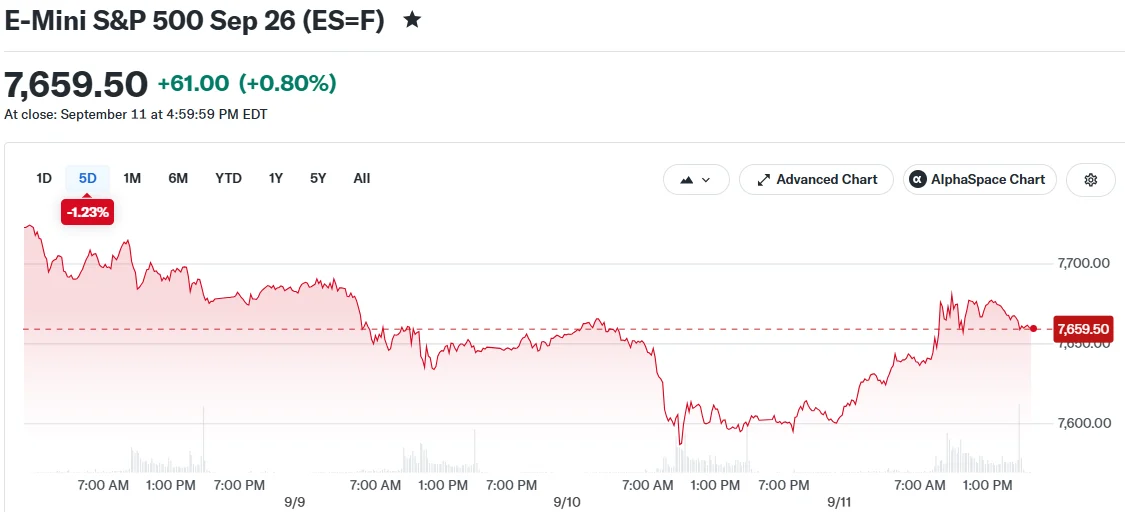
US stocks advanced on Friday despite August’s inflation report coming in above expectations, a development that significantly increased the likelihood of an interest rate increase from the Federal Reserve in the coming week.
The S&P 500 advanced 0.86%, while the Nasdaq Composite climbed 0.96%, and the Dow Jones Industrial Average jumped 0.98%, tacking on approximately 509 points. Despite Friday’s gains, all three benchmarks recorded weekly declines following four consecutive days of losses prior to the session.
The inflation data revealed that consumer prices increased 0.4% from the previous month and 3.4% compared to the same period last year. While these figures aligned with economist projections, they represented a slightly elevated reading compared to July’s data.
The core Consumer Price Index, which excludes volatile food and energy components, increased 0.3% on a monthly basis. This figure exceeded the 0.2% consensus estimate from Wall Street analysts.
Fed Rate Hike Expectations Surge Following Inflation Report
The stronger-than-anticipated core inflation figure prompted market participants to significantly revise upward their expectations for Federal Reserve action. According to the CME’s FedWatch tool, traders now assign roughly an 87% probability to a 25-basis-point rate increase at the upcoming Federal Open Market Committee gathering.

This represents a notable increase from 72% probability just 24 hours prior and 50% a week earlier. Market analysts suggest the clarification around rate policy helped fuel the afternoon equity rally by reducing uncertainty.
“We’ve seen this trend multiple times where macro factors will induce a selloff, but it’s typically bought back pretty quickly when investors realize that they’re able to buy the market on the dip,” said Will Rhind, CEO of GraniteShares.
Government bond yields edged higher after initially declining following the CPI release. The benchmark 10-year Treasury note yield concluded the session just under the 5% threshold.
Crude Oil Retreats Following Turbulent Trading Week
Energy markets experienced significant volatility throughout the week, with Brent crude surpassing $108 per barrel and diesel prices hitting an unprecedented $6 per gallon. These energy price movements intensified inflation worries during the period.
However, Friday brought some relief as oil prices moderated. West Texas Intermediate crude retreated to the $100 per barrel level. Brent crude futures similarly decelerated their upward trajectory.
Saudi Arabia’s Energy Ministry disclosed a temporary halt to flows through the East-West Pipeline. Nonetheless, crude oil futures remained relatively flat for the session despite this development.
While inflation has shown a downward trajectory since peaking in May, it continues to run substantially above the Federal Reserve’s 2% objective.
Market observers highlighted that technology sector earnings have provided crucial support for equity markets. Rhind emphasized that the market is “fundamentally strong, at least as far as earnings are concerned, and particularly tech earnings.”
The Federal Reserve’s monetary policy decision next week represents the next critical catalyst for stock market performance.
Get 3 Free Stock Ebooks
Discover top-performing stocks in AI, Crypto, and Technology with expert analysis.
- Top 10 AI Stocks - Leading AI companies
- Top 10 Crypto Stocks - Blockchain leaders
- Top 10 Tech Stocks - Tech giants



