



Key Takeaways
- Precious metal prices fell beneath the $4,400 threshold following robust August employment figures
- August payrolls showed 162,000 new positions, surpassing analyst projections
- Traders now assign a 60% probability to a Federal Reserve interest rate increase on September 15-16
- Crude oil climbing toward $97 per barrel is intensifying inflation worries
- Critical inflation reports scheduled for Thursday and Friday may reshape monetary policy expectations
Gold prices have breached a critical support threshold as new economic indicators apply downward pressure on the precious metal. Robust employment statistics from the United States have prompted market participants to increase their expectations of a Federal Reserve rate adjustment later this month.
Spot gold declined 0.7% to reach $4,398.89 per ounce during Monday trading. Futures contracts for gold similarly decreased 0.7% to $4,444.11. The precious metal had already surrendered 1% on Friday before extending losses as the new trading week began.
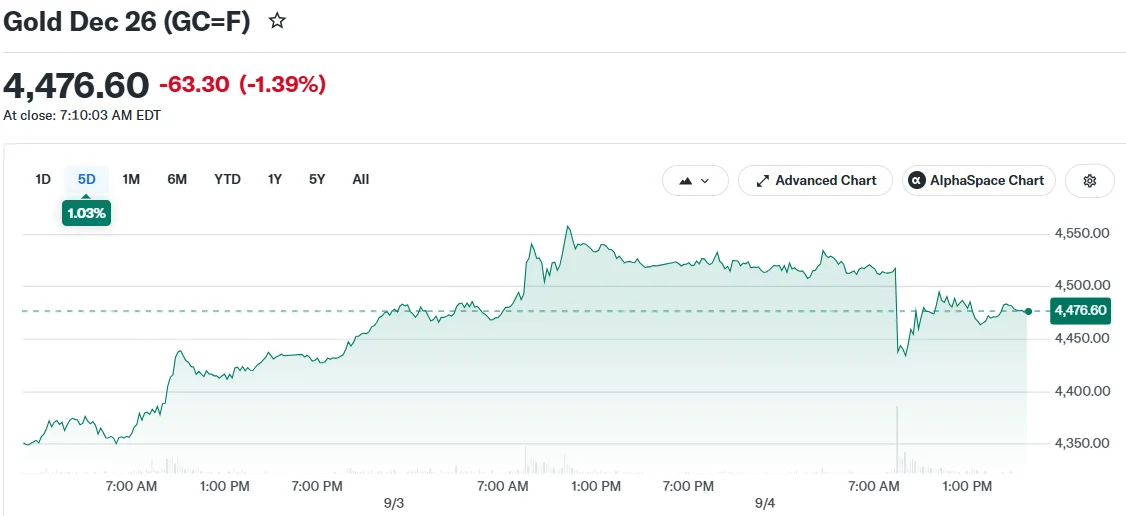
The downward movement followed the U.S. Labor Department’s announcement that businesses created 162,000 positions during August. This figure exceeded economist predictions. The jobless rate remained unchanged.
A resilient employment sector provides the Federal Reserve with greater flexibility to implement interest rate increases. Elevated rates typically disadvantage gold since they enhance the appeal of alternative investments, such as government bonds.
Market Expectations Shift Toward Tightening
Financial markets currently reflect approximately a 60% likelihood of a 25 basis point rate increase during the Federal Reserve’s September 15-16 policy meeting. This probability has climbed from lower levels recorded before Friday’s employment data release.

Research analysts at ING observed in correspondence with clients that the anticipated rate adjustment should provide temporary strength to the U.S. dollar, especially relative to currencies offering minimal yields.
An appreciating dollar creates headwinds for gold. Since gold trades in dollar denominations, a strengthening greenback increases the cost for international buyers utilizing alternative currencies.
During the preceding week, private employment tracker ADP disclosed just 38,000 new positions for August, significantly undershooting projections. That weaker figure had momentarily assisted gold in breaking a three-day decline on September 2.
The nearest-month gold contract had advanced 0.4% to $4,366.30 during that session, while silver gained 0.2% to $64.72 per ounce, before the more robust official employment figures shifted market sentiment.
Energy Markets and Inflation Concerns Mount
Oil prices remain a focal point for market watchers. Iranian authorities announced operations against three petroleum tankers in the Strait of Hormuz, alongside additional vessels associated with the United States. This action represented retaliation for American military strikes on maritime targets during the prior weekend.
Brent crude was exchanging hands near $97 per barrel. Elevated energy costs can contribute to widespread inflation, potentially compelling the Federal Reserve to maintain restrictive monetary policy for an extended period.
Gold has traded within a comparatively narrow band since recovering from a support level near $4,000 during July. During the previous week, the metal slipped beneath its 200-day moving average around $4,526, inflicting some near-term technical deterioration.
The upcoming significant price catalysts arrive later in the week. United States producer price statistics are scheduled for Thursday, with consumer price information following on Friday. Robust inflation figures could elevate rate increase expectations further and intensify selling pressure on gold.
Get 3 Free Stock Ebooks
Discover top-performing stocks in AI, Crypto, and Technology with expert analysis.
- Top 10 AI Stocks - Leading AI companies
- Top 10 Crypto Stocks - Blockchain leaders
- Top 10 Tech Stocks - Tech giants



