



Key Takeaways
- Spot gold reached $4,270.29 per ounce, while futures hit $4,329.15, marking a seven-week peak
- Potential agreement between Iran and Oman regarding the Strait of Hormuz is dampening inflation concerns
- Crude oil has declined over 9% in the past week, diminishing the Federal Reserve’s urgency for rate increases
- Probability of the Fed maintaining current rates in September has risen to 43%, compared to 37% seven days earlier
- The declining US dollar is enhancing gold’s appeal for international purchasers
The precious metal is maintaining its position near a seven-week peak as mounting expectations of a Strait of Hormuz agreement could drive down crude oil costs and diminish the Federal Reserve’s motivation to implement interest rate increases.
On Thursday, spot gold advanced 0.6% to reach $4,270.29 per ounce. Meanwhile, gold futures increased 0.5% to settle at $4,329.15 per ounce.
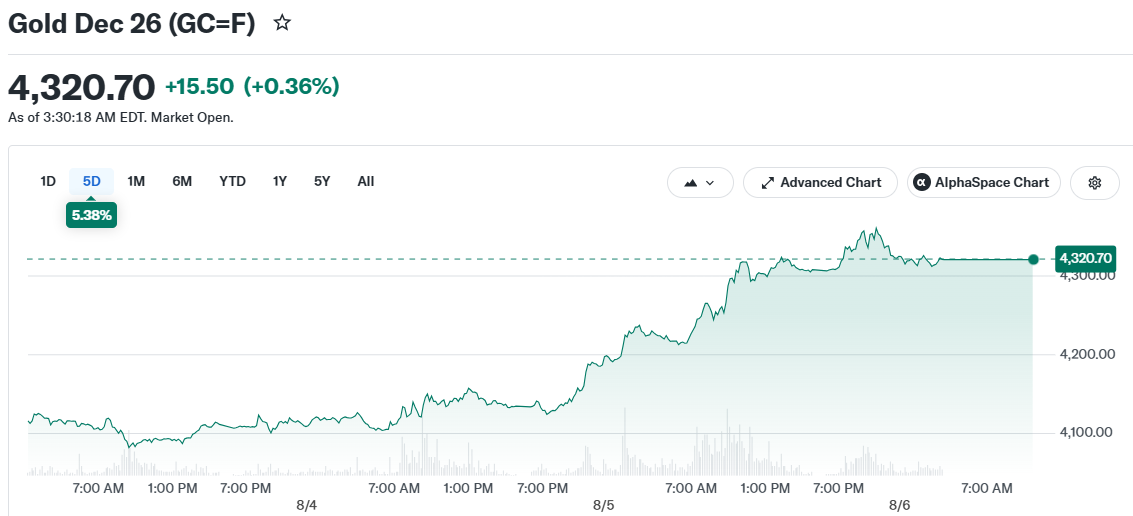
During early trading sessions, New York gold futures registered a 0.2% increase to $4,314 per troy ounce, positioning the metal for approximately a 4% weekly gain.
Middle East Agreement Prospects Reduce Inflation Worries
Emerging reports indicate a potential arrangement between Iran and Oman that would grant Iran authority over maritime traffic entering the Gulf via the Strait of Hormuz. American officials have indicated this week that an agreement may be imminent.
While some market watchers remain skeptical, noting the region’s history of escalating tensions followed by retreats, the possibility of uninterrupted energy transportation has already contributed to declining oil values.

Oil has dropped by more than 9% throughout the previous week. Brent crude is currently trading beneath the $80 per barrel threshold.
Declining energy costs typically diminish inflation projections, which consequently weakens the rationale for interest rate increases. Elevated rates are conventionally unfavorable for gold since they enhance the attractiveness of interest-bearing investments.
In a research note, ING analysts observed that “lower oil prices, a weaker dollar and potentially a more dovish-than-expected rates environment should remain supportive for bullion.”
Federal Reserve Policy Outlook Adjusts
Current market pricing indicates approximately a 43% likelihood that the Federal Reserve will maintain existing rates at its September policy meeting. This represents an increase from roughly 37% one week prior, based on CME FedWatch data.
ING further noted that “expectations for Federal Reserve tightening have eased, improving the outlook for non-yielding assets such as gold.”
A retreating US dollar is providing additional support for gold. Dollar weakness makes the precious metal more affordable for international buyers utilizing alternative currencies, potentially stimulating demand.
Market participants are closely monitoring Friday’s nonfarm payrolls release for insights into the Federal Reserve’s future policy direction.
Wednesday’s ADP National Employment Report revealed a deceleration in private-sector employment growth during July. This information strengthened arguments for the Fed to temporarily halt rate increases.
Friday’s employment data is anticipated to provide a more comprehensive assessment of the US labor market condition and may influence both gold valuations and rate projections.
The precious metal has gained nearly 4% during the current week, as market participants monitor developments in the Middle East alongside US economic indicators for trading signals.
Get 3 Free Stock Ebooks
Discover top-performing stocks in AI, Crypto, and Technology with expert analysis.
- Top 10 AI Stocks - Leading AI companies
- Top 10 Crypto Stocks - Blockchain leaders
- Top 10 Tech Stocks - Tech giants



