



Key Highlights
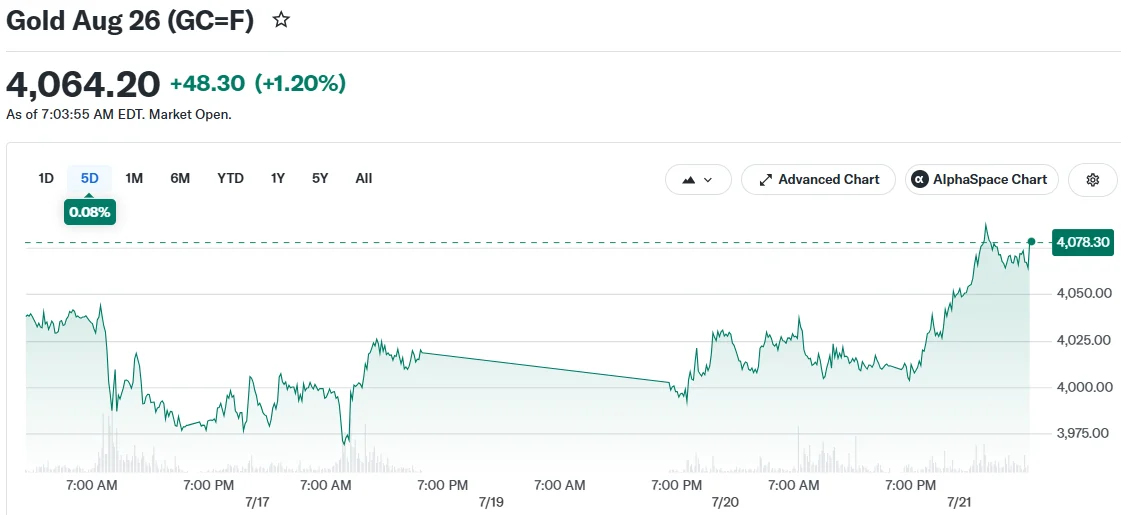
- Precious metal prices advanced 1.5% to reach $4,067.55 per ounce amid diplomatic progress in Middle East tensions
- Potential 10-day truce in Iran could alleviate concerns over petroleum-fueled price pressures
- Federal Reserve likely to maintain current policy at upcoming meeting, though September rate increase probability stands at approximately 54%
- The yellow metal has declined 22% from late February when Iran hostilities escalated, though maintaining 21% yearly advance
- Global monetary authorities continue accumulating reserves, with Poland leading net acquisitions in early 2026
The precious metals market experienced upward momentum Tuesday as market participants monitored peace negotiations aimed at defusing Middle East tensions, with expectations that conflict resolution might dampen energy-related price pressures and shape Federal Reserve monetary policy.
Physical gold advanced 1.5% to settle at $4,067.55 per troy ounce. Futures contracts similarly appreciated, posting a 1.4% increase to $4,072.45.
According to Reuters reporting, a high-ranking Iranian representative indicated that international mediators have presented a 10-day cessation of hostilities proposal. This diplomatic initiative seeks to preserve preliminary agreement frameworks while establishing conditions for more comprehensive negotiations.
However, ongoing military operations between opposing forces suggest limited progress toward de-escalation. This reality has intensified concerns regarding the Strait of Hormuz, a critical maritime corridor that previously facilitated passage of approximately one-fifth of global petroleum and liquefied natural gas volumes before hostilities commenced in late February.
Tehran-aligned Houthi forces operating from Yemen have additionally warned of potential maritime blockades targeting Saudi Arabian vessels, potentially expanding the geographic scope of regional instability.

Monetary Policy Uncertainty Pressures Bullion
Financial markets remain apprehensive that disrupted oil flows could accelerate inflationary pressures, compelling monetary authorities toward restrictive policy adjustments. The Federal Reserve appears positioned to maintain existing rates at next week’s policy gathering. However, CME FedWatch probability indicators reveal roughly 54% likelihood of a 25-basis-point increase come September.
Elevated borrowing costs typically disadvantage gold holdings, given the metal generates no income stream. As financing expenses increase, the relative cost of maintaining gold positions rises proportionally.
“Expectations of higher real interest rates have created headwinds for gold values, while observable investment capital movements remain unpredictable,” explained Dominic Schnider, Head Global FX and Commodity at UBS Global Wealth Management.
The precious metal has surrendered 22% of its value since Iran conflict escalation on February 28. This downturn surprised certain market observers, considering geopolitical instability traditionally bolsters gold valuations.
The probable explanation centers on market anticipation of Fed tightening measures to combat energy-driven inflation, diminishing attractiveness of income-free assets including gold.
Monetary Authorities Maintain Accumulation Strategy
Notwithstanding recent price deterioration, certain market analysts characterize the correction as a strategic accumulation opportunity. Gold’s trailing twelve-month performance registers a 21% appreciation, marginally exceeding the S&P 500 benchmark.
Reserve bank appetite for gold has remained robust following Russia’s 2022 Ukraine invasion. This pattern demonstrates various nations’ strategic objective to diminish dependence on dollar-denominated reserves.
Poland emerged as the predominant net accumulator during the initial six months of 2026, per World Gold Council data. Conversely, Turkey liquidated 81 metric tons valued at approximately $10.6 billion throughout the identical timeframe.
Recently appointed Fed Chair Kevin Warsh has provided minimal guidance regarding prospective rate trajectory. His established task forces examining inflationary dynamics and artificial intelligence productivity effects may not deliver conclusions until year-end, perpetuating market uncertainty.
Silver likewise posted gains Tuesday, advancing 4.4% to $58.92 per ounce. Platinum appreciated 1.9% to reach $1,632.80.
Get 3 Free Stock Ebooks
Discover top-performing stocks in AI, Crypto, and Technology with expert analysis.
- Top 10 AI Stocks - Leading AI companies
- Top 10 Crypto Stocks - Blockchain leaders
- Top 10 Tech Stocks - Tech giants



