


TLDR
- Precious metal climbs 0.1% to $4,339.20 following its most significant single-session decline in nearly four weeks
- Climbing Treasury rates and elevated crude prices weigh on precious metals
- Hormuz waterway crisis continues to unsettle global energy markets
- Federal Reserve meeting record expected Wednesday may provide rate trajectory insights
- Market participants now assign 67% probability to Fed maintaining current rates
Precious metals experienced a modest rebound Wednesday following their sharpest single-session retreat in approximately four weeks. The yellow metal advanced 0.1% to reach $4,339.20 per ounce during early market hours, though futures contracts declined 0.6% to settle at $4,392.42.
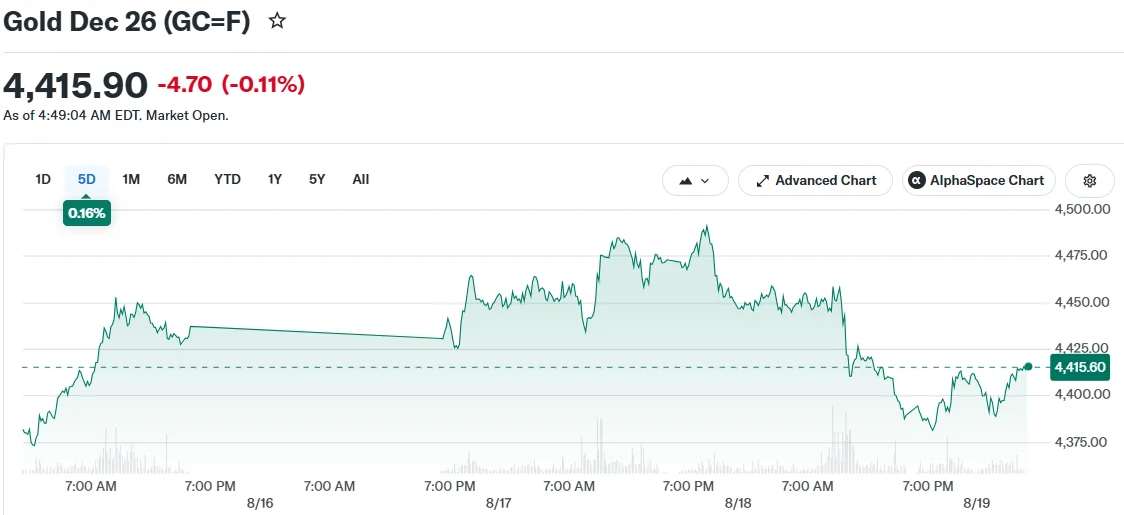
The marginal uptick occurred alongside a weakening greenback and retreating Treasury rates. Silver dropped 1.0% to $62.69 per ounce, while platinum dipped to $1,716.02.
Bond Rates and Crude Create Headwinds
Gold has faced difficulty maintaining momentum as government bond rates advance. The three-decade U.S. Treasury rate reached its peak level in approximately twenty years on Tuesday, while the benchmark 10-year rate hovered near its highest marks since early 2025.
Rising bond rates diminish the appeal of precious metals. Fixed-income securities begin delivering superior returns, whereas bullion generates no yield. This dynamic prompts investors to redirect capital away from precious metals toward interest-bearing instruments.
Oil prices have surged amid the persistent Hormuz waterway crisis. Roughly 20% of worldwide petroleum and natural gas transport flows through this critical passage.

Elevated energy costs can accelerate inflationary pressures. This scenario might prompt the Federal Reserve to maintain restrictive monetary policy longer, creating additional headwinds for bullion.
President Donald Trump stated Tuesday that no diplomatic discussions were currently happening with Tehran. A bilateral agreement between Washington and Iran signed in June lapsed without extension plans.
Vessels have persisted in navigating the waterway, with several disabling satellite tracking systems to evade surveillance.
Central Bank Records Draw Attention
Market participants are closely monitoring the Federal Reserve’s July policy meeting record, scheduled for release Wednesday afternoon. The transcript may illuminate policymakers’ perspectives on price pressures and prospective rate adjustments.
Focus will subsequently turn to Fed Chair Kevin Warsh’s address at the Jackson Hole economic symposium during the coming week.
Data from the CME FedWatch tool indicates traders have reduced rate increase expectations following recent U.S. economic indicators. Markets currently assign a 67% likelihood that monetary authorities will maintain existing rates.
Soojin Kim from MUFG noted the precious metal’s outlook remains limited by the Washington-Tehran standoff. Energy-fueled inflation may strengthen expectations for sustained restrictive Fed policy, capping bullion’s potential gains.
Tony Sycamore, analyst at IG, observed that the overnight decline to approximately $4,334 demonstrated the metal’s vulnerability against simultaneous pressure from elevated crude costs and higher government bond rates.
From a technical perspective, Sycamore indicated bullion must recapture resistance near $4,430 to restore upward trajectory. Breaking above that threshold would bring the 200-day moving average around $4,507 into focus.
The yellow metal had recently recovered above the $4,000 per ounce threshold on robust central bank purchases, especially from Chinese authorities. This rebound now confronts renewed challenges from macroeconomic conditions.
The immediate critical triggers are Wednesday’s Fed meeting record and Warsh’s Jackson Hole commentary during the upcoming week.
Get 3 Free Stock Ebooks
Discover top-performing stocks in AI, Crypto, and Technology with expert analysis.
- Top 10 AI Stocks - Leading AI companies
- Top 10 Crypto Stocks - Blockchain leaders
- Top 10 Tech Stocks - Tech giants



