



TLDR
- Gold has surged past the $4,500 per ounce level, gaining approximately 4% this week and 11% throughout August
- The Treasury Department has doubled its repurchase program for longer-maturity bonds, causing yields and the dollar to decline
- Scott Bessent, Treasury Secretary, indicated the buyback program may expand even more
- Declining dollar strength and lower Treasury yields make gold more attractive by reducing its opportunity cost
- Escalating oil prices and inflationary pressures may cap additional upside for gold
The precious metal is poised to extend its winning streak to three consecutive weeks, with spot prices hovering near $4,530 per ounce as a combination of dollar weakness and strategic Treasury debt operations continues supporting the rally.
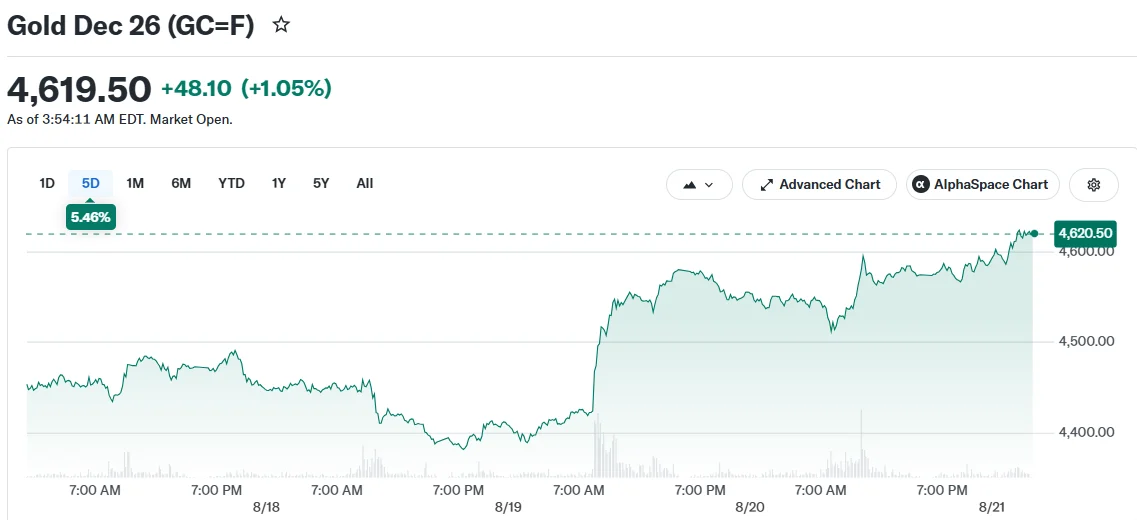
Bullion has surged approximately 4% over the past five trading days and has posted impressive gains exceeding 11% for August. Gold futures contracts also advanced, reaching approximately $4,587 per ounce.
Treasury Department Amplifies Bond Buyback Program
Earlier this week, the Treasury Department revealed plans to double its repurchase operations for longer-maturity government debt, committing to at least $4 billion per transaction during the upcoming quarter. This announcement triggered a decline in long-dated yields while simultaneously pressuring the dollar downward.
During Thursday remarks, Treasury Secretary Scott Bessent suggested the possibility of further expanding these repurchase operations. He additionally stated that prevailing yields fail to accurately represent underlying economic fundamentals.
Declining bond yields enhance gold’s investment appeal by reducing the opportunity cost associated with holding non-yielding assets like bullion rather than interest-bearing securities. Furthermore, lower yields typically pressure the dollar downward, making gold more affordable for international buyers using foreign currencies.

The U.S. dollar index declined 0.1% to reach 98.77 during Friday trading and appeared headed for a weekly drop exceeding 0.8%.
Other precious metals also posted gains, with silver increasing roughly 1% to $68.79 per ounce. Platinum advanced 1.6% to reach $1,866.
Interest Rate Expectations and Global Tensions Shape Outlook
Weekly unemployment insurance claims registered below expectations, indicating resilience in the U.S. labor market despite July’s surprising employment decline. The Federal Reserve continues prioritizing inflation management over rate reduction.
Financial markets currently assign approximately 64% probability to the Fed maintaining current rates in September, with a 36% likelihood of an increase, based on CME FedWatch tool data.
Several Federal Reserve policymakers have expressed concern that the Treasury’s debt management approach might inadvertently ease financial conditions during a period when the central bank continues battling inflation.
Regarding international developments, Bessent announced plans to implement unprecedented sanctions targeting Iran. He suggested these economic measures could potentially reduce the necessity for significant military intervention.
Oil prices jumped considerably this week following President Trump’s threats to devastate Iran’s economy, diminishing prospects for an agreement to reopen the Strait of Hormuz. Climbing energy costs could maintain elevated inflation levels and potentially constrain gold’s further advancement.
Gold had previously retreated approximately 15% from its pre-conflict peaks following the eruption of U.S.-Iran tensions in late February. The metal has maintained support above $4,000 since mid-July when bargain hunters emerged following that pullback.
Analysts at ANZ observed that this week’s price action underscores gold’s role as investors seek portfolio diversification beyond U.S.-based assets.
Get 3 Free Stock Ebooks
Discover top-performing stocks in AI, Crypto, and Technology with expert analysis.
- Top 10 AI Stocks - Leading AI companies
- Top 10 Crypto Stocks - Blockchain leaders
- Top 10 Tech Stocks - Tech giants



