


TLDR
- Natural gas prices across Europe soared by as much as 6% on Monday, climbing to levels not seen since the 2022-2023 energy crisis
- Gas storage facilities in Europe are currently at approximately 68% capacity, significantly below the five-year seasonal average exceeding 80%
- Saudi Arabia closed its East-West oil pipeline, eliminating a crucial alternative route that bypasses the Strait of Hormuz
- The CEO of JERA cautioned that shipping disruptions near the Strait of Hormuz may persist longer than anticipated
- Brent crude oil prices climbed to approximately $112 per barrel, intensifying stagflationary concerns throughout Europe
Natural gas prices throughout Europe experienced a dramatic surge of up to 6% on Monday, climbing to their highest levels since the energy crisis that gripped the continent during 2022-2023. The sharp increase was fueled by mounting tensions in the Middle East and alarming warnings regarding critically depleted winter storage reserves across European nations.
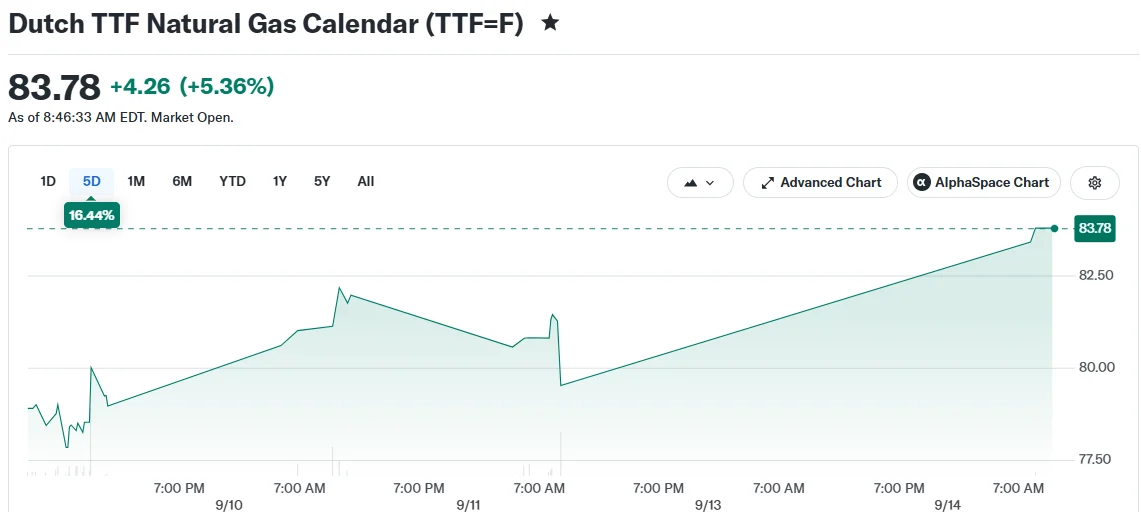
Europe’s primary gas trading benchmark, the Dutch TTF front-month contract, climbed to approximately 83-84 euros per megawatt-hour. These price levels exceed those recorded in January 2023, when Europe confronted its initial winter season with severely limited Russian pipeline gas supplies.
The British NBP wholesale gas contract similarly experienced a substantial increase of nearly 5%, surpassing the 200 pence per therm threshold for the first time in several years.
Storage at a Decade Low
Underground gas storage facilities across Europe currently hold just below 70% of total capacity. This represents a stark contrast to the 82% capacity recorded at the identical point in 2025, and falls well short of the five-year historical average that exceeds 80%.
Energy analysts indicate that Europe is entering the winter season with storage levels among the lowest witnessed in approximately twenty years. The substantial deviation from historical norms has triggered concern throughout energy markets.

Yukio Kani, CEO and Chair of JERA—Japan’s premier power generation company and among the globe’s largest liquefied natural gas purchasers—delivered a stark warning on Monday. He emphasized that European reserves remain dangerously low while disruptions surrounding the Strait of Hormuz may extend beyond current expectations.
Middle East Supply Crunch
The catalyst behind Monday’s dramatic price movement was Saudi Arabia’s decision to shut down its East-West oil pipeline during the weekend. This critical infrastructure enables Saudi Arabia to transport oil while circumventing the Strait of Hormuz.
Military tensions within the Persian Gulf have already significantly diminished LNG tanker movement through the strait. Qatar, ranking among the world’s foremost LNG exporters, relies extensively on this vital shipping corridor.
Houthi militants from Yemen have also pushed forward near critical Red Sea transit passages. Recent attacks on regional pipeline systems have further complicated the utilization of alternative transportation routes.
Commodity analysts at Kpler have issued warnings regarding an emerging global “fight for fuel,” particularly if the approaching winter season proves colder than forecasted. Spot LNG prices throughout Asia reached their peak levels since 2022 last week, demonstrating that competition for available shipments is growing fiercer.
The head of commodity strategy at Saxo Bank observed that supply disruptions have driven European gas prices to levels equivalent to more than $140 per barrel.
Energy Costs Add Pressure on Central Banks
Brent crude advanced approximately 3-4% on Monday, with trading occurring near the $112 per barrel mark. This compounds the energy price shock currently impacting European economies.
Last Thursday, the European Central Bank elevated its deposit rate to 2.50%. Given the continued ascent of gas and oil prices, money markets now anticipate that central banks will maintain restrictive interest rate policies well into the following year.
Escalating energy expenses heighten the probability of widespread price inflation across the eurozone. This development places policymakers in a challenging predicament as the winter season approaches.
Get 3 Free Stock Ebooks
Discover top-performing stocks in AI, Crypto, and Technology with expert analysis.
- Top 10 AI Stocks - Leading AI companies
- Top 10 Crypto Stocks - Blockchain leaders
- Top 10 Tech Stocks - Tech giants



