


Key Highlights
- Dutch TTF front-month contracts climbed 0.5% Friday, settling near €57.50/MWh, yet posted a 2.5% weekly decline
- Two consecutive weeks of price decreases attributed to modest diplomatic headway on Middle Eastern shipping routes
- Liquefied natural gas tanker movement through the Strait of Hormuz stays heavily constrained amid continuing negotiations
- European Union natural gas inventories stand at merely 55-57% capacity as August begins, significantly trailing the historical average of 71%
- Iranian maritime operations in the strait vicinity and transit stipulations maintain heightened supply risk
Natural gas quotations across Europe registered modest Friday increases yet recorded their second consecutive weekly retreat, as diminishing geopolitical concerns collided with constrained physical availability and renewed Persian Gulf instability.
The Netherlands’ TTF benchmark contract for nearest-month delivery advanced 0.5% to approximately €57.50 per megawatt-hour during Friday trading. However, this incremental uptick proved insufficient to reverse the week’s downward trajectory, with valuations closing approximately 2.5% lower than the preceding Friday’s settlement.
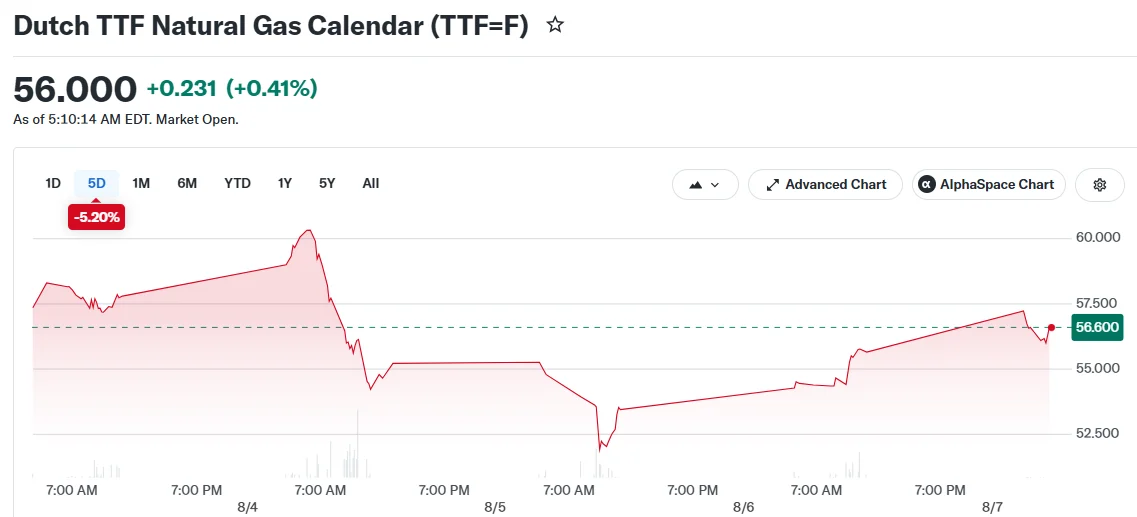
The consecutive weekly pullbacks emerged as diplomatic initiatives targeting the restoration of Strait of Hormuz shipping operations reduced some market anxiety. Oman and Qatar have undertaken intermediary roles in discussions designed to create secure maritime passages through the critical chokepoint, prompting energy market participants to reduce the risk premiums that had surged during late July.
An accompanying downturn in international crude prices throughout the previous fortnight additionally contributed to relieving strain on European energy valuations.
Transit Corridors Remain Compromised
Notwithstanding diplomatic advances, liquefied natural gas carrier passage through the Strait of Hormuz persists under substantial limitations. Vessel holdups are delaying summer spot cargo deliveries from critical Middle Eastern exporters, most notably Qatar.

Iranian government-controlled media outlets disclosed Friday that maritime forces had executed actions targeting what authorities characterized as “hostile entities” proximate to the strait, subsequent to detonations on Qeshm Island. Tehran reportedly seeks to prohibit American and Israeli vessels from waterway access while demanding financial restitution from nations it deems antagonistic as a precondition for allowing passage.
These circumstances propelled quotations back beyond the €57/MWh threshold Friday, recapturing the majority of declines registered during earlier weekday sessions.
Inventory Deficit Intensifies Concerns
Continental European natural gas storage facilities are commencing August at merely 55% to 57% filled capacity. The historical five-year norm for this calendar period approximates 71%, positioning European energy providers considerably behind typical seasonal preparation levels ahead of winter demand.
Abnormally elevated summer temperatures throughout southern European regions have exacerbated the inventory shortfall. Extreme heat conditions have amplified requirements for gas-fired electricity generation supporting cooling systems, reducing injection quantities.
European procurement entities now face direct competition from Asian purchasers for accessible LNG shipments within international spot markets. This rivalry is anticipated to establish a substantial price floor beneath European natural gas valuations.
Market specialists indicate quotations will maintain sensitivity toward any renewed complications in Middle Eastern negotiations. While discussions persist, physical market constraints limit potential price decreases even as geopolitical strains exhibit preliminary moderation signals.
The latest development as Friday concluded involved Iran’s documented naval activities near Qeshm Island, which reversed European gas price declines following a temporary midweek retreat.
Get 3 Free Stock Ebooks
Discover top-performing stocks in AI, Crypto, and Technology with expert analysis.
- Top 10 AI Stocks - Leading AI companies
- Top 10 Crypto Stocks - Blockchain leaders
- Top 10 Tech Stocks - Tech giants



