


TLDR
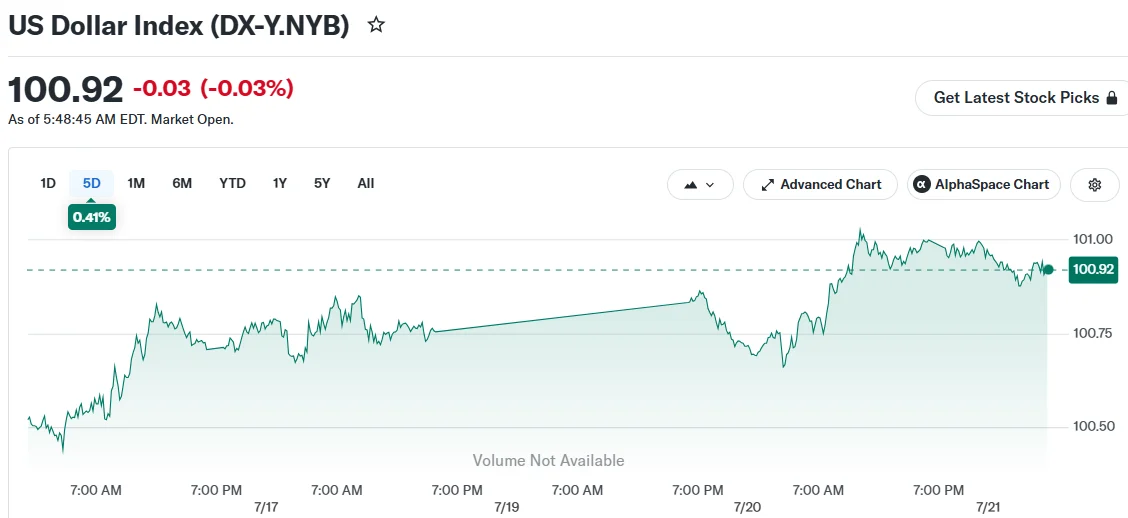
- The greenback maintained its position near 100.93, hovering close to a seven-day peak, as geopolitical risks in the Middle East sustained safe-haven appetite
- American forces have conducted strikes against Iranian targets for a tenth consecutive night, though diplomatic channels have proposed a 10-day cessation of hostilities
- Sterling advanced 0.1% following newly appointed UK Prime Minister Andy Burnham’s commitment to maintain current fiscal guidelines
- The single currency stabilized around $1.1424 before Thursday’s European Central Bank policy announcement, where interest rates are anticipated to remain static
- Traders are now assigning an 85% probability that the Federal Reserve will maintain its current rate stance at the upcoming meeting, amid persistent inflation uncertainty
The American currency has been fluctuating near its strongest position since mid-July, bolstered by elevated U.S. government bond yields. The benchmark 10-year Treasury yield is circling around 4.59%, with the 30-year bond exceeding the 5% threshold.
Foreign exchange market participants are navigating conflicting signals: escalating military actions across the Middle East versus the potential for a negotiated settlement.
American military forces have executed operations targeting Iranian command facilities and naval infrastructure for ten consecutive evenings, as confirmed by U.S. Central Command. Typically, such military escalation drives capital flows toward defensive assets like the U.S. dollar.
However, diplomatic initiatives remain active. A high-ranking Iranian representative informed Reuters that Tehran has been presented with a proposal for a 10-day pause in military operations from international mediators. This development has prevented market participants from establishing significant directional positions.
“The absence of definitive direction regarding the conflict’s trajectory has left the greenback in a holding pattern,” noted Jimmy Jean, chief economist at Desjardins, emphasizing that any meaningful dollar depreciation appears more probable in 2027.
Houthi Naval Restrictions Intensify Energy Market Concerns
The Houthi movement in Yemen, aligned with Tehran, has declared a new maritime embargo targeting Saudi Arabia, heightening worries about global oil transportation corridors. Brent crude has surged approximately 21% during the current month, despite retreating 1.1% in Tuesday’s session.

Disruptions in petroleum markets carry significant implications for currency valuations, as energy-fueled price pressures could compel monetary authorities to maintain restrictive policy stances for extended periods.
“Downside risks for the dollar remain limited as financial markets continue demonstrating a concerning level of indifference toward the renewed military escalation,” observed Francesco Pesole, foreign exchange strategist at ING.
Sterling Gains Following UK Leadership’s Budgetary Commitment
The British currency appreciated 0.1% versus the dollar, reaching $1.3441, positioned to end a three-session decline.
Andy Burnham assumed office as Britain’s prime minister on Monday—marking the nation’s seventh leader within a decade. He committed to adhering to established fiscal frameworks and designated John Healey as finance minister.
Financial district investors reacted favorably to the budgetary assurance, although uncertainty persists regarding Burnham’s strategy to finance campaign promises without increasing levies on wage earners.
The common currency registered modest gains, touching $1.1424 before Thursday’s ECB monetary policy determination. The Frankfurt-based institution is broadly anticipated to maintain current interest rates but is unlikely to preview any reductions while energy-related inflation threats remain pronounced.
The Federal Reserve convenes next week. Financial markets currently assign an 85% likelihood of unchanged rates, as monetary officials monitor how Middle Eastern developments influence price stability.
The Canadian currency stabilized after reaching a month-low, in response to Washington imposing a 50% levy on numerous Canadian exports amid trade disagreements.
Get 3 Free Stock Ebooks
Discover top-performing stocks in AI, Crypto, and Technology with expert analysis.
- Top 10 AI Stocks - Leading AI companies
- Top 10 Crypto Stocks - Blockchain leaders
- Top 10 Tech Stocks - Tech giants



