


Key Takeaways
- Dick’s Sporting Goods fell short of Q2 profit expectations and reduced its annual EPS outlook to $11.00-$12.00 from a previous forecast of $13.50-$14.50.
- Telsey Advisory Group lowered DKS rating to Market Perform while cutting the price target from $255 down to $145.
- The recently integrated Foot Locker operation reported a Q2 operating deficit of $31.9 million alongside a 3.6% decline in pro forma comparable sales.
- The flagship Dick’s brand delivered solid results with comparable store sales climbing 4.9%, boosted by World Cup merchandise.
- Widespread promotional activity and excess inventory across the industry are anticipated to continue into the fourth quarter at minimum.
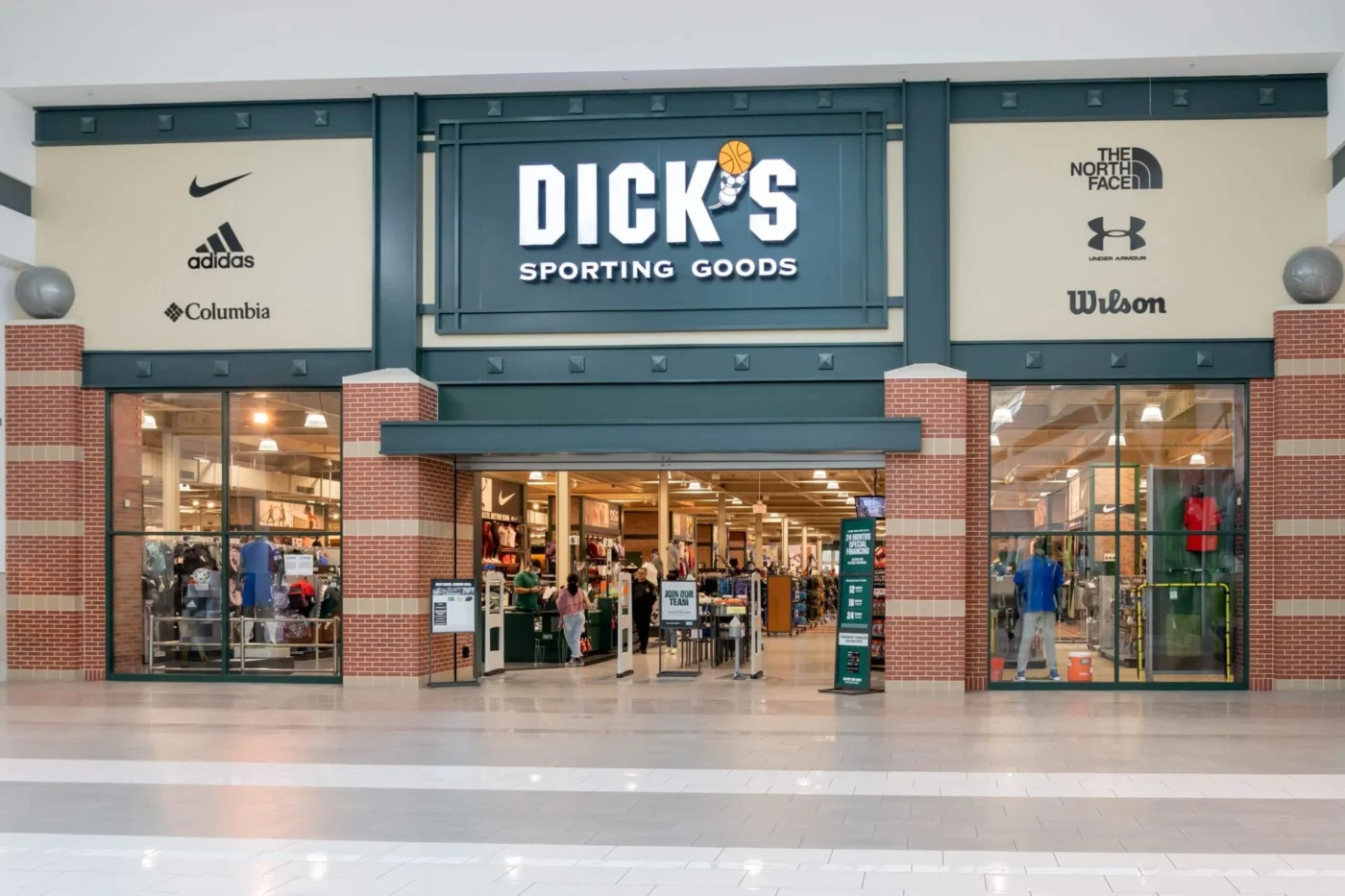
Dick’s Sporting Goods (DKS) faces mounting challenges after releasing a mixed second-quarter earnings report that prompted analysts to reassess their positions. Shares declined approximately 1.2% in response to the financial update.
DICK’S Sporting Goods, Inc., DKS
The company’s adjusted earnings per share projection for the complete fiscal year dropped to a range of $11.00-$12.00, significantly below the previously stated $13.50-$14.50 bracket. This substantial reduction prompted Telsey Advisory Group to lower its rating on the stock from Outperform to Market Perform while dramatically reducing the price objective from $255 down to $145.
At first glance, the top-line revenue figure appeared impressive. Total consolidated net sales surged 53.2% to reach $5.59 billion, primarily fueled by $1.74 billion in contributions stemming from the Foot Locker purchase.
Foot Locker Acquisition Creates Headwinds
However, the Foot Locker division is turning out to be more challenging than initially anticipated. The segment experienced a 3.6% decrease in pro forma comparable sales during Q2 and recorded an operating deficit of $31.9 million. Looking ahead to the complete fiscal year, leadership now projects Foot Locker pro forma comps ranging from negative 2% to flat performance, accompanied by an operating loss between $80 million and $40 million.

This represents a significant departure from previous forecasts that anticipated positive profitability.
Telsey analyst Cristina Fernández indicated the Foot Locker recovery timeline has been pushed back “at least a few quarters,” pointing to softening demand in casual footwear and evolving consumer preferences toward more formal shoe styles.
Performance footwear brands such as On and Hoka continue to demonstrate relative strength. However, the downturn is also affecting adidas and New Balance, extending beyond just Nike.
The footwear sector overall is grappling with surplus inventory levels, especially concerning legacy product designs. Company leadership anticipates an intensely promotional landscape continuing through at least the fourth quarter, identifying Q3 as presenting the most significant margin pressure.
Consolidated adjusted gross profit totaled $1.9 billion, representing 34.06% of revenues, marking a roughly 300 basis point year-over-year contraction. Adjusted operating income decreased to $453.3 million, accounting for 8.11% of sales, compared with 13.02% in the prior-year period.
Core Dick’s Operations Demonstrate Resilience
Setting aside Foot Locker complications, the primary Dick’s business delivered respectable performance. Comparable store sales increased 4.9%, with World Cup-related products contributing to customer traffic. Two-year and three-year comparable growth rates of 9.9% and 14.4% respectively demonstrate the brand’s continued outperformance relative to broader retail trends.
Gross margin at the Dick’s flagship division actually improved approximately 79 basis points compared to last year, supported by revenue from the Dick’s Media Network and GameChanger platforms, along with tariff refund recognition during the period.
The ScoreCard customer loyalty initiative now encompasses roughly 30 million registered members. A premium subscription option, ScoreCard+, carrying a $99 annual fee, was introduced to strengthen consumer relationships.
Regarding physical expansion, the company opened five additional House of Sport venues and eight Field House stores during the quarter, with approximately 14 and 20 total locations respectively planned for the complete fiscal year.
The retailer closed the quarter holding approximately $914 million in cash reserves with zero outstanding balances on its $2 billion revolving credit line. Shareholder distributions totaled $111 million through dividend payments.
Leadership maintains confidence in achieving $100 million to $125 million in medium-range cost efficiencies through the Foot Locker merger, having recognized $516 million in integration expenses to date against a total anticipated investment of $750 million.
Get 3 Free Stock Ebooks
Discover top-performing stocks in AI, Crypto, and Technology with expert analysis.
- Top 10 AI Stocks - Leading AI companies
- Top 10 Crypto Stocks - Blockchain leaders
- Top 10 Tech Stocks - Tech giants



