



Key Takeaways
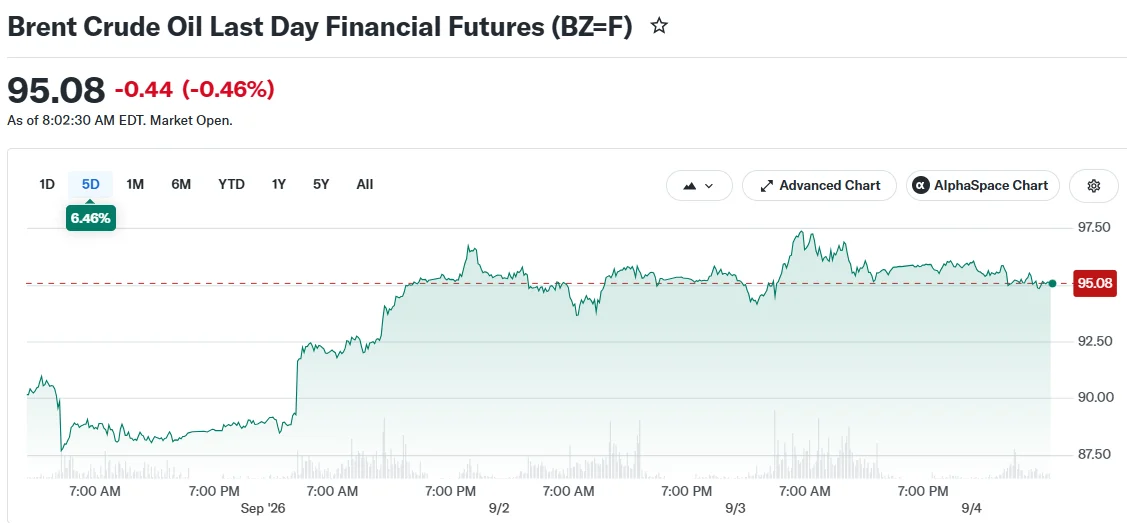
- Brent crude poised for approximately 7% weekly increase; WTI targeting 10% climb, approaching six-week peaks
- Military confrontations between Washington and Tehran intensified this week, affecting Kuwait, Bahrain, and Jordan
- Strait of Hormuz shipping activity plunged to merely 4 vessels Thursday, significantly below the 15-ship 10-day average
- American diesel costs reached unprecedented levels, contributing to inflationary pressures and elevated bond yields
- Citi upgraded Q3 Brent projection to $86 per barrel; ANZ forecasts near-term prices reaching $95
Crude prices experienced modest declines on Friday while maintaining trajectory for one of the strongest weekly gains in recent months. Escalating military tensions between Washington and Tehran continue to generate anxiety across international energy sectors.
Brent crude hovered near $95.15 per barrel Friday morning, registering a 0.4% daily decline. West Texas Intermediate dropped 0.6% to $90.77. Notwithstanding the intraday pullback, Brent posted a 6.6% weekly advance while WTI surged 8.8%, marking its strongest weekly performance since mid-July.
The standoff between Washington and Tehran has entered its seventh month. Recent days witnessed some of the most intense confrontations since July, with American military operations targeting sites near the Strait of Hormuz. Iranian forces retaliated with missile and unmanned aerial vehicle strikes against American and coalition installations across Kuwait, Bahrain, and Jordan.
Reports indicate one American strike impacted a location hosting a wedding celebration in southern Iran, resulting in civilian casualties. Iranian officials strongly denounced the incident.
Critical Shipping Lane Faces Severe Slowdown
The Strait of Hormuz represents the planet’s most critical oil transit corridor. Iranian authorities have broadened limitations on international maritime traffic through this strategic waterway following recent escalations.

Just four commercial cargo ships transited the strait Thursday, contrasting sharply with the approximately 15-vessel 10-day average. This dramatic reduction provides unmistakable evidence that shipping operations remain severely compromised, contradicting official U.S. government assertions suggesting flows have normalized.
Maritime monitoring services and independent energy analysts confirm the disruption persists. The discrepancy between official pronouncements and actual field data has intensified market volatility.
Vice President JD Vance stated Thursday that Washington would refuse diplomatic engagement with Tehran until Iranian authorities cease targeting commercial maritime operations.
Diesel Costs Reach Historic Peak
American diesel prices climbed to all-time highs this week. Market analysts attribute this partially to crude supply disruptions, alongside continued Ukrainian operations targeting Russian refining infrastructure.
“Diesel affects every economic sector,” explained Claudio Galimberti, chief economist at Rystad Energy. He noted that elevated diesel costs are fueling inflation expectations, subsequently driving upward pressure on U.S. government bond yields.
The surge in energy expenses has prompted concerns regarding potential severe economic slowdown globally.
American commercial crude stockpiles decreased to 424.5 million barrels during the week concluded August 28, declining from 428.9 million barrels the prior week, per Energy Information Administration data.
OPEC+ is anticipated to maintain its October production strategy unchanged during Sunday’s meeting. The coalition recently completed reversing one phase of production curtailments, though Hormuz disruptions have muddied the effects of those policy adjustments.
Citi elevated its Q3 Brent average projection to $86 per barrel from $80, reflecting slower-than-anticipated normalization of strait operations. ANZ increased its near-term Brent outlook to $95, warning of additional upside potential should hostilities intensify.
Iraqi authorities increased August crude exports to approximately 2.34 million barrels daily, rising from 1.35 million in July.
Get 3 Free Stock Ebooks
Discover top-performing stocks in AI, Crypto, and Technology with expert analysis.
- Top 10 AI Stocks - Leading AI companies
- Top 10 Crypto Stocks - Blockchain leaders
- Top 10 Tech Stocks - Tech giants



