


Key Highlights
- Crude benchmarks extended their rally for a third consecutive trading day Wednesday, with Brent climbing to $85.23 and WTI reaching $79.67 per barrel
- Washington reinstated its naval blockade targeting Iranian vessels in the Strait of Hormuz shipping lane on Tuesday evening
- President Trump warned of potential attacks on Iranian infrastructure, including energy facilities and transportation networks, unless negotiations resume
- Plans for a 20% cargo transit levy through Hormuz were abandoned following opposition from regional partners
- Commercial traffic through the critical waterway has significantly decreased, though complete closure hasn’t occurred
Oil prices extended their upward trajectory for a third consecutive session Wednesday as escalating U.S.-Iran hostilities heightened concerns about global supply disruptions. Brent crude advanced 0.6% to reach $85.23 per barrel, while West Texas Intermediate increased 0.4% to settle at $79.67.
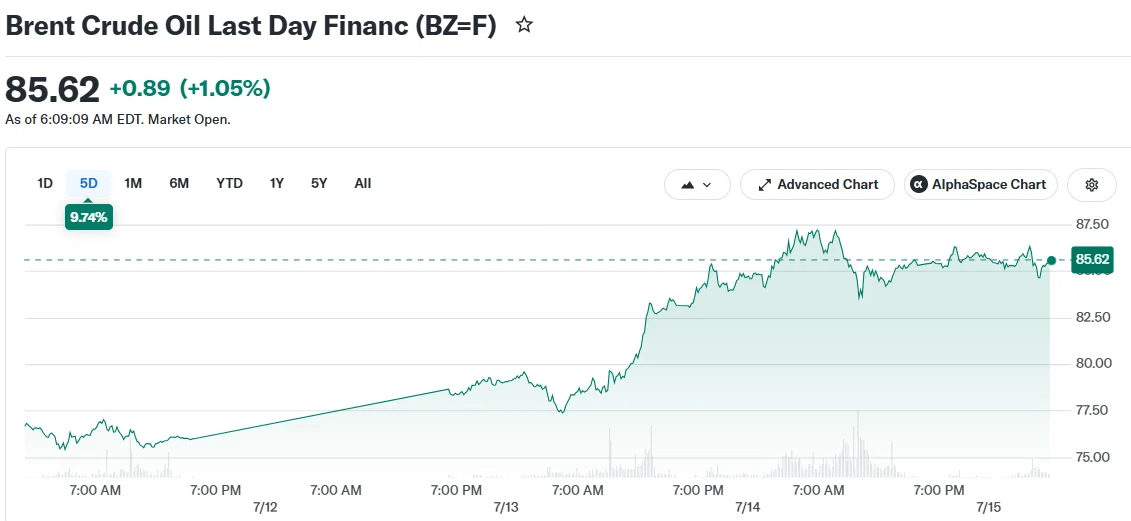
Both key benchmarks are trading near monthly highs. The contracts had already jumped approximately 10% during the week’s first two trading days.
Military Operations and Naval Enforcement Intensify Supply Concerns
American forces conducted additional strikes against Iranian positions in the early hours of Wednesday. Officials stated the operations aimed to diminish Tehran’s capacity to threaten commercial shipping in the Strait of Hormuz.
During a Fox News appearance, President Trump indicated that military operations would continue until Iran agrees to restart diplomatic discussions. He suggested that critical infrastructure including power generation facilities and transportation links could become targets within days without progress toward an agreement.
The president noted that energy installations would remain off-limits for the time being.

Washington officially reinstated its naval enforcement operations against Iranian shipping Tuesday night. The blockade implementation followed just one hour after the most recent military strikes concluded.
Trump had previously floated imposing a 20% fee on all cargo transiting the Strait of Hormuz. The proposal was withdrawn after regional allies expressed strong objections. The administration indicated that Gulf nations would compensate for the foregone revenue through direct financial commitments, though specific figures and participating countries weren’t disclosed.
Critical Waterway Faces Mounting Disruption
The Strait of Hormuz serves as a conduit for approximately 20% of the world’s oil and liquefied natural gas shipments. Vessel movement through the passage has decelerated substantially but hasn’t completely halted.
Scott Shelton, an energy analyst at TP ICAP, noted ongoing uncertainty. “Are we at war? Will the U.S. be able to control the Strait of Hormuz and enable non-Iranian ships to get through? As of today, nothing is getting through,” he stated.
Houthi forces aligned with Iran in Yemen launched ballistic projectiles and unmanned aerial attacks targeting Saudi Arabia. The offensive represents the most significant hostilities between the parties since their 2022 truce agreement.
Weekly petroleum inventory figures from the American Petroleum Institute revealed a decline of approximately 600,000 barrels. The reduction fell significantly short of analyst projections for a 2.7 million barrel drawdown.
The breakdown of the U.S.-Iran ceasefire agreement triggered the current wave of military confrontations. The crisis has brought shipping operations in the strategic waterway nearly to a halt, with diplomatic resolution remaining elusive.
Get 3 Free Stock Ebooks
Discover top-performing stocks in AI, Crypto, and Technology with expert analysis.
- Top 10 AI Stocks - Leading AI companies
- Top 10 Crypto Stocks - Blockchain leaders
- Top 10 Tech Stocks - Tech giants



