



Key Highlights
- Brent crude declined more than 1% to approximately $88 per barrel Tuesday amid ongoing U.S.-Iran hostilities
- Diplomatic intermediaries suggested a 10-day truce aimed at restoring a June temporary agreement, providing potential relief
- An oil tanker in the Strait of Hormuz sustained damage and was evacuated after Iran’s Revolutionary Guards took credit
- Yemen’s Houthi forces announced intentions to blockade Saudi Arabia by sea, intensifying concerns about energy supply chains
- Market participants await U.S. petroleum inventory figures from API and EIA scheduled for release this week
Oil prices retreated more than 1% Tuesday as market participants weighed optimism surrounding potential diplomatic resolution between Washington and Tehran against continuing military actions and emerging shipping threats.
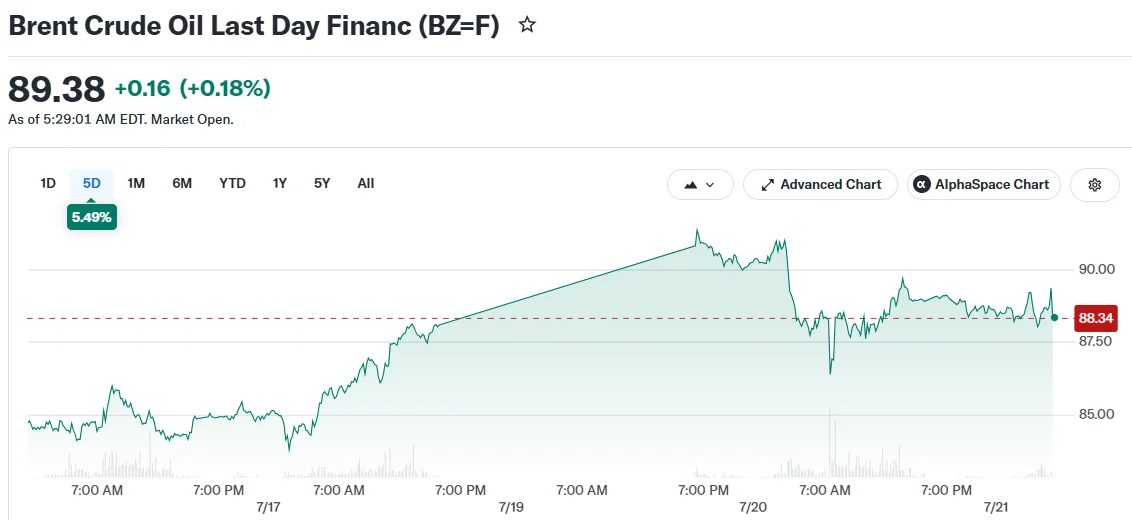
Brent crude slipped to approximately $88 per barrel, while U.S. West Texas Intermediate descended to around $82. The previous session saw both benchmarks close higher, with Brent momentarily surpassing the $90 threshold.
International mediators have put forward a 10-day cessation of hostilities between the United States and Iran, Reuters reported, citing a high-ranking Iranian source. The diplomatic initiative seeks to restore an interim agreement from June 17 and establish groundwork for comprehensive negotiations.
Hostilities commenced February 28 following combined U.S.-Israeli operations against Iranian positions. The U.S. Central Command has verified conducting ten straight days of airstrikes targeting Iranian military installations, with detonations documented in Bandar Abbas, Qeshm Island, and Konarak.
While diplomatic channels remain open, substantial disagreements persist between Washington and Tehran. U.S. President Donald Trump pledged additional military responses following casualties among American military personnel.

Tuesday witnessed an attack on an oil tanker navigating the Strait of Hormuz, hit by an unidentified projectile that compelled crew evacuation. Iran’s Islamic Revolutionary Guards Corps acknowledged the assault. Maritime traffic through this critical waterway has declined noticeably.
As one of the planet’s most vital petroleum shipping corridors, the Strait of Hormuz handles significant crude volumes. Extended interruptions would severely impact worldwide energy distribution networks.
Yemen’s Houthis Introduce Additional Supply Concerns
The Iran-aligned Houthi militia in Yemen declared intentions to establish a maritime blockade targeting Saudi Arabia. Such action would impact the Bab al-Mandab Strait, a strategic bottleneck managing roughly 12% of international commerce.
“A naval blockade threat against Saudi Arabia from the Houthis carries considerable weight as it amplifies disruption risks to another key petroleum producer,” stated Tim Waterer from KCM Trade.
ING’s analytical team indicated markets remain skeptical about the blockade’s feasibility. Nevertheless, they emphasized such threats would drive up maritime insurance premiums across the region. Shipping companies might need to redirect vessels around the African continent should the blockade materialize.
SEB Research suggested recent American military operations could represent strategic positioning ahead of diplomatic agreements. However, analysts cautioned against dismissing the possibility of extended standoff conditions, which would perpetuate uncertainty around energy supplies and potentially elevate crude valuations.
Geopolitical instability continues underpinning petroleum prices. Yet upward momentum remains constrained by historical precedent showing Middle Eastern conflicts typically de-escalate before triggering prolonged supply interruptions.
Attention now shifts to weekly American petroleum stockpile reports from the American Petroleum Institute scheduled Tuesday and the Energy Information Administration due Wednesday, which will provide insights into consumption patterns in the world’s primary oil-consuming nation.
Get 3 Free Stock Ebooks
Discover top-performing stocks in AI, Crypto, and Technology with expert analysis.
- Top 10 AI Stocks - Leading AI companies
- Top 10 Crypto Stocks - Blockchain leaders
- Top 10 Tech Stocks - Tech giants



