



Key Highlights
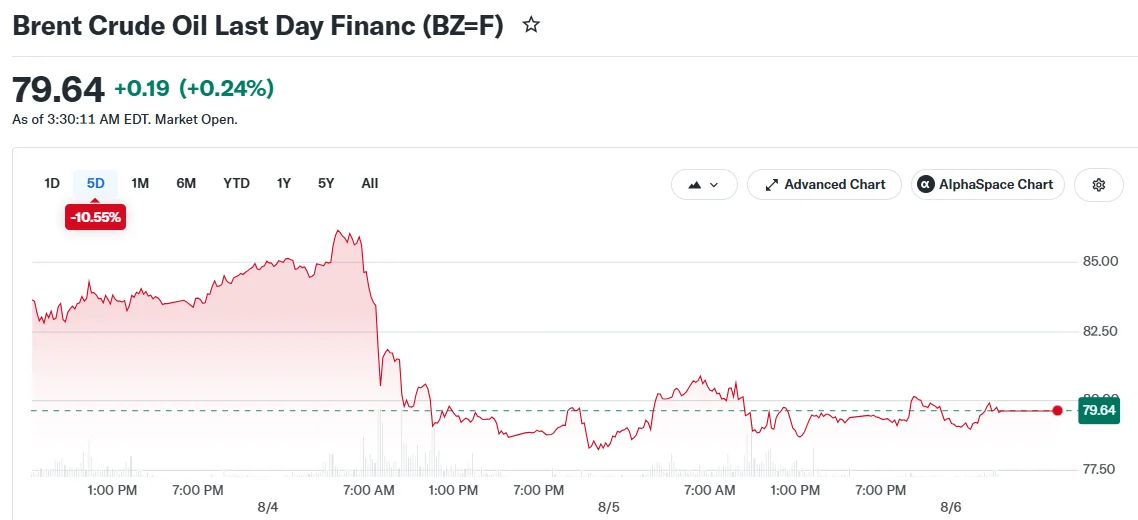
- Brent crude trades at $79.54 while WTI stands at $75.27, with both benchmarks declining more than 10% across the past week
- Iran and Oman have established coordinates for a potential Strait of Hormuz corridor, though comprehensive terms remain unsigned
- Yemen’s Houthi militants targeted two Saudi crude carriers in attacks across the Red Sea and Gulf of Aden regions
- American crude stockpiles expanded by 2.5 million barrels, defying forecasts for a withdrawal
- Persian Gulf oil shipments continue running approximately 40% beneath late February pre-conflict volumes
On Thursday, Brent crude futures hovered around $79.54 per barrel, while U.S. West Texas Intermediate contracts remained positioned at $75.27. Each benchmark has shed more than 10% of its value throughout the previous seven trading days.
Tehran and Muscat have arrived at a mutual understanding regarding geographical coordinates that would define a prospective maritime passage through the Strait of Hormuz. Nevertheless, a comprehensive agreement remains elusive. Negotiations concerning transit fees, inspection protocols, and security frameworks continue without resolution.
Iranian diplomatic officials acknowledged that a collaborative statement was in its final preparation stages, though they cautioned that specific external actors might still obstruct finalization.
Market participants maintained a skeptical stance. Research teams at KCM Trade referenced a brief memorandum of understanding executed last June that subsequently collapsed, fueling apprehension that any emerging accord might encounter identical obstacles.
Prior to hostilities commencing in late February, the Strait of Hormuz facilitated passage for approximately 20% of worldwide daily petroleum and liquefied natural gas volumes. Current Persian Gulf crude and condensate shipment levels remain roughly 40% beneath their pre-conflict benchmarks.

U.S. President Donald Trump indicated Wednesday that American officials were engaged in discussions with Iranian counterparts and suggested observers should “see what happens.” Tehran publicly refuted any ongoing diplomatic negotiations regarding peace.
Research analysts at ING emphasized that substantial advancement in Washington-Tehran dialogue would be necessary before disrupted energy transportation could realistically return to normal operations.
Militant Strikes and Inventory Growth Weigh on Sentiment
Yemeni Houthi military factions announced they executed missile operations against two Saudi petroleum tankers—one positioned near the Red Sea terminal at Yanbu and another in Gulf of Aden waters. Riyadh has not provided official verification of either event.
Roberto Cominotto, an analyst with Julius Baer, observed that Houthi military actions have yet to meaningfully disrupt hydrocarbon supply chains, though he cautioned that intensified hostilities could alter this assessment.
American petroleum stockpiles expanded by approximately 2.5 million barrels during the previous week. Traders had anticipated a withdrawal of 1.5 million barrels. This unexpected accumulation signals weaker immediate consumption patterns.
Gasoline reserves contracted by 1.64 million barrels, while distillate supplies decreased 3.47 million barrels, indicating some tightening dynamics within processed fuel sectors.
Iranian authorities issued warnings to Persian Gulf nations that any additional American military action targeting Iranian assets would provoke counter-strikes against regional energy facilities.
Saudi Arabia implemented modest reductions to its official selling price for Arab Light crude destined for Asian markets in September deliveries. Meanwhile, a significant petroleum processing facility in Russia’s Yaroslavl area experienced fire damage following a Ukrainian unmanned aerial vehicle attack, with emergency response teams working to suppress the flames.
Trading activity continues in a wait-and-see mode pending a confirmed arrangement that delivers tangible increases in petroleum transit through the strategic waterway.
Get 3 Free Stock Ebooks
Discover top-performing stocks in AI, Crypto, and Technology with expert analysis.
- Top 10 AI Stocks - Leading AI companies
- Top 10 Crypto Stocks - Blockchain leaders
- Top 10 Tech Stocks - Tech giants



