



TLDR
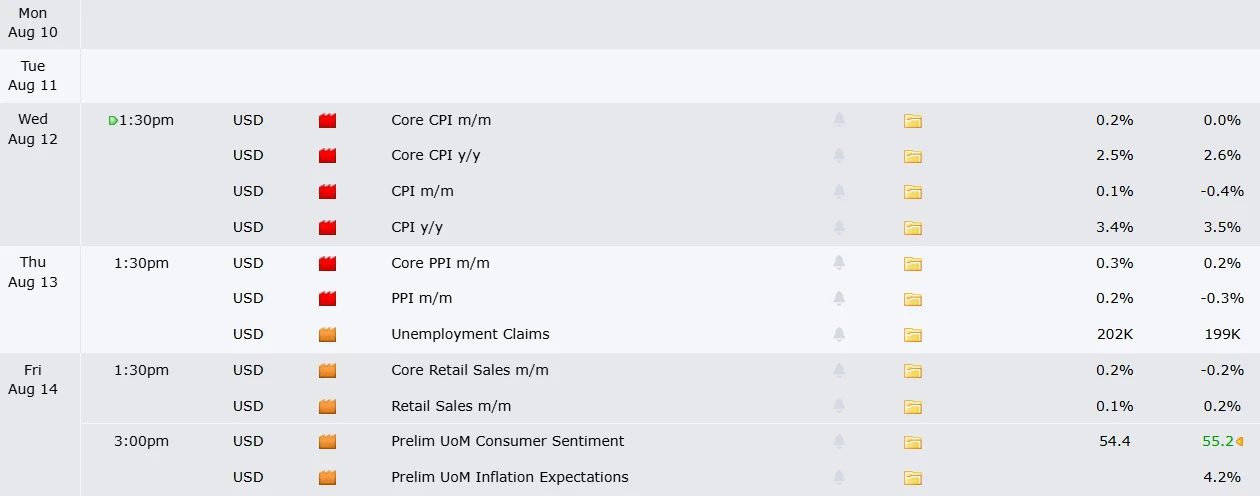
- Wednesday brings July’s Consumer Price Index, with analysts forecasting 0.2% increases in headline and core measures
- Political tension mounts as administration weighs removal of Federal Reserve Governor Lisa Cook
- Earnings season continues with reports from AI infrastructure players Nebius, CoreWeave, and Cerebras
- Major indices notched record territory following Friday’s robust employment figures that diminished rate increase speculation
- Consumer spending figures and sentiment readings cap off Friday’s economic calendar
Financial markets enter an exceptionally active stretch as investors digest inflation metrics, Federal Reserve political developments, and artificial intelligence sector results.
Friday saw the S&P 500 reach unprecedented levels, advancing 0.6% during the session. Across the five-day period, the tech-focused Nasdaq surged 5.2%, while the S&P 500 climbed 3.6% and the Dow Jones Industrial Average posted a 3% increase. These gains marked the strongest weekly performance for all three benchmarks since April.
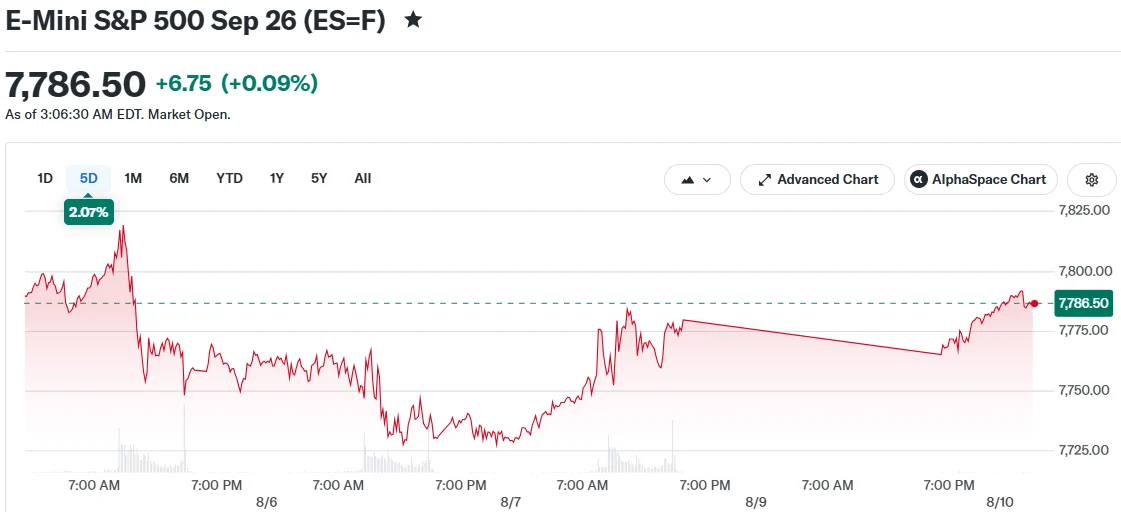
The employment situation released Friday fueled market optimism. Solid job creation figures relieved concerns that monetary policy tightening might resume soon.
Key Inflation Metrics Approach
Wednesday morning at 8:30 a.m. Eastern brings the July Consumer Price Index release. Market analysts anticipate monthly gains of 0.2% for both headline and core inflation measures.
While June witnessed declining price pressures, circumstances have evolved. Regional conflict in Middle Eastern territories has interrupted petroleum supply chains, elevating energy costs.

Thursday’s calendar features the Producer Price Index, which monitors inflation at the wholesale level. This gauge retreated in June following May’s significant jump.
Bank of America’s Stephen Juneau characterized June’s softer inflation reading as an anomaly. He noted that results matching current projections would strengthen arguments for monetary tightening in September.
Friday’s economic releases include consumer spending at retail establishments and the University of Michigan’s confidence index. Household expenditures edged up 0.2% in June, even as the personal savings rate dropped to its lowest point in four years.
Central Bank Autonomy Questions Emerge
Recent correspondence from the administration indicated presidential consideration of Governor Lisa Cook’s potential removal. This development stems from a late-June Supreme Court ruling that appears to permit such presidential action.
Kevin Hassett, directing the White House National Economic Council, acknowledged publicly that prospective Fed Chair candidate Kevin Warsh maintains regular economic discussions with the president. Such ongoing communication between executive and central bank figures represents a departure from traditional norms.
Fixed-income markets responded to these developments. Last week’s yield increases reflected investor unease that some analysts connected to doubts about Federal Reserve institutional credibility.
Artificial Intelligence Sector Performance Diverges
Three companies specializing in AI infrastructure infrastructure deliver quarterly results this week. Nebius Group shares have soared 122% in 2025. CoreWeave has appreciated 25%. Meanwhile, Cerebras Systems trades 35% below its initial public offering price.
These contrasting stock performances demonstrate that surging artificial intelligence investment doesn’t uniformly benefit all sector participants.
Both CoreWeave and Nebius secured positions in the Nasdaq 100 during summer months. Nvidia maintains equity stakes in both enterprises.
Cerebras exceeded analyst projections in its inaugural earnings announcement as a publicly traded entity last June.
Super Micro Computer delivers results Tuesday following preliminary disclosures revealing expanding profit margins and unprecedented order volumes.
Applied Materials completes the week Thursday, concluding a pivotal period for semiconductor and AI hardware segments.
Get 3 Free Stock Ebooks
Discover top-performing stocks in AI, Crypto, and Technology with expert analysis.
- Top 10 AI Stocks - Leading AI companies
- Top 10 Crypto Stocks - Blockchain leaders
- Top 10 Tech Stocks - Tech giants



