



Key Takeaways
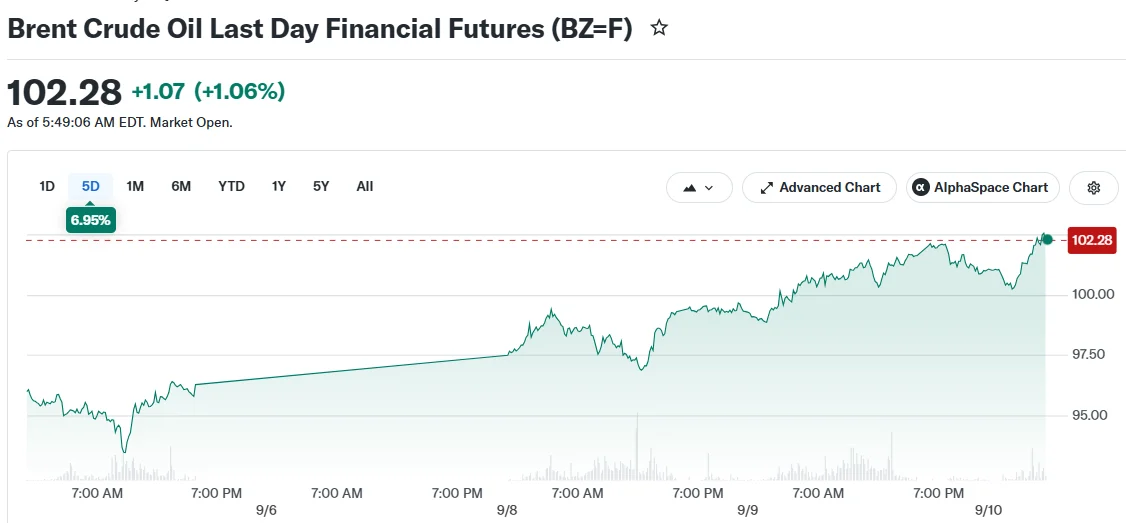
- Brent crude surpassed the $100 threshold for the first time since the end of July following intensified military confrontations between the United States and Iran
- American forces confirmed destroying five Iranian oil vessels; Iranian military struck 10 commercial ships operating near the Strait of Hormuz
- Oil transit through the Hormuz corridor has plummeted to less than 2 million barrels daily, a dramatic decline from the 8-9 million bpd recorded before hostilities escalated
- Houthi forces from Yemen launched strikes against Saudi Arabian energy facilities, targeting the Jizan refinery among other installations
- Worldwide petroleum stockpiles decreased by 69 million barrels during July, as the International Energy Agency documented 8.3 million bpd of Middle Eastern production offline
On Wednesday, [[LINK_START_1]]Brent crude[[LINK_END_1]] climbed above the $100 per barrel threshold amid escalating military confrontations between American and Iranian forces, intensifying concerns about sustained disruptions to global petroleum supplies. West Texas Intermediate followed suit, hovering near $96 per barrel.
The recent escalation witnessed Iranian forces targeting 10 vessels operating in and around the strategically vital Strait of Hormuz. In retaliation, American military operations resulted in the destruction of five Iranian oil tankers navigating Persian Gulf waters. Subsequently, Iran launched a counterstrike against a U.S. military installation in Jordan.
The volume of petroleum passing through the Strait of Hormuz has experienced a dramatic contraction. Prior to the resumption of hostilities, approximately 8 to 9 million barrels flowed through the waterway daily. Current figures indicate this volume has collapsed to under 2 million barrels per day, based on information from Rystad Energy referenced by Reuters.
Data from maritime tracking company Kpler reveals that no very large crude carriers have successfully navigated out of the strait since September 2.
Alternative Export Channels Face Growing Threats
Several oil-producing nations in the Middle East have diverted their crude shipments through pipeline networks connecting to terminals beyond Hormuz. The United Arab Emirates is utilizing pipeline infrastructure to reach the Fujairah port facility. Iraqi crude is being transported via pipeline to Turkish terminals. Saudi Arabia has reversed the direction of its East-West pipeline system to access the Yanbu port on the Red Sea coast.

However, these backup routes are increasingly vulnerable. Iran-supported Houthi militants from Yemen executed attacks on Saudi energy infrastructure during the past week. The recent assault damaged the Jizan refinery facility. Additional petroleum processing plants across the Arabian Peninsula have similarly sustained strikes.
Energy analysts at ANZ indicated in their research note that the pattern of retaliatory strikes suggests petroleum exports from the Persian Gulf region will likely face ongoing disruption for an extended period.
Stockpiles Depleting as Conflict Persists
The International Energy Agency’s most recent monthly assessment indicated that 8.3 million barrels per day of Middle Eastern oil production remained offline as of July. During that same month, worldwide petroleum inventories contracted by 69 million barrels, representing an average daily withdrawal of 2.7 million barrels.
Multiple physical crude oil benchmarks have already exceeded the $100 mark. Murban crude, DME Oman, the OPEC reference basket, and the Indian crude basket are all currently trading above that price point. Brent futures contracts have now crossed into triple-digit territory as well.
President Trump informed journalists on Wednesday that the conflict would conclude following November’s midterm elections. Conversely, a Wall Street Journal article reported that Trump’s senior advisers have cautioned the confrontation may persist throughout the remainder of his presidential term.
No diplomatic peace negotiations between Washington and Tehran have been announced. Petroleum consumption typically increases during the year’s fourth quarter, potentially driving prices even higher if supply constraints continue.
As of Thursday morning, Brent crude was changing hands at $101.22 per barrel.
Get 3 Free Stock Ebooks
Discover top-performing stocks in AI, Crypto, and Technology with expert analysis.
- Top 10 AI Stocks - Leading AI companies
- Top 10 Crypto Stocks - Blockchain leaders
- Top 10 Tech Stocks - Tech giants



