



Key Highlights
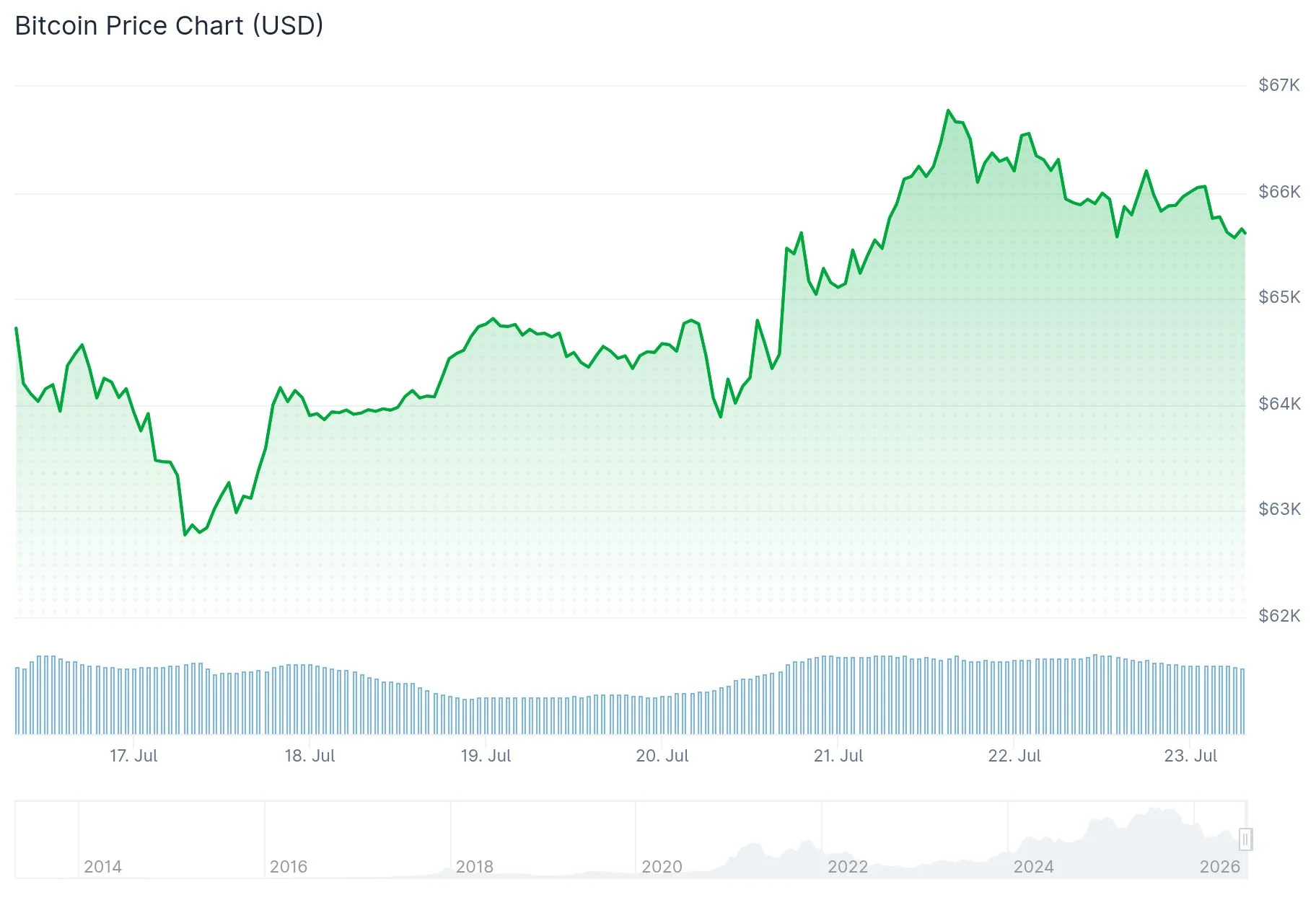
- Bitcoin retreated to approximately $65,500 as climbing oil prices and elevated Treasury yields created headwinds for cryptocurrency assets
- Polymarket’s prediction odds for the Digital Asset Market Clarity Act passing fell sharply from 46% down to 38%
- Senate Democrats criticized the most recent version of the Clarity Act, stating it doesn’t adequately address ethics requirements and other key areas
- Stock markets across Asia posted broad gains following Alphabet’s announcement of a $15 billion increase to its yearly capital expenditure plans
- South Korea’s KOSPI index jumped 4.4%, powered by semiconductor giants SK Hynix and Samsung Electronics riding AI investment enthusiasm
Cryptocurrency markets faced headwinds on Thursday as Bitcoin encountered downward pressure from multiple fronts—escalating oil prices, rising bond yields, and growing doubts about pending regulatory legislation. Meanwhile, equity markets in Asia received a boost from artificial intelligence spending announcements.
Bitcoin Retreats Under Macroeconomic Headwinds
Bitcoin declined to approximately $65,500 during Thursday’s early hours, representing a 0.7% decrease from midnight UTC levels. This downturn continued a retreat from Wednesday’s peak near $66,700. Other major cryptocurrencies including Ether, Solana, and XRP similarly moved into negative territory.
Energy markets played a significant role in triggering the selloff. West Texas Intermediate crude futures advanced to $88.60 per barrel, reaching the highest point since June 11. This represented a dramatic recovery from recent levels below $70, reigniting worries about inflationary pressures.
Fixed-income markets moved swiftly in response. The two-year U.S. Treasury yield surged to 4.31%, marking its peak since February 2025. Meanwhile, the 10-year yield climbed to 4.66%, the highest reading since May. Elevated yields typically diminish the appeal of non-yielding holdings like Bitcoin for portfolio managers.
Compounding market anxiety, U.S. armed forces launched a B-1 long-range bomber strike against facilities connected to Iran’s Islamic Revolutionary Guard Corps. The military action suggested potential escalation beyond the contained operations observed in preceding days.

Legislative Prospects for Clarity Act Decline
Hopes for crypto regulatory progress suffered a setback on Thursday. A coalition of influential Senate Democrats declared that the latest version of the Digital Asset Market Clarity Act “falls short” regarding ethics standards and other essential components.
Prediction markets on Polymarket quickly reflected the development. The probability of the Clarity Act becoming law dropped from 46% down to 38%.
Senate Republicans had unveiled a revised draft earlier this week. The proposal incorporates an ethics framework that received White House approval. Senator Bernie Moreno characterized it as “the most powerful ethics language in U.S. history,” yet this characterization failed to win over Democratic lawmakers.
Asian Equity Markets Advance on AI Infrastructure Investment
Stock exchanges throughout Asia predominantly posted gains on Thursday. The upward momentum stemmed from Alphabet’s decision to increase its annual capital expenditure projection by an additional $15 billion, signaling sustained momentum in AI infrastructure investments.
South Korea’s KOSPI index topped regional performance with a 4.4% surge. Memory chip manufacturers SK Hynix and Samsung Electronics rallied sharply on projections that expanded AI-related capital spending would drive increased demand for memory semiconductors and AI server equipment.
South Korea’s economic data also impressed, with GDP expanding 3.7% year-over-year during Q2 2026, surpassing economist estimates of 3.5%. Robust semiconductor shipments contributed significantly to the outperformance.
Japan’s Nikkei 225 index advanced 0.4%. Hong Kong’s Hang Seng climbed 1.1%. China’s Shanghai Composite inched higher by 0.2%.
The crude oil rally limited broader market gains. Houthi militant attacks targeting two Saudi Arabian oil tankers in Red Sea waters drove petroleum prices to six-week peaks for the fifth consecutive trading session, maintaining inflationary concerns.
Australia’s labor market demonstrated unexpected strength, adding 76,300 positions in June—significantly exceeding the 16,400 consensus forecast. The robust employment data increased speculation about a potential interest rate increase from the Reserve Bank of Australia before 2025 concludes.
Alphabet’s stock declined during extended trading hours despite delivering earnings results that topped analyst projections, as market participants engaged in profit-taking.
Get 3 Free Stock Ebooks
Discover top-performing stocks in AI, Crypto, and Technology with expert analysis.
- Top 10 AI Stocks - Leading AI companies
- Top 10 Crypto Stocks - Blockchain leaders
- Top 10 Tech Stocks - Tech giants



