


TLDR
- Gold declined 0.6% to $4,271 per ounce, reaching its lowest point in five weeks
- Crude oil surged following Saudi Arabia’s closure of its east-west pipeline after Houthi militant strikes
- Federal Reserve rate hike probability jumped to 92% for Wednesday’s policy meeting, up from 59% seven days earlier
- U.S. 10-year Treasury yields surged past 5%, marking nearly two-decade highs
- Rising interest rates coupled with dollar strength create headwinds for non-yielding gold
Gold prices experienced a significant decline on Tuesday, plunging beneath the $4,300 per ounce threshold as escalating energy costs heightened inflation concerns in advance of a crucial Federal Reserve policy announcement.
Spot gold decreased 0.6% to settle at $4,271.32 per ounce. Meanwhile, gold futures experienced a steeper 1.0% decline to $4,310.90 per ounce during early market activity.
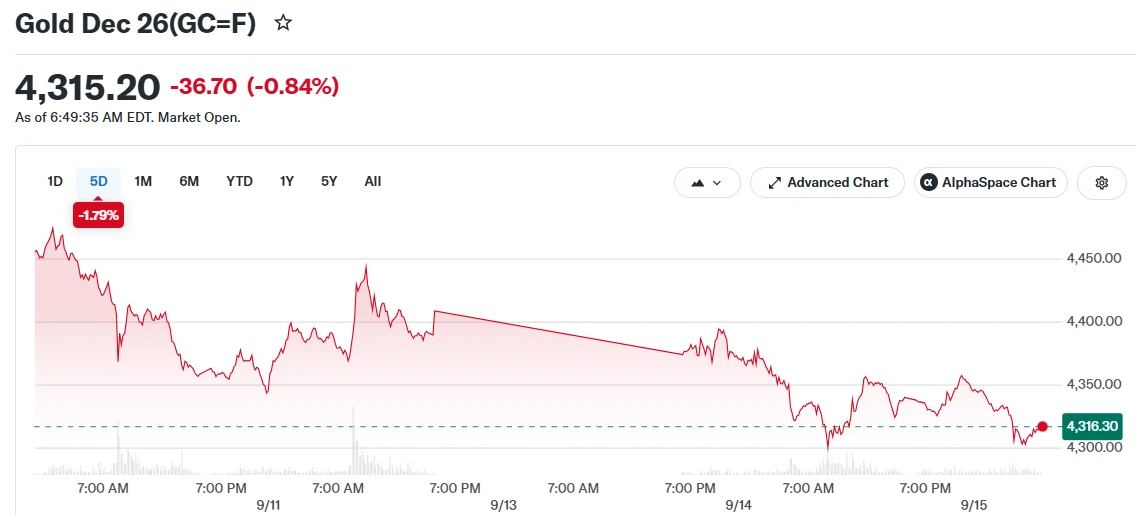
The precious metal had previously touched a five-week bottom on Monday. Tuesday’s session saw the downward momentum persist as developments in energy markets intensified selling pressure.
Pipeline Attack Amplifies Inflation Concerns
Saudi Arabia was forced to close its strategic east-west pipeline following attacks by Iran-aligned Houthi militants operating from Yemen. The 1,200-kilometer conduit is projected to remain non-operational for a period of three to five weeks during necessary repairs, including restoration work at a critical pumping facility.
The pipeline had been transporting between 2.6 million and 4 million barrels daily since the end of August. Market analysts indicate a sustained closure could eliminate as much as 4% of worldwide oil availability.

Brent crude jumped 2% to reach $107.70 per barrel in response to the disruption. The shutdown arrives after the Strait of Hormuz was essentially blocked earlier in the year, establishing the pipeline as a vital corridor for Saudi petroleum shipments.
As energy expenses escalate, market participants fear inflation may persist at elevated levels or accelerate further. This scenario intensifies expectations that the Federal Reserve will implement tighter monetary policy.
Rate Hike Probability Soars Ahead of Fed Decision
Financial markets are currently assigning a 92% probability to a rate increase at Wednesday’s Federal Reserve policy meeting. This represents a dramatic increase from the 59% likelihood calculated merely one week prior, based on CME FedWatch data.
U.S. 10-year Treasury yields have breached the 5% threshold, representing their most elevated position in approximately two decades. Simultaneously, the U.S. dollar has gained considerable strength.
These twin developments create adverse conditions for gold. Since gold generates no income, elevated interest rates diminish its attractiveness relative to interest-bearing investments. Additionally, a robust dollar increases gold’s cost for international purchasers transacting in alternative currencies.
Lukman Otunuga, Head of Market Research at FXTM, observed that markets are entering a critical period where oil dynamics, central bank actions, and yield movements could all align in the same direction. He emphasized that the pivotal question is whether monetary authorities will validate or challenge current market expectations, noting that their response will likely determine the subsequent major movement across currency, equity, and gold markets.
ANZ analysts similarly highlighted that constrained oil availability is strengthening the case for monetary tightening, contributing additional downward pressure on gold valuations.
Gold futures were most recently quoted at $4,331.20 per troy ounce during European morning trading hours, representing a 0.5% daily decline.
Get 3 Free Stock Ebooks
Discover top-performing stocks in AI, Crypto, and Technology with expert analysis.
- Top 10 AI Stocks - Leading AI companies
- Top 10 Crypto Stocks - Blockchain leaders
- Top 10 Tech Stocks - Tech giants



