



Key Takeaways
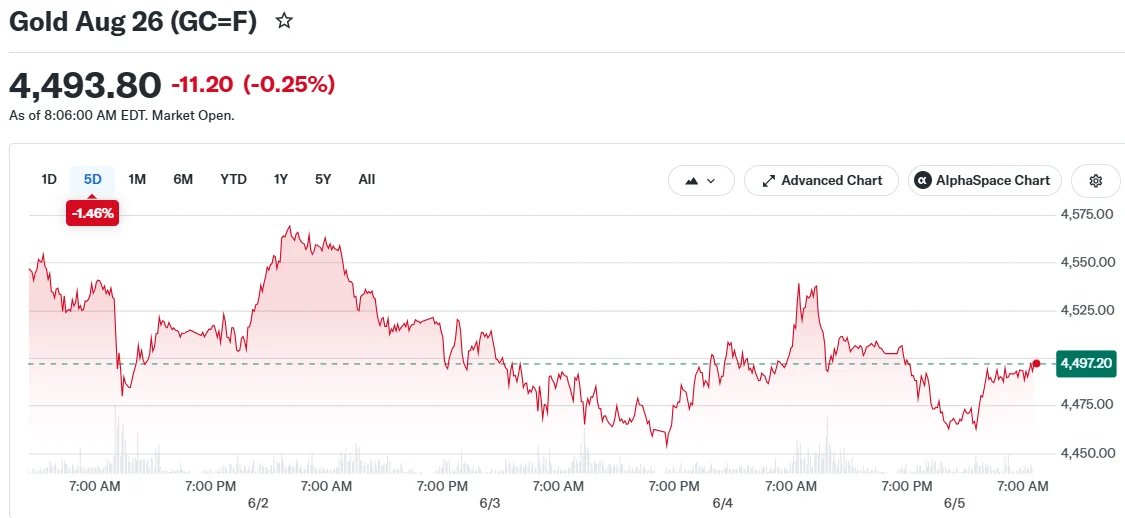
- Gold is on track for a weekly decline of approximately 1.6%, currently trading near $4,465 per ounce.
- Since late February, the Strait of Hormuz has remained shut due to escalating U.S.-Iran hostilities, driving crude prices upward and sparking inflation concerns.
- Market expectations now point to the Federal Reserve maintaining current interest rates through 2026, with potential hikes in early 2027.
- A U.S.-brokered ceasefire between Israel and Lebanon was turned down by Hezbollah, diminishing prospects for near-term peace with Iran.
- Despite its reputation as a crisis hedge, gold has declined approximately 12% across the last three months.
The precious metal is experiencing downward pressure this week as escalating Middle Eastern hostilities keep crude oil prices elevated and trigger concerns about persistent inflation. Remarkably, gold has shed roughly 12% over a three-month period even amid ongoing geopolitical turmoil, weighed down by a robust dollar and expectations of prolonged higher interest rates.
Middle East Turmoil Amplifies Oil Costs and Inflation Anxieties
The strategic Strait of Hormuz has remained blocked since the final days of February, following a coordinated U.S.-Israeli military strike against Iran. This critical waterway normally carries approximately 20% of the world’s oil supply, and its closure has severely disrupted international energy markets, sending prices soaring.
Market experts at Saxo Bank have cautioned that swift depletion of petroleum reserves resulting from the blockade will likely trigger significant fuel cost spikes. Their analysis suggests energy costs will remain significantly elevated for a considerable timeframe.
These surging energy expenses are contributing to widespread inflationary pressures globally. Central banking institutions worldwide, particularly the Federal Reserve, are reacting by maintaining elevated interest rate policies.
Data from CME’s FedWatch Tool indicates market participants now anticipate the Fed will keep rates at current levels throughout 2026, followed by potential increases in the first quarter of 2027.

This scenario presents a challenging environment for gold. Since the precious metal generates no yield, sustained high interest rates make it comparatively less appealing versus assets that provide interest income.
Hezbollah’s Ceasefire Rejection Clouds Peace Prospects
Prospects for a diplomatic resolution between Washington and Tehran grew dimmer following Hezbollah’s rejection of an American-mediated cessation of hostilities between Israel and Lebanon.
Hezbollah’s leader Naim Kassem characterized the proposed terms as “absurd, humiliating, and insulting.” He insisted that Israel must execute a complete withdrawal from Lebanese territory before Hezbollah would cease its military operations.
Tehran has stipulated an end to the Lebanon conflict as a critical precondition for its own peace discussions with the United States. Hezbollah’s dismissal of the ceasefire proposal significantly complicates those diplomatic efforts.
This development occurred as Israeli military operations resulted in at least four fatalities in Lebanon. Meanwhile, Lebanese military forces deployed into regions of southern Lebanon on Thursday, as reported by state media outlets and confirmed by the Associated Press.
Gold’s Safe-Haven Appeal Weakens
Historically, gold has functioned as a reliable refuge asset during periods of geopolitical instability and market uncertainty. However, the current conflict has defied conventional patterns.
Spot gold declined 0.2% on Friday, settling around $4,465 per ounce. Gold futures fell 0.3% to reach $4,492 per ounce. The weekly performance shows a decline of approximately 1.6%.
Across the three-month period, gold has retreated roughly 12%. Additional downward pressure has come from a strengthening U.S. dollar. Since gold trades in dollar-denominated terms, dollar appreciation makes the metal more costly for international purchasers.
The greenback has gained strength partially because the United States stands as a significant energy producer and is perceived as relatively shielded from the oil price surge triggered by the conflict.
Market participants are closely monitoring Friday’s U.S. employment data for insights into how American labor markets are weathering the economic challenges stemming from the ongoing war.
Get 3 Free Stock Ebooks
Discover top-performing stocks in AI, Crypto, and Technology with expert analysis.
- Top 10 AI Stocks - Leading AI companies
- Top 10 Crypto Stocks - Blockchain leaders
- Top 10 Tech Stocks - Tech giants



