


Key Highlights
- SGP-0002 received approval from Solana validators, increasing the yearly disinflation rate from 15% to 30%
- 67% of voters supported the measure with 60.7% stake participation recorded
- Terminal inflation target of 1.5% will now be achieved in approximately 2.8 years rather than 5.7 years
- Net inflows into Solana spot ETFs reached $138M across a 10-day period, including a $47M daily peak
- BSOL from Bitwise surpassed the $1 billion AUM threshold, maintaining 9.3M SOL in holdings
The Solana validator community has made a decisive move to speed up the network’s token emission reduction schedule. Known as SGP-0002 or the “Double Disinflation” initiative, this governance proposal secured passage with 67% approval, while 25.16% opposed and 7.84% abstained from voting. The vote saw 60.7% of all eligible stake participate in the decision-making process.
This governance decision effectively doubles the network’s yearly disinflation rate from 15% to 30%. Importantly, the ultimate inflation floor of 1.5% remains unchanged — the network simply reaches this target on an accelerated timeline.
The previous issuance schedule would have seen Solana arrive at its 1.5% terminal rate in approximately 5.7 years. With this updated framework, that milestone will be reached in around 2.8 years. This acceleration translates to roughly 18.9 million fewer SOL tokens entering circulation over the coming six-year period.
Token holders stand to benefit from reduced supply dilution under this new framework. The trade-off comes in the form of diminished staking rewards for validators and those who delegate to them.
This vote represented Solana’s inaugural binding governance exercise. The same voting process ratified a proposed Solana Constitution while voting down a separate measure concerning resource and inclusion fees.

The decision wasn’t unanimous. Figment, which commanded the largest voting weight in the governance data with 17.1 million SOL staked, cast its entire vote against SGP-0002. Meanwhile, Helius and Jupiter threw their support behind the measure.
Kraken’s stance evolved during the voting window. The exchange initially registered opposition to the proposal at 12:33 UTC, momentarily dropping support below the required approval threshold. However, by the close of voting, over 90% of its approximately 8.9 million SOL stake had switched to support the measure.
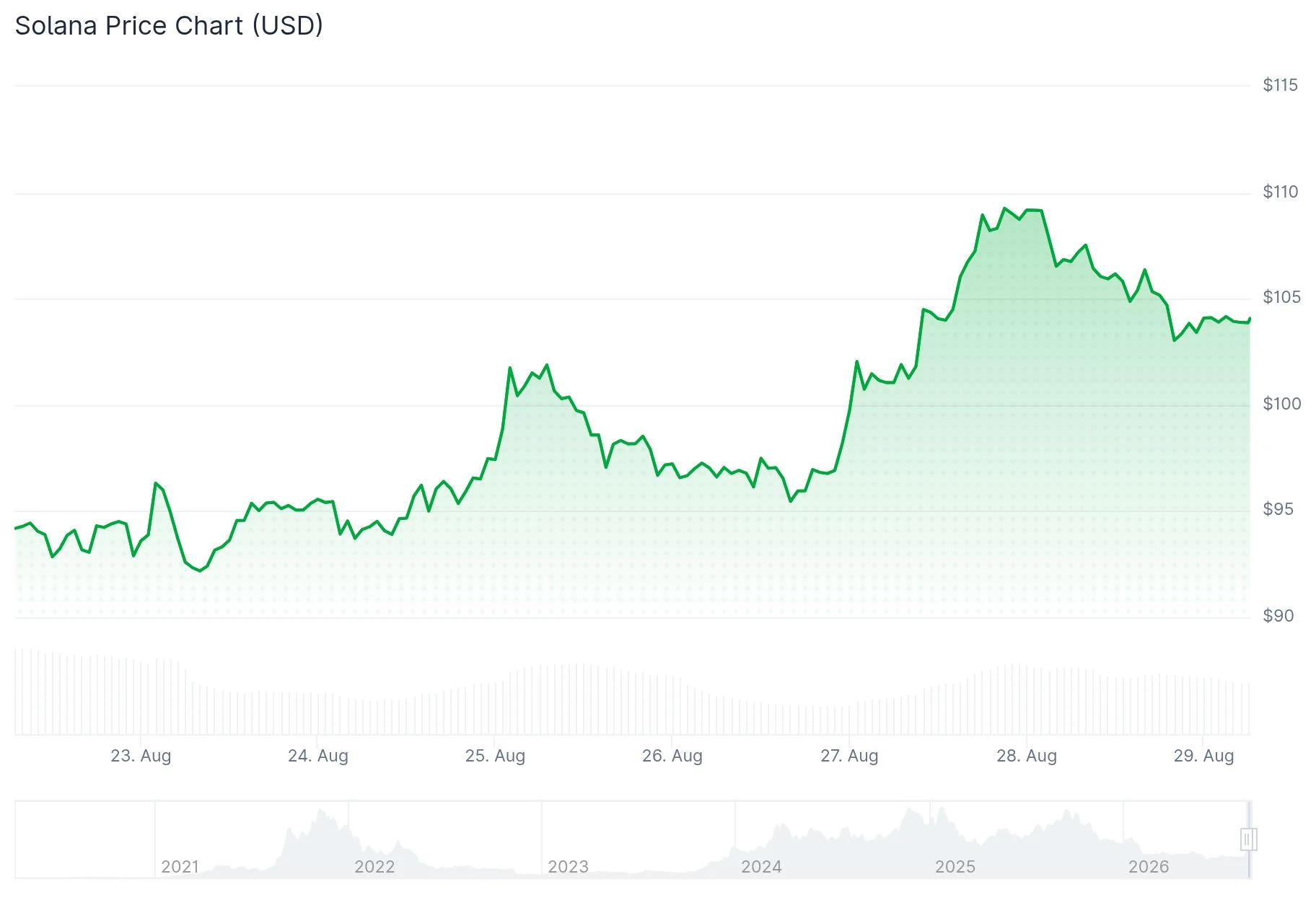
Market analyst Ted Pillows highlighted on X that a major investor acquired $29.58 million worth of $SOL via Binance on voting day, observing that “big money is getting more interested in Solana after the double disinflation proposal passed.”
Spot ETF Products Post Historic Inflow Period
Concurrent with the governance proceedings, Solana’s exchange-traded fund market demonstrated impressive momentum. According to Glassnode data, Solana spot ETFs accumulated $138 million in net inflows over a 10-day window, representing the “strongest stretch on record” for these investment vehicles.
One particular trading session captured $47 million in inflows, indicating that demand arrived in concentrated bursts rather than steady accumulation. Eric Balchunas, ETF analyst at Bloomberg, observed that Solana ETFs trading in the United States have collectively attracted approximately $1.7 billion in cumulative net inflows since their market debut, experiencing minimal sustained redemption activity.
Bitwise Product Achieves Billion-Dollar Milestone
The BSOL ETF from Bitwise has become the first Solana ETF to exceed $1 billion in total assets under management. Data from August 26 shows BSOL maintaining holdings of 9,332,360.79 SOL tokens, valued at approximately $1.02 billion at that time.
Bitwise introduced BSOL to the market in October 2025 as the first U.S. exchange-traded product offering complete direct exposure to SOL. The fund has established itself as the dominant Solana ETF measured by total assets.
According to Balchunas, Solana ETFs available to US investors have collectively drawn in around $1.7 billion in net inflows since launching, with sustained outflows remaining largely absent from these products.
Get 3 Free Stock Ebooks
Discover top-performing stocks in AI, Crypto, and Technology with expert analysis.
- Top 10 AI Stocks - Leading AI companies
- Top 10 Crypto Stocks - Blockchain leaders
- Top 10 Tech Stocks - Tech giants



