


Key Takeaways
- SK Hynix revealed plans for a 100 trillion won ($64.4 billion) investment to construct new NAND flash memory and advanced packaging facilities in Cheongju, South Korea.
- The primary NAND manufacturing site (designated M17) carries an 80 trillion won price tag with an anticipated 2029 completion date, while a 20 trillion won packaging facility targets late 2027.
- This initiative forms part of an expansive $2.1 trillion semiconductor development strategy coordinated with Samsung, designed to double South Korea’s memory production capabilities over five years.
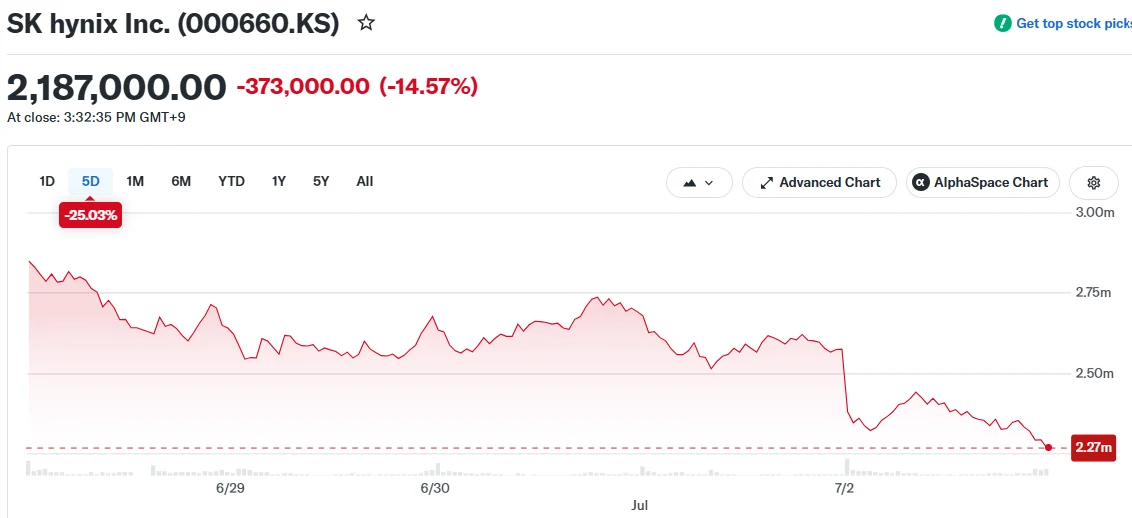
- Shares of SK Hynix plummeted 15% while Samsung declined 9% on Thursday, caught in a widespread semiconductor sector retreat driven by uncertainty surrounding Meta’s cloud infrastructure strategy.
- Prominent investor Michael Burry issued warnings regarding excessive AI capital deployment, characterizing it as “the beginning of the end” in communications to subscribers.
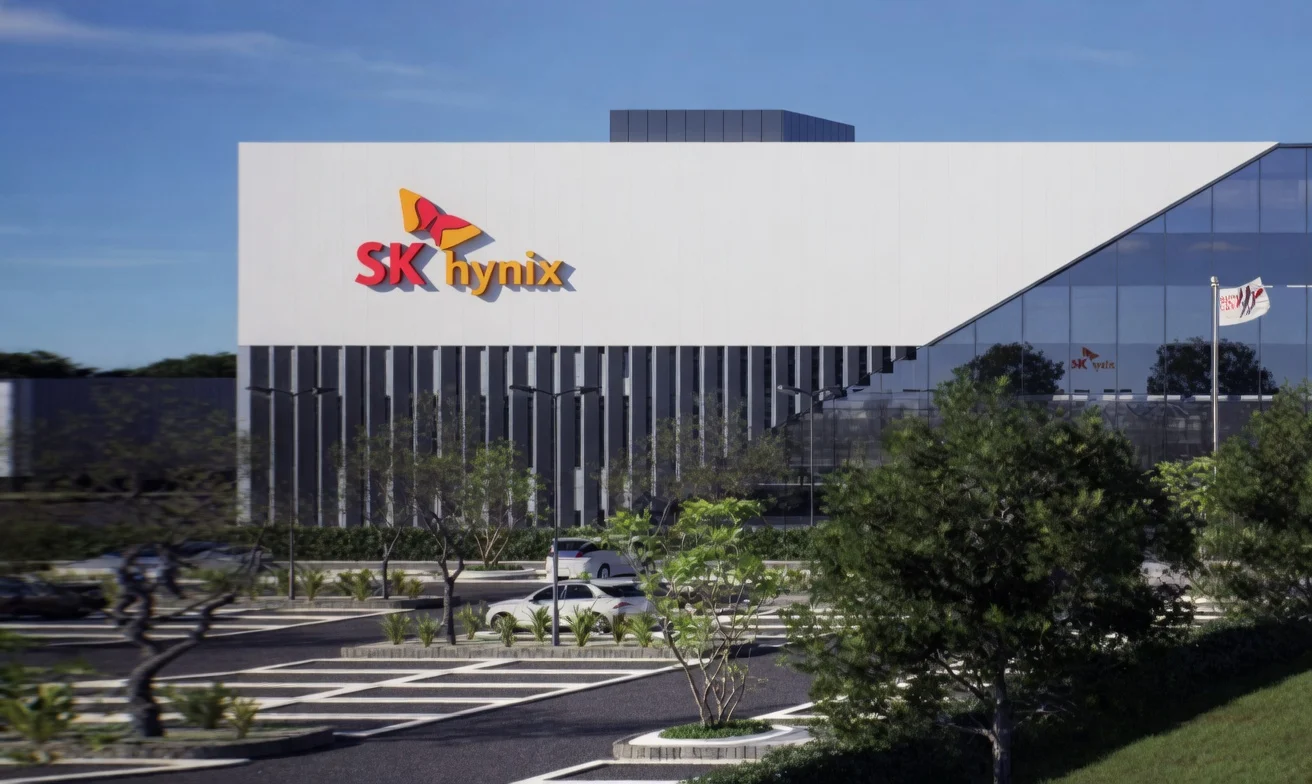
SK Hynix shares concluded Thursday’s trading session with a 15% decline as the South Korean memory manufacturer unveiled one of the nation’s most ambitious semiconductor capital expenditure programs to date.
The semiconductor giant confirmed its commitment to deploy 100 trillion won ($64.4 billion) toward constructing cutting-edge chip production facilities in Cheongju, South Korea. Chief Executive Officer Kwak Noh-jung disclosed the investment strategy during a ceremonial gathering that included South Korean President Lee Jae Myung.
The lion’s share of capital allocation — 80 trillion won — will fund a next-generation NAND flash memory production facility designated M17, scheduled for operational readiness by 2029. An additional 20 trillion won has been designated for an advanced chip packaging installation expected to launch by late 2027. Ground-breaking for the M17 facility is planned for next year.
This Cheongju development represents one component of a comprehensive $2.1 trillion investment framework unveiled this week in coordination with Samsung Electronics. The expanded program encompasses a proposed semiconductor hub in southwestern South Korea alongside multiple ongoing initiatives. The national objective calls for doubling memory chip manufacturing capacity within a five-year timeframe.
Kwak emphasized growing NAND requirements and supply constraints during his remarks. “While demand for NAND has been increasing and is expected to continue growing in the future, NAND supply is constrained,” he stated at the announcement.
Understanding the Share Price Decline
Notwithstanding the optimistic investment announcement, both SK Hynix and Samsung experienced significant market pressure. SK Hynix concluded trading down 15%, Samsung retreated 9%, and the comprehensive KOSPI benchmark declined approximately 7.2%.

The market downturn stemmed from developments concerning Meta Platforms’ intentions to commercialize computing infrastructure, sparking investor concerns about potential saturation in AI infrastructure capital expenditures. This prompted widespread selling across global semiconductor equities.
Previously in April, SK Hynix had initiated construction on a distinct advanced packaging operation in Cheongju dedicated to AI memory products, including high-bandwidth memory solutions. That particular installation addresses immediate AI market requirements.
SK Hynix acknowledged potential uncertainties in regulatory disclosures filed this week. The organization indicated that extended-term investment roadmaps remain subject to modification based on worldwide semiconductor demand trajectories and customer capital allocation behaviors. Site selection complications could potentially delay projected schedules.
Investment Skepticism from Michael Burry
Notable investor Michael Burry, recognized for his prescient mortgage market position documented in The Big Short, raised questions about the magnitude of artificial intelligence capital deployment in a subscriber communication highlighted by the Wall Street Journal.
Burry expressed skepticism that enormous AI investments will yield proportionate financial returns. “I see that as the beginning of the end,” he communicated. Reports further indicated he has established additional short positions targeting AI-exposed equities.
SK Hynix, Samsung, and Micron collectively dominate global memory chip production. Pricing for NAND flash and DRAM technologies has reached record levels as AI cloud providers intensify procurement across all memory categories.
Get 3 Free Stock Ebooks
Discover top-performing stocks in AI, Crypto, and Technology with expert analysis.
- Top 10 AI Stocks - Leading AI companies
- Top 10 Crypto Stocks - Blockchain leaders
- Top 10 Tech Stocks - Tech giants



