


Key Takeaways
- Senate leadership postponed the Clarity Act procedural vote until the September session following the August recess.
- Majority Leader John Thune announced the crypto market structure bill will receive priority placement when Congress returns.
- Passage requires 60 affirmative votes in the Senate, necessitating cross-party cooperation from Democratic members.
- Ongoing disagreements about stablecoin reward programs, ethics standards, and anti-money laundering measures remain unresolved.
- The postponement provides legislators with additional weeks to build consensus ahead of the scheduled September proceedings.
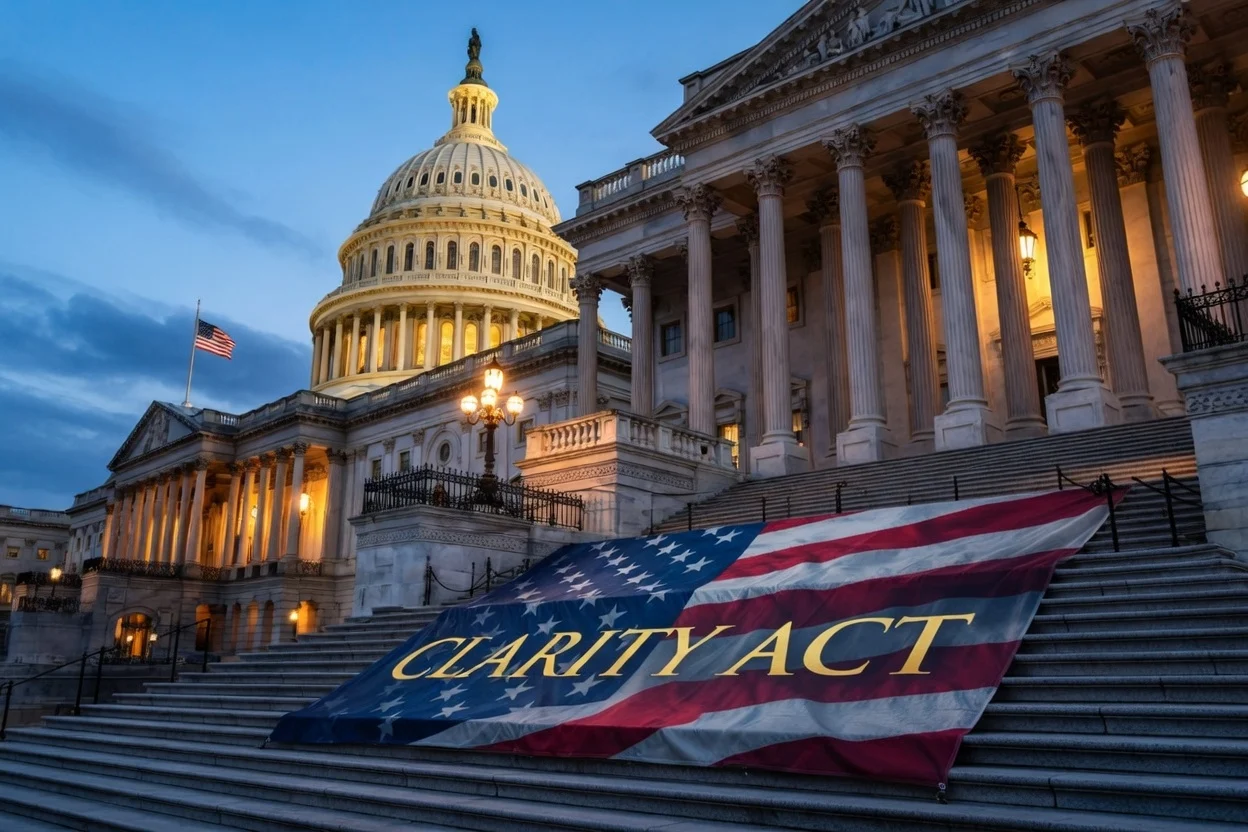
The U.S. Senate has postponed a critical procedural vote on the Clarity Act until September, when legislators return from their scheduled August break. Majority Leader John Thune announced the postponement Thursday evening, indicating that bill sponsors will prioritize the cryptocurrency market structure legislation when the chamber resumes operations.
The Senate’s month-long August recess begins Friday. Congressional members are scheduled to reconvene in mid-September, creating a compressed timeline for legislative action before campaign activities intensify ahead of November elections.
September Timeline Set for Clarity Act Consideration
Thune indicated that Democratic senators opposed scheduling the vote before the recess period. He noted that Senator Cynthia Lummis and fellow sponsors have been preparing the legislation for floor consideration upon the Senate’s September return.
The extended timeline allows proponents additional opportunities to secure the necessary 60-vote threshold for advancement. The legislation requires support from Democratic senators, while certain Republican commitments have become less definitive throughout the negotiation process.
Stablecoin rewards continue generating substantial disagreement among stakeholders. Traditional banking institutions and cryptocurrency platforms remain divided on whether digital asset companies should offer incentive programs tied to stablecoin holdings, making this a persistent sticking point.
Ethics provisions related to government officials and digital asset ventures have also sparked considerable debate. Senators Ruben Gallego and Thom Tillis have introduced proposals limiting officials from creating or endorsing digital tokens, alongside potential requirements for asset divestment.

Anti-Money Laundering Provisions Under Scrutiny
Certain lawmakers advocate for enhanced regulatory measures targeting financial crimes and consumer safeguards. These senators contend the Clarity Act in its present form lacks sufficient enforcement mechanisms to combat illegal activities within cryptocurrency markets.
Digital asset advocacy organizations dispute these characterizations and maintain their support for the bill’s passage. The Digital Chamber and the Crypto Council for Innovation announced plans to continue engaging with senators across party lines throughout the recess period.
Should the Senate approve the Clarity Act following amendments, the legislation must return to the House of Representatives for another vote due to modifications made in the upper chamber. Following House approval, the measure would proceed to President Donald Trump for final action.
The September legislative session represents the immediate opportunity for progress on this measure. Legislators face a limited window of several weeks before electoral considerations increasingly dominate Washington’s agenda during the final September negotiations.
Get 3 Free Stock Ebooks
Discover top-performing stocks in AI, Crypto, and Technology with expert analysis.
- Top 10 AI Stocks - Leading AI companies
- Top 10 Crypto Stocks - Blockchain leaders
- Top 10 Tech Stocks - Tech giants



