


TLDR
- White House meeting scheduled Thursday between Trump and senators to push forward the CLARITY Act cryptocurrency legislation
- Senator Cynthia Lummis announces new version coming within days, floor vote anticipated next week
- Kalshi prediction platform shows 79% probability of Senate vote occurring before August break
- Senator Chris Murphy from Democratic party claims legislation protects Trump’s cryptocurrency financial holdings
- Recent financial filings show Trump received approximately $1.4 billion from cryptocurrency ventures
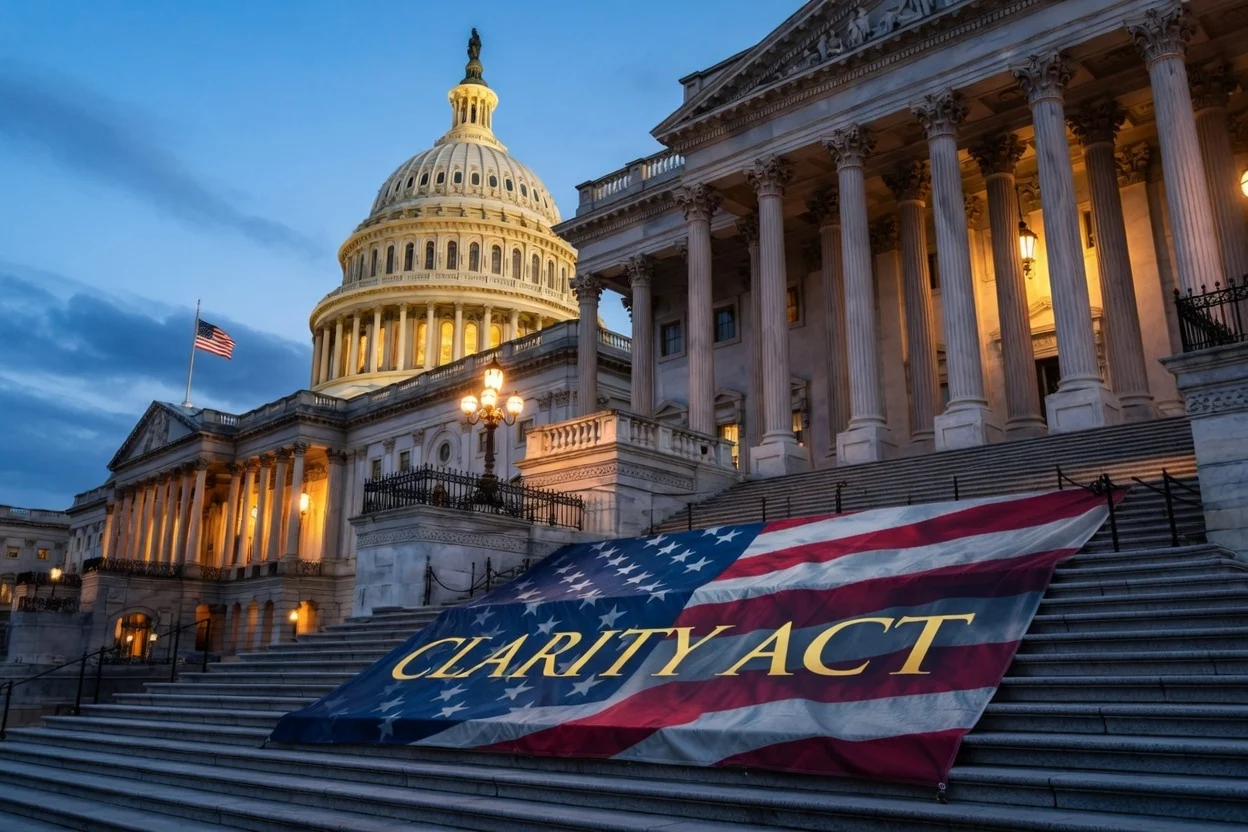
President Donald Trump has scheduled a Thursday White House session with multiple senators to advance the CLARITY Act, a cryptocurrency regulatory framework that legislators are rushing to approve ahead of the Senate’s August break.
Senator Bernie Moreno verified the scheduled gathering, indicating senators will update the president regarding the legislation and discuss “its pathway forward.” Senator Cynthia Lummis is also expected to participate.
The August recess represents a critical timeline for legislators. Numerous members view this period as the final viable opportunity to secure passage before the political landscape shifts toward midterm campaign season.
Senator Thom Tillis, currently negotiating outstanding elements of the proposed legislation, informed Politico he anticipates reaching consensus before week’s end.
Lummis stated during a Fox Business interview Wednesday that an updated version will become available in the coming days, with expectations for a full Senate vote during the following week.
Prediction Markets Signal Optimism
Investors on Kalshi currently assess the CLARITY Act’s chances at 79% for securing a Senate vote prior to the August recess, representing an increase from 68.8% recorded one day earlier.

Nevertheless, market confidence regarding full passage into law remains more modest. [[LINK_START_1]]Kalshi[[LINK_END_1]] estimates a 36% probability of the bill becoming law during 2026. Polymarket participants place that likelihood at 39%.
Democratic Opposition Grows
Democratic Senator Chris Murphy escalated his concerns regarding the legislation on July 14, characterizing it as a measure designed to “essentially legalize Donald Trump’s crypto corruption scheme.”
Murphy contended the legislation, as presently drafted, fails to prohibit government officials from gaining financial advantages from sectors they oversee through regulation.
His statements followed Trump’s most recent financial disclosure documenting approximately $1.4 billion in cryptocurrency-related revenue, predominantly connected to his family’s World Liberty Financial enterprise.
Senators Jeff Merkley and Chris Van Hollen aligned with Murphy in demanding enhanced ethics standards before legislative advancement.
They advocate for specific language preventing the president, vice president, congressional members, and their direct relatives from generating profits through crypto enterprises influenced by forthcoming regulations.
Five days preceding Murphy’s public statement, senior Democrats spanning five Senate committees, including Senator Elizabeth Warren, demanded formal hearings examining Trump’s cryptocurrency portfolio.
The Senate iteration of this bill has undergone negotiations exceeding ten months. Disagreements concerning stablecoin interest provisions and conflict-of-interest safeguards have delayed advancement.
The CLARITY Act would establish shared regulatory authority over digital assets between the Commodity Futures Trading Commission and the Securities and Exchange Commission, while simultaneously implementing consumer safeguards.
Industry organizations maintain their support for the measure. Coinbase leadership has contended that transparent cryptocurrency regulation remains essential for maintaining U.S. market competitiveness against China and the European Union.
Lummis verified that the collaborative Banking and Agriculture Committee version stands ready for Senate consideration. The upcoming phase is projected between July 15 and July 20, with Senate Majority Leader John Thune positioned to establish the bill’s ultimate trajectory.
Get 3 Free Stock Ebooks
Discover top-performing stocks in AI, Crypto, and Technology with expert analysis.
- Top 10 AI Stocks - Leading AI companies
- Top 10 Crypto Stocks - Blockchain leaders
- Top 10 Tech Stocks - Tech giants



