TLDR
- Brent crude traded between $114.93 and $116.38 on Tuesday, while WTI moved between $100.90 and $102.35.
- Iran, Saudi Arabia, Pakistan and Turkey agreed to keep talking after meeting in Tehran.
- Houthi forces said they attacked Saudi pipeline pumping stations and Riyadh airport.
- Oman said talks with Iran produced an outline to restore free navigation in the Strait of Hormuz.
- The IEA’s Fatih Birol said energy markets are unlikely to return to pre-war conditions in 2027.
Oil prices turned choppy on Tuesday as traders weighed diplomacy in the Middle East against new attacks. The moves came as efforts continued to calm the U.S.-Israeli war with Iran.
Brent crude futures rose 0.5% to $116.38 per barrel in early trading, according to Investing.com. U.S. West Texas Intermediate gained 0.6% to $102.35.
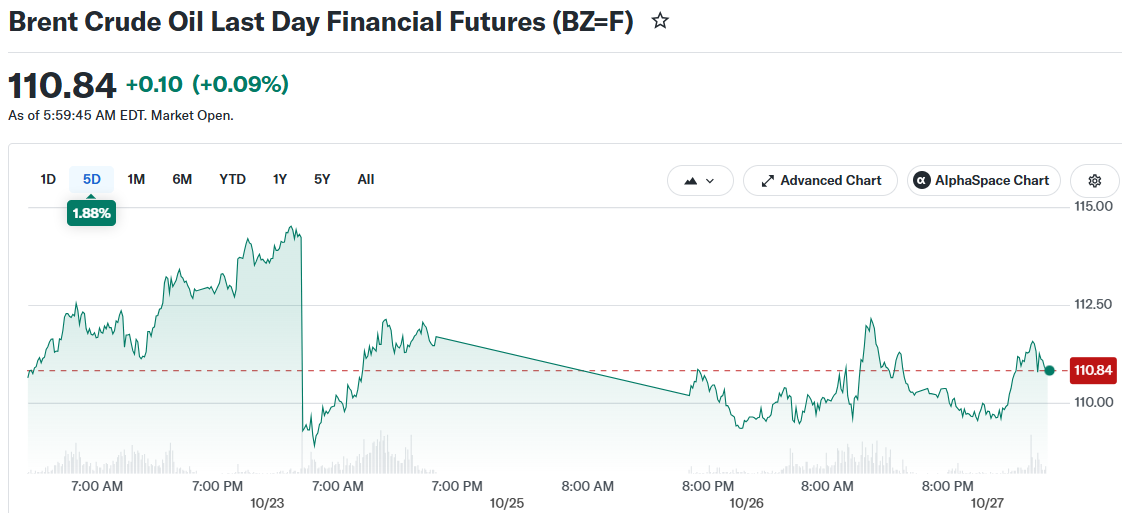
Later, the picture changed. December Brent fell 0.8% to $114.93 a barrel, and December WTI dropped 0.9% to $100.90, the Wall Street Journal reported.
Last week, Brent touched six-month highs. Fears of attacks on energy sites and shipping drove the rise.
Iran Talks Continue in Tehran
Senior officials from Saudi Arabia, Turkey and Pakistan met Iranian leaders in Tehran on Monday. A joint statement said the four countries agreed to keep talking about regional peace and security.
https://x.com/MarioNawfal/status/2115081080688579038?s=20

Saudi Arabia’s Foreign Ministry said the visit aimed to reduce tensions and support mediation by Qatar and Pakistan. Qatari officials have also been speaking with Tehran.
Talks covered Houthi attacks on Saudi Arabia, possible U.S.-Iran talks and shipping problems in the Strait of Hormuz. They also touched on the U.S. blockade of Iranian ports.
Oman said its talks with Iran produced an outline for a temporary deal to restore free navigation through Hormuz. Omani Foreign Minister Badr Albusaidi said both Washington and Tehran would need to compromise.
President Donald Trump has left open the chance of more military action against Iran. Tehran says talks with Washington would require an end to the blockade and the lifting of sanctions on its oil exports.
Houthi Attacks and Supply Concerns
Houthi forces said on Monday they attacked pumping stations on Saudi Arabia’s East-West crude pipeline and Riyadh airport. Saudi Arabia had not confirmed the claims.
The kingdom has reported intercepting missiles and drones in recent days. The Saudi-led coalition said it intercepted a ballistic missile fired by the Houthis toward Riyadh.
The coalition also said it destroyed four ballistic missile launchers and five tunnels used to store missiles in Yemen.
Analysts at Capital Economics said the U.S. naval blockade, in place for more than 100 days, is hurting Iran’s economy. They said the rial has fallen and inflation is close to 90% a year.
International Energy Agency chief Fatih Birol said energy markets are unlikely to return to pre-war conditions in 2027.
Saudi Aramco plans to begin storing crude oil in Singapore in the second half of 2027. Saudi and Singaporean energy ministers announced the plan.
On Tuesday, December Brent traded near $114.93 and WTI near $100.90 as talks and attacks both continued.
Get 3 Free Stock Ebooks
Discover top-performing stocks in AI, Crypto, and Technology with expert analysis.
- Top 10 AI Stocks - Leading AI companies
- Top 10 Crypto Stocks - Blockchain leaders
- Top 10 Tech Stocks - Tech giants