


Key Takeaways
- Moderna shares advanced 2.2% to $193.15 in pre-market hours following Nasdaq’s confirmation of its Nasdaq-100 Index addition on October 9.
- The biotech firm takes Warner Bros. Discovery’s place, which exits due to Paramount Skydance’s $81 billion acquisition closing October 6.
- Year-to-date gains have reached approximately 553%, elevating Moderna’s market capitalization to around $75.4 billion.
- Citi’s Geoff Meacham issued a Sell rating on MRNA, arguing the stock’s climb exceeds what its cancer therapy pipeline justifies.
- Analyst consensus leans toward Hold, with average price targets suggesting a potential 42% decline from current levels.
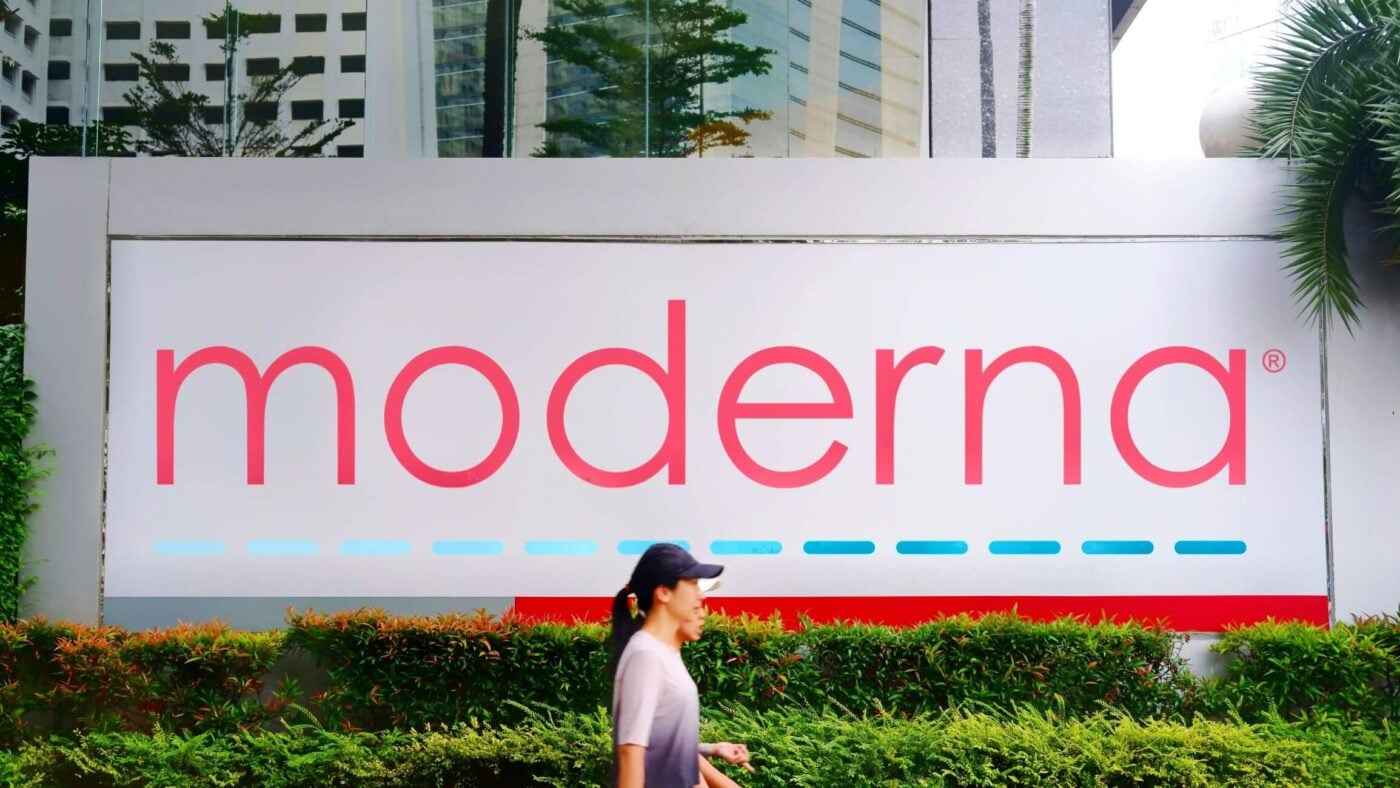
Moderna shares posted a 2.2% gain in Friday’s pre-market session, reaching $193.15 after Nasdaq officially announced the company’s inclusion in the Nasdaq-100 Index effective before the October 9 opening bell.
The catalyst has nothing to do with clinical trial updates or pipeline developments. This is purely an index-driven story.
Warner Bros. Discovery is vacating its Nasdaq-100 slot as it gets folded into Paramount Skydance through an $81 billion transaction. A federal court recently greenlit a settlement that removed the final obstacle to the merger, which is scheduled to finalize on October 6.
When Moderna officially enters the index, passive funds mirroring the Nasdaq-100 will be forced to acquire shares. With more than $800 billion in assets tracking this benchmark, even modest portfolio adjustments generate substantial demand.

Moderna’s Remarkable 2024 Performance
The current year has delivered unprecedented returns for Moderna shareholders. The stock has soared approximately 553% year-to-date, propelling the company’s valuation to roughly $75.4 billion.
The dramatic ascent stems largely from encouraging Phase 3 data for intismeran autogene, a personalized melanoma therapy Moderna co-developed with Merck. Since those interim results surfaced, the stock has climbed about 222%.
Trading near its 52-week peak of $208.90, Moderna has experienced a complete reversal from the post-pandemic slump that plagued the stock for several years following the COVID-19 vaccine windfall.
Broader market strength provided additional tailwinds. The S&P 500 climbed 0.5%, the Dow Jones advanced 0.5%, and the Nasdaq rose 0.8% during the session. Meanwhile, competitors BioNTech and Pfizer showed minimal movement, indicating Moderna’s gains reflect company-specific factors rather than industry momentum.
Analysts Sound Valuation Alarms
The bullish sentiment isn’t universal on Wall Street. Days before the Nasdaq-100 announcement, Citi analyst Geoff Meacham slapped a Sell rating on Moderna, downgrading from Neutral.
While he lifted his price target from $60 to $80, the rating change delivers an unmistakable message: Meacham believes the rally has exceeded reasonable bounds.
His thesis hinges on financial modeling. Citi calculates that Moderna would require approximately $13 billion in annual oncology revenue to warrant a $200 share price. That figure represents nearly seven times Citi’s current projections for the company’s cancer franchise.
Meacham dismissed such revenue expectations as implausible.
Yet buyers ignored the warning, with shares rebounding the following trading day. That momentum has persisted into this week’s pre-market trading, extending the upward trajectory.
Across Wall Street, the picture remains mixed. Twenty analysts covering the stock over the past three months have collectively settled on a Hold recommendation for MRNA.
The consensus price target stands at $110.44, representing roughly 42% downside from current trading levels—a gap that underscores the stark divide in market opinion.
In related corporate news, Moderna recently established a Chief Operating Officer position, naming Juan Andres to lead the function. The strategic hire aims to support manufacturing expansion as the company’s oncology programs advance toward commercialization.
Market participants are now circling October 24, when Moderna plans to unveil additional data at the ESMO conference. That presentation could serve as the next major inflection point for investor sentiment.
Get 3 Free Stock Ebooks
Discover top-performing stocks in AI, Crypto, and Technology with expert analysis.
- Top 10 AI Stocks - Leading AI companies
- Top 10 Crypto Stocks - Blockchain leaders
- Top 10 Tech Stocks - Tech giants



