


Key Takeaways
- Micron shares declined approximately 7% during Thursday’s premarket session, trading near $999–$1,005 per share.
- Semiconductor sector weakness followed Broadcom’s earnings release, which failed to exceed investor expectations for AI revenue projections.
- Raymond James analyst Karl Ackerman projects DRAM and NAND pricing will reach peak levels around mid-2026.
- Long-term supply contracts are anticipated to help mitigate the impact of pricing peaks.
- Wall Street sentiment stays positive — recent price target increases came from Morgan Stanley, Raymond James, and Susquehanna.
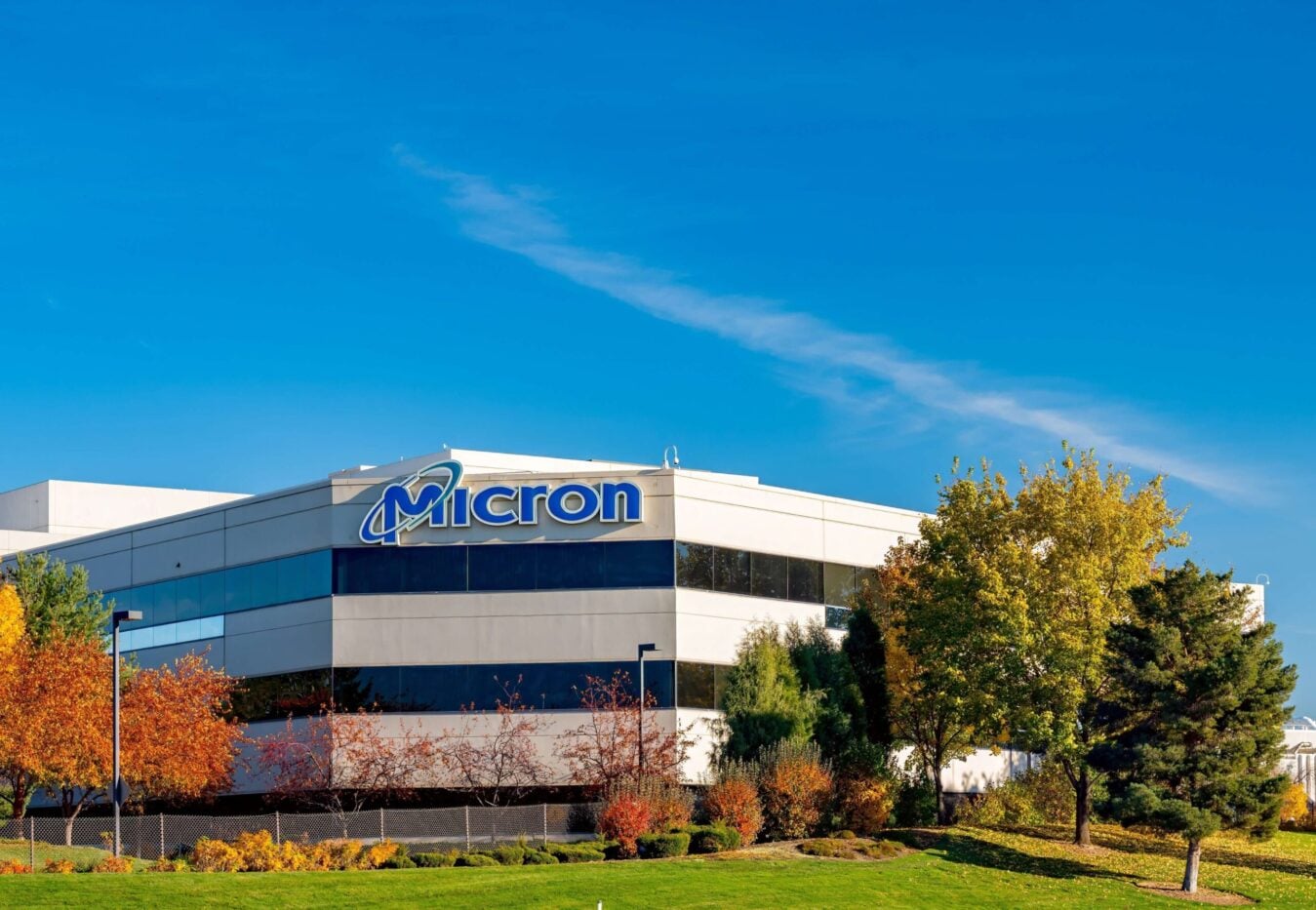
Micron Technology (MU) shares experienced a decline of approximately 7% during Thursday’s premarket session, dropping to the $999–$1,005 range, as semiconductor stocks broadly retreated following investor reactions to Broadcom’s latest quarterly performance.
While Broadcom delivered solid financial results, market participants expressed disappointment over the company’s decision not to elevate its AI revenue outlook beyond the current $100 billion projection for fiscal 2027. This sentiment triggered widespread selling pressure throughout chip stocks, with Micron experiencing collateral damage.
Context matters significantly here. Despite Thursday’s pullback, Micron shares remain up approximately 916% over the trailing twelve months—an extraordinary performance by any measure.
Analysts Flag Memory Pricing Ceiling Approaching
The deeper concern stems from Raymond James analyst Karl Ackerman’s Wednesday research note, which forecasts that DRAM and NAND average selling prices will reach their cyclical peak around mid-2026.

This timeline arrives sooner than many market observers predicted. The consensus view among most Wall Street firms had pointed toward mid-2027 as the earliest potential inflection point when expanding supply capacity might counterbalance AI-driven infrastructure demand.
Historically, memory chip pricing peaks have preceded cyclical downturns—events that have severely impacted companies including Micron, SK Hynix, and Samsung Electronics.
Despite this cautionary outlook, Ackerman maintained his Outperform rating, emphasizing that long-term contractual pricing arrangements should provide a buffer against volatility this cycle.
Micron’s forward price-to-earnings multiple has expanded dramatically, climbing from 4.4x as recently as April to 11.7x currently, based on FactSet data.
According to Ackerman, this valuation expansion “implies moderating contract ASP growth, margin degradation, and oversupply conditions looming in the next 1-2 years.”
This represents a clear cautionary signal—though Ackerman believes market participants are already beginning to factor in these dynamics.
Upcoming Earnings and Wall Street Outlook
Micron’s next significant catalyst arrives with its earnings announcement scheduled for June 24, 2026.
Analyst consensus calls for earnings of $19.29 per share, representing substantial growth from $1.91 in the year-ago period. Revenue estimates stand at $33.88 billion, compared with $9.30 billion during the comparable quarter last year.
The stock currently commands a price-to-earnings ratio of 50.9—elevated compared to numerous semiconductor industry peers.
Thursday’s decline hasn’t dampened Wall Street enthusiasm.
Morgan Stanley reaffirmed its Overweight rating while lifting its price objective to $1,050 on June 3. Raymond James elevated its target to $1,100 on June 1. Susquehanna adopted the most aggressive stance, boosting its target to $1,750 on May 29 alongside a Positive rating.
The analyst consensus maintains a Buy recommendation, with the average target price sitting at $827.61.
During Thursday’s premarket trading, Micron declined 7.38% to $999.86.
Get 3 Free Stock Ebooks
Discover top-performing stocks in AI, Crypto, and Technology with expert analysis.
- Top 10 AI Stocks - Leading AI companies
- Top 10 Crypto Stocks - Blockchain leaders
- Top 10 Tech Stocks - Tech giants



