


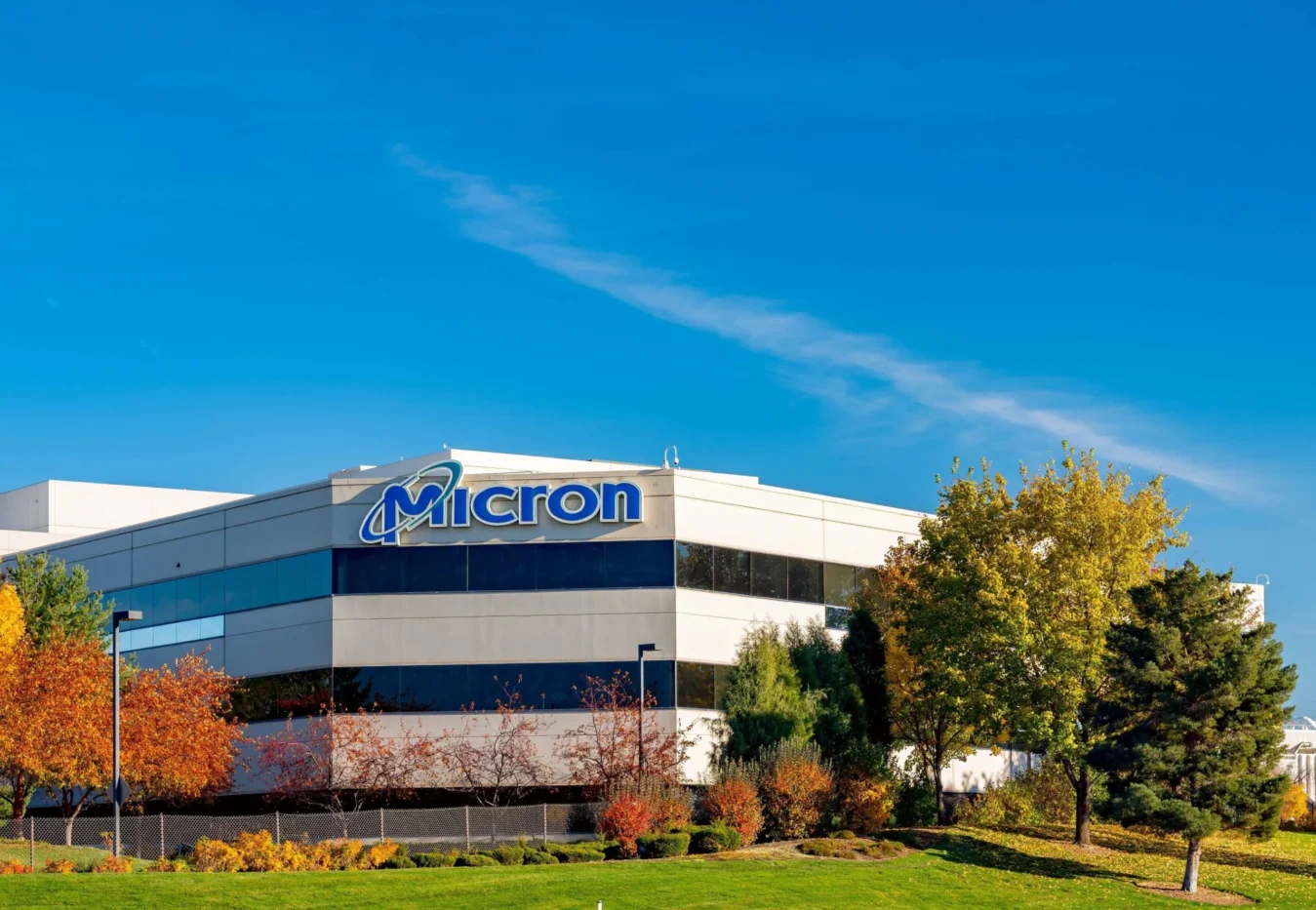
Key Takeaways
- Over the past five years, Micron (MU) has delivered approximately 1,313% in returns, surpassing Nvidia’s 912% performance during the same timeframe.
- MU shares finished Friday’s session at $1,016.59, boosting its market capitalization to roughly $1.15 trillion from $104.2 billion in 2021.
- The surge in high-bandwidth memory (HBM) driven by artificial intelligence applications has fueled growth, with demand exceeding supply by more than double.
- The company delivered record-breaking fiscal Q3 revenue of $41.46 billion, a dramatic jump from $9.3 billion in the prior-year quarter.
- Analysts project $50.4 billion in quarterly revenue and adjusted earnings per share of $30.89 when the company unveils results on September 30.
Micron Technology has emerged as one of the stock market’s most impressive success stories over the past half-decade. Shares closed at $1,016.59 on Friday, representing a remarkable five-year gain of approximately 1,313%, based on data from StatMuse. This performance exceeds Nvidia’s already impressive 912% appreciation during the identical period.
The company’s valuation has skyrocketed from roughly $104.2 billion at 2021’s conclusion to approximately $1.15 trillion presently. This represents an extraordinary addition of over $1 trillion in shareholder value.
While Sandisk and Comfort Systems USA technically posted higher raw five-year returns, neither maintained full S&P 500 membership throughout the entire period. Sandisk only gained independence in February 2025 and entered the benchmark index in November. Among longstanding index components, Micron’s performance is unmatched.
Year-to-date in 2026, the stock has climbed between 256% and 260%, breaking through the $1,000 threshold just last week. However, shares still trade roughly 20% beneath their 52-week peak of $1,255.

Artificial Intelligence Transforms Memory Chip Economics
High-bandwidth memory has emerged as an indispensable element within AI computing systems. Modern graphics processing units demand rapid access to massive data pools, a requirement perfectly suited to HBM architecture. Current market dynamics show demand levels exceeding available production capacity by more than twofold.
Micron is strategically positioned to capitalize on this imbalance. Management has committed to doubling HBM wafer production to approximately 100,000 units monthly by the end of the year. This persistent supply shortage has granted Micron exceptional leverage in pricing negotiations, propelling both revenue figures and profit margins far beyond historical benchmarks.
Third-quarter fiscal results reached an unprecedented $41.46 billion in revenue, representing a massive leap from the $9.3 billion recorded during the corresponding quarter twelve months prior. This explosive expansion has resulted in a forward price-to-earnings ratio of approximately six times—a remarkably modest valuation considering the company’s growth trajectory.
Critical Catalysts Ahead of September 30 Report
Micron faces its next pivotal moment on September 30, when quarterly financial results will be released. The analyst consensus anticipates revenue approaching $50.4 billion alongside adjusted earnings per share of $30.89. These projections compare to $11.32 billion in revenue and $2.84 in EPS from the year-ago period.
Notwithstanding widespread bullishness, certain market observers have identified potential warning signals. Trading activity has declined to levels not witnessed since early April, preceding the stock’s explosive advance. During that timeframe, MU was changing hands below $400.
The current price-to-earnings ratio of roughly 23 times trails only slightly behind the S&P 500’s average multiple of 24. Skeptics contend this valuation presumes sustained exceptional HBM demand, prolonged supply constraints extending years into the future, and continued aggressive capital deployment by major technology companies. This scenario offers minimal margin for disappointment.
The memory semiconductor industry has traditionally exhibited pronounced cyclical characteristics. Expanding production capacity from Micron, Samsung, and SK Hynix could generate excess inventory should artificial intelligence infrastructure investment decelerate. The September 30 earnings announcement will provide the most definitive indication of whether this extraordinary growth cycle maintains momentum.
Get 3 Free Stock Ebooks
Discover top-performing stocks in AI, Crypto, and Technology with expert analysis.
- Top 10 AI Stocks - Leading AI companies
- Top 10 Crypto Stocks - Blockchain leaders
- Top 10 Tech Stocks - Tech giants



